If you think it’s been hot so far this summer, you should have been in Philadelphia 234 years ago.
Not only did the temperatures soar into the 90s during the summer of 1776, it was, of course, also the year Washington, Franklin, Jefferson and even one (but only one) Irish Catholic revolutionary faced some serious heat from the British.
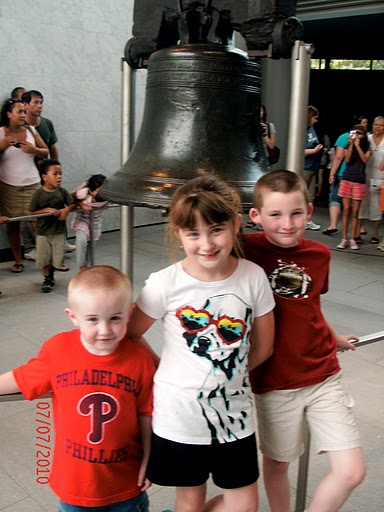
Earlier this month, I drove my wife and four kids to the City of Brotherly Love to walk those very same (and still hot!) streets where independence was declared over two centuries ago.
What I discovered is that Philadelphia remains a city of mysteries. Forget about why the famous Liberty Bell is cracked. It’s difficult to figure out precisely how many Irish-born people actually signed the Declaration of Independence, or even when that famous document was actually signed.
We first got our Irish up at the National Liberty Museum, a more modern and international take on the themes of freedom and resistance which have made Philly as famous as its cheese steaks.
Alongside American stalwarts of freedom and democracy such as Martin Luther King, you can also see exhibits and displays featuring John Hume and David Trimble, the Nobel Prize winners credited with bringing peace to Northern Ireland.
Folks with a strong sense of Irish history, however, might also find it curious that Winston Churchill -- who negotiated on behalf of England with Michael Collins over Ireland’s future -- is also included in this display, which is entitled “Peacemakers.”
Less famous, but no less fascinating, is a section on U.S. Medal of Honor winners which includes the brave exploits of Father Joseph Timothy O’Callahan, a Boston native who was serving as chaplain aboard the USS Franklin in the Pacific when, on March 19, 1945, Japanese forces launched an attack.
O'Callahan bravely ministered to the wounded and assisted as sailors dumped bombs over the sides of the ship. He is believed to have helped save the lives of over 700 crewmen.
Among the artifacts at the National Liberty Museum are White House dishes from the Kennedy administration, which are festooned with shamrocks, while a display entitled “Coming to America” explores the impact of immigrants throughout American society.
This exhibit does, however, contain at least one error. New York Governor Al Smith did face intense bigotry when he became the first Roman Catholic to run for president in 1928, but he was not the “child of Irish immigrants.” His father was of mixed European ancestry.
The real mysteries of Philly began with the famous Liberty Bell. It remains unclear how or even when the famous crack appeared in the bell, which still draws long lines of visitors.
Meanwhile, after you cross Market Street and visit Independence Hall, you really start asking some questions. July 4 is considered America’s birthday, since it is the date the Declaration of Independence was announced from these very steps.
However, it remains unclear when exactly those 56 famous people actually signed the document. Some of them were not even in Philly in July of 1776!
In fact, some historians believe only the famously ostentatious John Hancock and Derry-born Charles Thomson signed the first version of the document. And yet, Thomson the Irishman is not considered among the 56 famous signatories because he served as a record keeper rather than delegate.
Meanwhile, there might not have been a Declaration to sign if not for Tyrone native John Dunlap, the printer who produced the first copies of the document.
Three Irish-born revolutionaries did sign the Declaration -- Matthew Thornton, George Taylor and James Smith. All of these men, however, were Presbyterians.
Only one Catholic signed the Declaration, Charles Carroll, whose family had been persecuted for religious reasons in Ireland, England and the U.S.
Don’t weep too strongly for the Carrolls, however. They were the Kennedys of their day, a multi-generational political dynasty with humble beginnings who eventually amassed a huge fortune.
At the end of this stroll through the historical streets of Philly, I was, first of all, very hot, but also amazed that great events unfolded in these very buildings. I was amazed, further, that we are still working on pinning down the details of precisely how those great events unfolded.
(Contact at [email protected] or facebook.com/tomdeignan.)
Not only did the temperatures soar into the 90s during the summer of 1776, it was, of course, also the year Washington, Franklin, Jefferson and even one (but only one) Irish Catholic revolutionary faced some serious heat from the British.
Earlier this month, I drove my wife and four kids to the City of Brotherly Love to walk those very same (and still hot!) streets where independence was declared over two centuries ago.
What I discovered is that Philadelphia remains a city of mysteries. Forget about why the famous Liberty Bell is cracked. It’s difficult to figure out precisely how many Irish-born people actually signed the Declaration of Independence, or even when that famous document was actually signed.
We first got our Irish up at the National Liberty Museum, a more modern and international take on the themes of freedom and resistance which have made Philly as famous as its cheese steaks.
Alongside American stalwarts of freedom and democracy such as Martin Luther King, you can also see exhibits and displays featuring John Hume and David Trimble, the Nobel Prize winners credited with bringing peace to Northern Ireland.
Folks with a strong sense of Irish history, however, might also find it curious that Winston Churchill -- who negotiated on behalf of England with Michael Collins over Ireland’s future -- is also included in this display, which is entitled “Peacemakers.”
Less famous, but no less fascinating, is a section on U.S. Medal of Honor winners which includes the brave exploits of Father Joseph Timothy O’Callahan, a Boston native who was serving as chaplain aboard the USS Franklin in the Pacific when, on March 19, 1945, Japanese forces launched an attack.
O'Callahan bravely ministered to the wounded and assisted as sailors dumped bombs over the sides of the ship. He is believed to have helped save the lives of over 700 crewmen.
Among the artifacts at the National Liberty Museum are White House dishes from the Kennedy administration, which are festooned with shamrocks, while a display entitled “Coming to America” explores the impact of immigrants throughout American society.
This exhibit does, however, contain at least one error. New York Governor Al Smith did face intense bigotry when he became the first Roman Catholic to run for president in 1928, but he was not the “child of Irish immigrants.” His father was of mixed European ancestry.
The real mysteries of Philly began with the famous Liberty Bell. It remains unclear how or even when the famous crack appeared in the bell, which still draws long lines of visitors.
Meanwhile, after you cross Market Street and visit Independence Hall, you really start asking some questions. July 4 is considered America’s birthday, since it is the date the Declaration of Independence was announced from these very steps.
However, it remains unclear when exactly those 56 famous people actually signed the document. Some of them were not even in Philly in July of 1776!
In fact, some historians believe only the famously ostentatious John Hancock and Derry-born Charles Thomson signed the first version of the document. And yet, Thomson the Irishman is not considered among the 56 famous signatories because he served as a record keeper rather than delegate.
Meanwhile, there might not have been a Declaration to sign if not for Tyrone native John Dunlap, the printer who produced the first copies of the document.
Three Irish-born revolutionaries did sign the Declaration -- Matthew Thornton, George Taylor and James Smith. All of these men, however, were Presbyterians.
Only one Catholic signed the Declaration, Charles Carroll, whose family had been persecuted for religious reasons in Ireland, England and the U.S.
Don’t weep too strongly for the Carrolls, however. They were the Kennedys of their day, a multi-generational political dynasty with humble beginnings who eventually amassed a huge fortune.
At the end of this stroll through the historical streets of Philly, I was, first of all, very hot, but also amazed that great events unfolded in these very buildings. I was amazed, further, that we are still working on pinning down the details of precisely how those great events unfolded.
(Contact at [email protected] or facebook.com/tomdeignan.)
Comments