By now you’ve probably heard the story about the knucklehead (or as he has been called in the press, the “junior diplomat”) who thought it would be funny to suggest that Pope Benedict open some abortion clinics and hand out condoms when he visits Britain in September.
The aforementioned knucklehead actually put these thoughts down on paper, in a memo that was subsequently leaked to The Sunday Telegraph newspaper.
“This is clearly a foolish document,” was the official response from Britain’s Foreign Office.
Personally, I enjoyed the response of Rt. Reverend Malcolm McMahon, bishop of Nottingham. He said that the memo showed “appalling manners,” but he also added that it would not cause much fuss for the over four million Catholics in Britain because “they are getting used to bad press.”
What is noteworthy about McMahon’s response is that, rather than raise his voice and spew vitriol -- which would have been understandable -- he implied that this is not very different from a strain of anti-Catholic thought which the Pope’s army has been dealing with in the U.K. and U.S. for centuries.
Or that’s how I would have viewed Rev. McMahon’s comments in the past. But the more we learn about the depth and breadth of the Catholic Church’s sex abuse cover-up scandals, it is harder and harder to call on the anti-Catholic card.
In fact, if certain cardinals and bishops want to take credit for yet another accomplishment, they should know that their mismanagement of these tragedies has now made it hard to distinguish between legitimate criticism of the church and good old fashioned Pope-bashing.
Anti-Catholicism is one of those things people tend to know happened a very long time ago yet ended once John F. Kennedy was elected.
And, true, not many folks in recent decades can claim they lost a job or home simply because they are Roman Catholic. After all, these days you could start of Knights of Columbus chapter amongst members of the Supreme Court alone.
That, however, does not mean a soft intellectual bigotry was not alive and thriving in elite places. On the East Coast, the Irish may have dominated cities such as Boston and New York from City Hall to the police commissioner’s office.
But that meant little to editors at the Boston Globe and New York Times, which have been accused of treating Catholics harshly well into the 21st century.
Even after the election of JFK (not exactly a model Catholic, incidentally), it was not hard to find people on both sides of the debate who would eventually acknowledge that anti-Catholicism was the last acceptable form of bigotry.
And by the way, there’s no need to pile up simply on the WASPs. Irish Catholics themselves did a fine job of looking back in anger and exposing what they saw as hypocrisy and intellectual shortcomings in their own backgrounds.
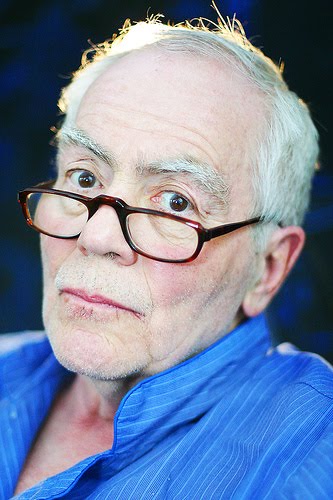
From James Joyce to Eugene O’Neill, from Mary McCarthy to James T. Farrell, from Maureen Dowd to Jimmy Breslin (pictured above, who wrote a scathing book called "The Church That Forgot Christ"), Irish Catholics have said things that would make even the most notorious 19th century anti-Papist cringe.
None of which changed the fact that from TV to movies to print media, devout Catholics always made for great punch lines and even better punching bags.
And so, it is understandable that some feel the extensive attention given to the latest round of church sex revelations -- which may or may not directly involve the Pope -- have Irish Americans once again crying anti-Catholic.
“I am outraged each time The Times intentionally disparages the Catholic Church, its pope and its bishops,” wrote Richard Kelly of Pittsburgh, in a New York Times article this past Sunday, which, to its credit, soberly analyzed the paper’s coverage of church issues.
The problem now is that powerful church officials may be more guilty of -- at the very least -- a judgment much poorer than any newspaper editor ever could be.
A nasty kind of anti-Catholicism will always be around. Now, though, powerful defenders of the faith have done more to encourage it than discourage it.
(Contact at [email protected] or facebook.com/tomdeignan.)


Comments