Later this year, we will receive two more heaping platefuls of Irish gangsterism. In September, Martin Scorsese presents a new HBO mini-series called "Boardwalk Empire," about the creation of gambling mecca Atlantic City, featuring numerous Irish underworld characters.
Also, "The Irishman" is expected to hit the big screen in late 2010. Starring Christopher Walken, the film explores the rise and fall of Cleveland killer Danny Greene, the Celtic-obsessed gangster who challenged Cleveland’s high-level Italian American mob.
But if your appetite for Irish crime lords is such that your can’t wait, stroll over to St. Mark’s Place on the Lower East Side where the Museum of the American Gangster is about to open. Located in a former speak-easy, the museum is currently conducting preview tours.
When renovations are completed in the coming weeks, viewers will be able to explore the entire facility, where it is said Frank Sinatra (no stranger to the underworld) once worked as a singing waiter.
The museum is the brainchild of native New Yorker and gang historian Eric Ferrara as well as Lorcan Otway, whose family has managed the museum building for decades.
The Museum of the American Gangster is not the only site dedicated to studying unsavory figures such as Meyer Lansky, Al Capone and Donegal native Vincent “Mad Dog” Coll. Next year, the long-planned Mob Museum is set to open in Las Vegas.
Of course, any museum dedicated to the American underworld would have to dedicate significant space to the role the Irish played.
Several of the Museum of the American Gangster’s consultants have explored some of the darkest corners of the Irish American underworld.
First there’s Patrick Downey, who has written about New York crime in the early 20th century when gangsters like “Mad Dog” Coll and Owney “the Killer” Madden reigned.
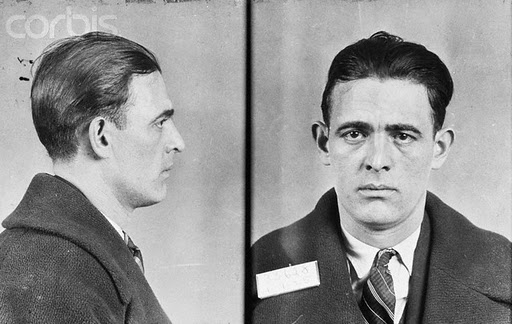
Downey is currently writing a book about Jack “Legs” Diamond (pictured above), the Philadelphia-born criminal whose parents were born in Ireland.
Also contributing to the museum is Rose Keefe, who has written at length about Chicago Irish gangster Deanie O’Banion.
Given that the museum building once housed a speakeasy, it makes sense that one of the museum’s first exhibits focuses on the prohibition era of 1919-1931 and the broader “history of alcohol trafficking in the United States.”
According to the museum’s founders, some $2 million in prohibition-era artifacts were discovered hidden in the building’s maze of secret rooms.
Prohibition, of course, was America’s ill-fated noble experiment to outlaw alcohol. The Irish played a central role in this era, though not for reasons one would think, given the stereotypes about the Irish and drink.
In fact, it was those very stereotypes that fanned the flames of prohibition.
Those who supported banning booze were not just opposed to alcohol. They believed they were doing what was best for the decadent, lawless ethnics who ran cities such as New York, Boston and Chicago.
Since the Irish (who were the dominant big city political group in most cities) could not take care of themselves, the thinking went, right thinking rural Protestants would outlaw booze for their own good.
It is no surprise that, when Al Smith ran for president in 1928, he was not only slammed for being a low-class child of the lower East Side as well as a slavish devotee to the pope in Rome. He was also a dreaded “wet,” meaning he supported lifting the ban on alcohol.
“What else would you expect?” many people argued. It was just another reason one of “them” should never be allowed into the White House.
The Museum of the American Gangster also looks closely at lesser known Irish American criminals such as John Lonergan and his son Richard “Pegleg” Lonergan, who led Brooklyn’s White Hand Gang, and was killed by Al Capone.
Hopefully, down the road, the museum will also explore the stubborn endurance of Irish organized crime and its link to politics, from the Westies and “goodfella” Jimmy Conway in New York right up to Boston’s “Whitey” Bulger, who, to this day, stands next to the likes of Osama bin Laden on the FBI’s Most Wanted list.
(Tom Deignan will be discussing “Twenty Books Every Irish American Should Read” at the mid-Manhattan branch library, 455 Fifth Avenue, April 17 and at the Riverdale, Bronx branch library on April 22. Contact [email protected] or facebook.com/tomdeignan.)
Comments