| Activist New York exhibition opens at Museum of the City of New York |
On May 5, 1981, Irish New Yorkers poured out into the streets when news came out of Belfast that Republican hunger striker Bobby Sands had died. An estimated 10,000 people closed off several blocks in Manhattan near the British consulate.
On the waterfront, longshoremen called for a one day boycott of British shipping, while others proposed a national boycott of British Airways. Finally, Transit Workers Union head John Lawe called for members to drive with headlights on all day to acknowledge Sands' death.
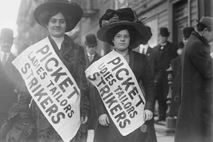
In these days of Occupy Wall Street and gay marriage, protest and the change it spurs is very much in the news. So much so that the Museum of the City of New York recently opened a new exhibit called “Activist New York.”
The exhibit, according to organizers, “explores the drama of social activism in New York City from the 17th century right up to the present. In a town renowned for its in-your-face persona, citizens of the city have banded together on issues as diverse as historic preservation, civil rights, wages, sexual orientation and religious freedom.”
The issues the exhibit explores are undoubtedly important. But it would have certainly added an interesting dynamic to the exhibit if it also explored the way various immigrants have championed their national causes and the way ethnic enclaves around New York responded.
Needless to say, Irish New York rabble rousers have had their share of moments in the “Activist New York” spotlight.
There was, of course, the moment when Sands’ death shed light on the problem of The Troubles in the North. That was at the start of the 1980s.
By the end of that turbulent decade, a Belfast fellow named Joseph Patrick Thomas Doherty -- and his many supporters --made Northern Ireland an important issue in the 1989 race to be New York City mayor.
Doherty was arrested while working at a Manhattan bar, accused of serving as an active IRA soldier.
The British wanted him returned to the U.K., and while serving as U.S. attorney in charge of the case, Rudy Giuliani earned many enemies in the Irish community.
That Northern Ireland would become a flashpoint in the 1989 race for New York mayor was unlikely, to say the least. That year, crime and racial tension were spiraling out of control.
David Dinkins was aiming to become New York’s first African American mayor. And yet, both Dinkins and his opponent Giuliani were forced to have “full-fledged policies about the former Irish Republican Army guerrilla,” The New York Times reported at the time, adding that “the 'Doherty issue’ … could sway votes in the mayoral election.”
This, of course, was a testament to Irish organizers harnessing the network of Irish American support across the five boroughs.
Then again, perhaps this should be no surprise because the Irish have been loud and proud members of “Activist New York” for decades.
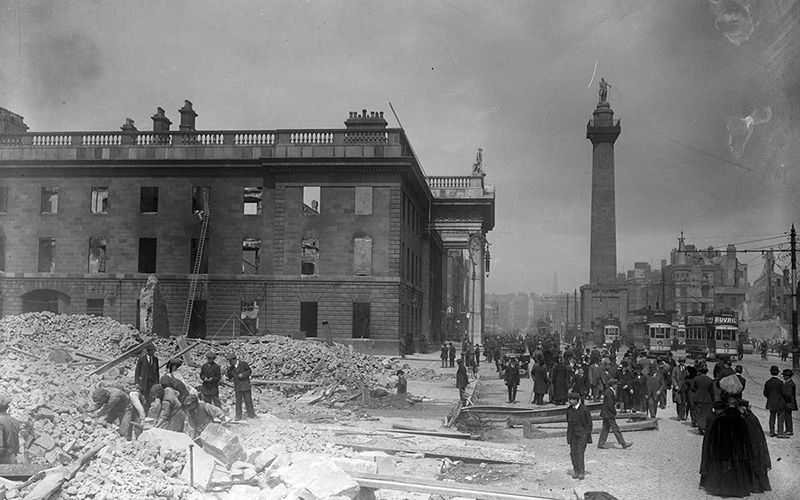
Many Irish New Yorkers were fierce in their support for the 1916 Easter Rising, and nationalist rallies in venues such as Madison Square Garden attracted upwards of 20,000 Irish American supporters.
Visits by the likes of Eamon de Valera were also popular – and controversial.
After all, during the World War I era, many criticized the notion of “hyphenated Americans” who could feel loyalty for both Ireland and the U.S.
After World War I, Irish-born activists in New York used their political skills to found the Transit Workers Union.
The Irish are a particularly interesting study in activism because subsequent visits by nationalist leaders – think Bernadette Devlin in the late 1960s – rallied support in some parts of the Irish American community, but also alienated many others.
So, if you go to visit “Activist New York” at the Museum of the City of New York, realize that it tells a good story. But it is only part of the story.
(Contact “Sidewalks” at [email protected] or facebook.com/tomdeignan)
Comments