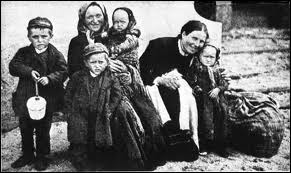
Irish divided in their attitudes to emigrants---- Just send the money the message from some
Posted on Monday, July 04, 2011 at 11:29 PM
RSS 
Recent Posts
- President Obama’s visit to North comes at a critical time for peace process - Hopes that he can help stop slow slide into the dark side
- Boston Irish Immigration Center continues to lie about their role in turning woman in to State Department
- Why no effort to repair damage to Irish Famine memorial in New York nearly one year after? - Car slammed into memorial and ugly plywood and metal barricades still mark the site
- How sports helped defeat the 'No Irish Need Apply' racism in America - Top baseball exec Tim Brosnan tells Irish Sports 50 how Irish served as example
- Sandy scourged Rockaways is on the mend with a little help from community spirit and perseverance
Archives

Noreen Bowden has worked on Irish emigrant issues for 20 years and headed up the Irish Emigrant Advice Network at one point for several years .
She understands better than most the ambivalence in Ireland towards emigrants and those who leave the country.
She has just written a thought provoking piece for
Partly it was brought up by my brief run for Irish president where the Irish Times op ed page and several other newspapers questioned whether I had the right to run as an American and Irish dual citizen.
Bowden writes that all is fine as long as emigrants and the Diaspora are sending back money and helping with investment but becoming part of the system or having actual input is not a part of the bargain as far as the Irish are concerned.
She states "When times are tough,... we hear the calls to embrace our renewed status as an emigrant nation. The loudest of these voices tend to belong to those who feel no urge to move themselves’
She notes that "In the 1980s, Brian Lenihan Snr’s “We can’t all live on a small island” seemed to sum up governmental complacency. During the current crisis, it was former Tánaiste Mary Coughlan who highlighted the government’s non-response to rising emigration figures: she claimed young people were emigrating because “they want to enjoy themselves. That’s what young people are entitled to do.”
She is making a point I fully understand.
Talk of emigration being good neatly sidesteps involuntary emigration which is a critical issue right now in Ireland,It is fine for those who want to go abroad, but what about the 50 per cent of young people who are afraid they will have to emigrate just to get a job?
Bowden points out that the Irish leaders like to have their cake and eat it too when it comes to emigrants and the Diaspora.
She writes; "It may have been Mary Robinson who started the celebration of the diaspora in Ireland in the 1990s, but her embrace was soon followed by the phenomenon of diaspora engagement for economic purposes. Irish policy-makers realised we were on to something."
She notes that "The Irish establishment has responded enthusiastically. Former Taoiseach Brian Cowen eagerly talked up the diaspora as a “huge and willing resource” when he launched the Smart Economy strategy in 2010. Enda Kenny was thinking similarly when he announced the initiative in which diaspora members would be paid for job creation. During the crisis, the notion that the diaspora could save us from our financial fate has loomed large. There seems to be no limit to what we can ask of our loyal foot soldiers abroad."
However, Bowden points out that when it came to having an emigrant possibly running for president it became a very different take.
The mentality among some was that ‘He’s not one of us’ she writes.
"There were plenty of voices pointing out that O’Dowd isn’t really one of us any more.
She notes that "The Irish Times ran an unintentionally comical article from the Northern Ireland-born, New York-resident Walter Ellis, who plaintively opined that O’Dowd “would not get my vote”. No surprise there, as Ellis is as disenfranchised as O’Dowd. Irish Times editors thoughtfully appended to the article the text of the US oath of allegiance taken by immigrants when they became US citizens. They did not add that the Irish government does not recognise such oaths as a renunciation of Irish citizenship."
Bowden concludes that " Once you go, your money, your contacts, and your expertise are welcome. Your presence in the political system is not."
That is an interesting finding and one that will hit home with emigrants everywhere. It will be interesting to see how it plays out.
132 comments
themurphia | Jul 08, 2011, 02:48 PM EDT
The Diaspora should know that the commenter known as 'Towngate' is a Irish Times hack...he has previously made 'threats' such as that at 12.06 07.07.11 below to an IT blogger with whom he took issue...disclosing his IP address stating 'I know where you live'...This commenter has no qualms about posting disparaging/insulting comments about the allegiance of the Diaspora to it's historical and cultural heritage whilst simutlaneously adding insult to injury by paying homage to the Empire and it's Head of State...Maybe the Diaspora should treat those that hold it in such obvious contempt in kind...?
Report abuse
themurphia | Jul 08, 2011, 01:57 PM EDT
Noreen:Thanks for that...in that case I reassert my position that Citizenship is the determining factor and if that brings the 'family' together all well and good...in all other respects we are ad idem...i.e. in agreement...the Diaspora have supported Ireland and should now be acknowledged for having done so...my previous comments on the basis that those not born in Ireland and therefore not citizens could contribute 'in kind' for the right to vote was wrong and I recuse myself form that position...Where are all the other contributors...?
Report abuse
NoreenBowden | Jul 08, 2011, 01:42 PM EDT
TheMurphia, You don't need to be born in Ireland to be a citizen - people with Irish-born citizen parents are automatically citizens, no matter where they are born, and people with Irish-born citizen grandparents are eligible for citizenship, for example. When I said that voting is both a right and a responsibility I mean that we need to see voting a the civic action that it is. I don't see it as something that needs to be 'balanced' by the payment of tax, as it's already a task of considerable responsibility.
Report abuse
NoreenBowden | Jul 08, 2011, 01:32 PM EDT
Kinvara,
Thanks for your thoughts, although I disagree with many of them! I think you yourself missed the nuance in my discussion of good will: The diaspora's good will translates into cold hard cash; that's why a diaspora tax would be a dumb move (I reserve the right to call an idea dumb when it is; it's best not to be too precious about such things.) There are reasons why we so eagerly engage the diaspora: we see the payoff in philanthropy, diaspora direct investment, tourism spending, business networking, you name it. I don't believe that a tax would raise any more cash than is already coming from the diaspora, and I suspect it would substantially decrease it. It would be naive to believe that such a tax would not decrease the amount of money coming in because such a tax would be unprecedented in the EU - it would certainly raise questions from our expats about why Ireland, which already relies more on its expats than most other developed nations, has to impost a tax on them. And to think that we would have to - uniquely - tax our expats before introducing the right that every other EU nation gives its citizens is a bit of an insult to all those who are already coughing up the cash- a phenomenon which, I have to say, many people in Ireland are blithely unaware of. I am not opposed to a tax on all Irish citizens no matter where they live on principle; on principle I feel pretty neutral about it. It's just wildly impractical and would be costly. But I am totally and utterly opposed to requiring the payment of a tax in return for a vote. That is a barrier to democracy. As for voting, I believe it's not just a right, but a responsiblity in itself. I'm all in favour of citizens living up to their responsibilities, but we should acknowledge that voting is a central responsibility.
As for there being a constitutional barrier to emigrant voting, the Committee on the Constitution acknowledged in its seventh progress report that there was not (in 2002).
Report abuse
themurphia | Jul 08, 2011, 12:18 PM EDT
the repetition of my blog name...perhaps it's an internet thing or maybe I've been in Blighty too long where such things are considered rude...I'll give you the benefit of doubt on the BOP...anyway never mind...let's focus on the issues...
Report abuse
kinvara7 | Jul 08, 2011, 12:09 PM EDT
@themurphia: Your welcome, but to be honest I don't see where you got the aggressive tone from. I think I have been very courteous. @Noreen: This has been a very decent debate by IC standards, so please don't go labeling ideas as 'dumb' just because you don’t like them; especially since you seem to have overlooked the nuance of those ideas. Could you explain ‘goodwill’ to me Noreen? Could resident citizens explain to Revenue that they will pay with goodwill; will the State tell its teachers and doctors that the ‘goodwill’ is in the post. Voting isn’t based on the ability to pay, per se, but those who can must. Now could you please explain to me why it should be different for non-resident citizens? Wouldn’t it be best if non-resident citizens accepted a responsibility (albeit nominal) in return for the right to vote? If such a reasonable request angered people, then is it not fair to ask: to what extent do such people have goodwill towards the Irish Republic. The problem that many Republics face is not that citizens talk too much about rights; but rather we are unable to talk about anything else. I am an Irish citizen and I freely accept that I have responsibilities to the Republic (Article 9.3). What makes a good Republic is not the exercise of rights, but rather the exercise of responsibilities.
Report abuse
Towngate | Jul 08, 2011, 11:54 AM EDT
Overheard in the Corridors of the "House of Comments": - - - "Is there nobody can stop those two feckers from squabbling? - do they think I'm made of pencils?! ~ ~ ~ Lookit; I'd willingly give them two pencils each! - if they'd promise to jab them in their eyes!"
Report abuse
kinvara7 | Jul 08, 2011, 11:30 AM EDT
Noreen: Welcome to the debate. I think when I use the word ‘tax’ people ignore how I qualify it. (1) Only those non-resident citizens who can afford to contribute should. (2) It is a small nominal tax; I don’t want to get tied down to any figure but in my opinion it should be slightly more than the cost of providing postal voting to non-resident citizens. (3) I believe any sum collected, which is surplus to the cost of providing for postal voting, should only be used in support of areas such as the arts or sport or research which all Irish citizens can share a part in. I know of the US practice regarding tax, I have intentionally not mentioned this because that is very different to what I am proposing. I am just staying true to the principle that in a Republic, citizens not only have rights but responsibilities as well. If people genuinely can’t pay, then that should not preclude them from voting. As I have already said: my posts are not legislation, I have not set out every single exception. As you know Noreen, Irish people living abroad currently have no voting rights. And I have already discussed this in relation to ECHR case law. To be eligible to vote in Ireland you must be ordinarily resident at the address at which you wish to be registered. Voters are entered onto the Register of Electors according to the address they provide on their application to become an elector. This address must be an address within the Republic of Ireland and must also be where they normally reside. During the process of bringing in the Electoral Act, 1992, the question of whether it would be constitutional to extend voting rights to non-resident citizens was raised. The Attorney General advised that such a move would be unconstitutional on the ground that the entire tenor of Article 16 (in particular Article 16.2) presupposed that only persons who were resident in the State were eligible for the franchise.
Report abuse
themurphia | Jul 08, 2011, 10:42 AM EDT
Noreen:I understood in order to be a Citizen you had to be born in the Republic of Ireland...is this not correct? It doesn't change my position I still believe Citizenship is the determining factor...We'll agree to disagree kinvara I'm not going up any more cul de sacs on that one...Noreen Can you clarify what you mean by 'voting is both a right and a responsibility' I understand it to mean a responsibility to vote not to 'contribute' to the state at least not terms of revenue...
Report abuse
themurphia | Jul 08, 2011, 10:28 AM EDT
Well ms Bowden look at what you have started...! However I think it has been a useful exercise in identifying the issues that need to be considered...I am glad that someone sees the nonsense of expecting people to pay some sort of voting levy...I don't know why you are adopting a hostile tone Kinvara and it seems you are determined to misrepresent what I am saying...you are the one that is shifting position from No representation without taxation...I disagree with you that's all it's not personal so there is no need to adopt an aggressive tone...thanks for the translation I look forward to meeting the polar bear...!
Report abuse
kinvara7 | Jul 08, 2011, 10:15 AM EDT
You are not under oath themurphia, but it is up to you to make out your points. What are you differentiating, citizens and successful non-citizens? So non-resident Irish citizens get to vote, in return their 'successful' neighbours, who have less of a connection with Ireland make the contribution for them? I’m sorry now but that is not a solution. As regards other countries that provide ‘a free system of voting’, I think you will find that somebody pays themurphia. I don’t think your argument about how people who ‘move to Ireland and obtain legal and constitutional rights without contributing anything’, is very strong for a variety of reasons. Some examples are: (1) they live in Ireland, thus they are affected by changes in the law etc. Therefore of course they should have voting rights. (2) Even taking what you say at its highest, what is your point; that because some don’t contribute, neither should you? That is very weak. Resident citizens, who can contribute, must themurphia; why should non-resident citizens be any different? The reason this debate is going round in circles is because you don’t expand on your points. As regards the polar bears, yes it’s very good news for the hotels in Leitrim. No doubt the bears are on their way to visit the home of their ancestors! Since you asked -the Irish for polar bear is ‘béar bán’.
Report abuse
NoreenBowden | Jul 08, 2011, 10:14 AM EDT
I wrote the original piece that Niall wrote about here - I've been following the conversation with interest and I'd just like to jump in -
Obviously, I support voting rights for Irish citizens abroad - I think voting is both a right and a responsibility. I don't really understand the notion that people should be made to pay a tax in order to vote, as that's simply not the way any democracy works. Voting is based on citizenship, and even if you're penniless, you should be allowed your say.
The constitution says that all citizens have the entitlement and birthright to be part of the Irish Nation - because of this, I don't see how we could limit voting rights to people born in Ireland. The Constitution clearly delineates between citizens and those in the diaspora who have an affinity for Ireland, but it doesn't distinguish between citizens born in Ireland and those not born here - they have the same entitlement to be part of the Irish Nation.
I don't have a particularly strong opinion on whether it would be right or wrong for Ireland to tax its expats (the US is the only nation that currently taxes all expats on foreign-earned income, so it's extraordinarily rare), but it's a totally separate issue to the vote. I'm not aware of any democracy that requires the payment of tax in order to vote, but there is certainly no developed nation in the world that has introduced an expat tax in order to facilitate an expat vote. From a pragmatic point of view, this would be a pretty dumb idea, as whatever we'd make up in tax we'd no doubt lose in goodwill lost.
Report abuse
themurphia | Jul 08, 2011, 08:49 AM EDT
I am not under oath here...I am differentiating between those born in Ireland i.e CITIZENS and successful Non Citizens albeit with a close family/cultural ties to Ireland in which they want to invest personally and economically not merely for commercial reasons...It is my OPINION that the rights of CITIZENS as enshrined in the Constitutions SHOULD be indivisble...Many people move to Ireland and obtain legal and constitutional rights without contributing anything to revenue or otherwise have a responsibility to give back merely taking from the State...They don't have to become Citizens in order to obtain the right to vote...So I understand your arguments I just don't agree with you...It is not because I don't want to contribute I am talking strictly about the principle...This argument is not so alien many other countries manage to set up a free system of voting for citizens living abroad it is not rocket science...I'm sure they could provide the costings to the relevant Oireachtas Committee so that an informed decision can be made...However I am beginning to feel this discussion is like being on a roundabout without an exit sign...That's it folks...
Report abuse
kinvara7 | Jul 08, 2011, 08:22 AM EDT
‘I'm gonna take a rain check and get back to you.’ Those were your words themurphia, and I am still waiting. To begin with let’s keep our debate focused on voting rights for non-resident citizens who were born in Ireland (what I have mentioned at the end of my post to Walter is a separate idea). I don’t agree with your proposal themurphia. You are suggesting that non resident citizens should have voting rights at the expense of those at home, in return for ‘maybe’ getting more investment from businesses abroad. Where is the connection between the individual citizen and the Republic they apparently care about? Don’t foreign investors already enjoy a low corporate tax rate; entry of goods and services into the EU etc. Don’t Irish companies invest in America; providing 82,000 jobs in the good aul U.S. of A. If an Irish citizen is in a position to invest in Ireland -brilliant, however chances are they wouldn’t invest unless other things such as the low corporate tax rate were in place. You talk about principles and how money shouldn’t be the deciding factor –I agree with that. So why then do you talk about investment etc.? Why do you want to vote in the elections of a Republic that you personally don’t want to contribute to? Forget about what big business might or might not do, what do you think you should contribute?
Report abuse
- Michelle Obama and daughters trace their...
- Body of Irish immigrant tossed in medical...
- President Obama’s visit to North comes at...
- Former church spokesman criticised for using...
- Daily Mail unloads on 'drunken young' Paddys...
- Sinn Fein deputy leader speaks out against...
- Irish kids receive almost $700 in Holy Communio
- North’s Minister for Finance accuses Republic...
- Shock as Irish priest praises Prime Minister’s.
- President Obama urges all of Northern Ireland...
132 Comments
Report abuse