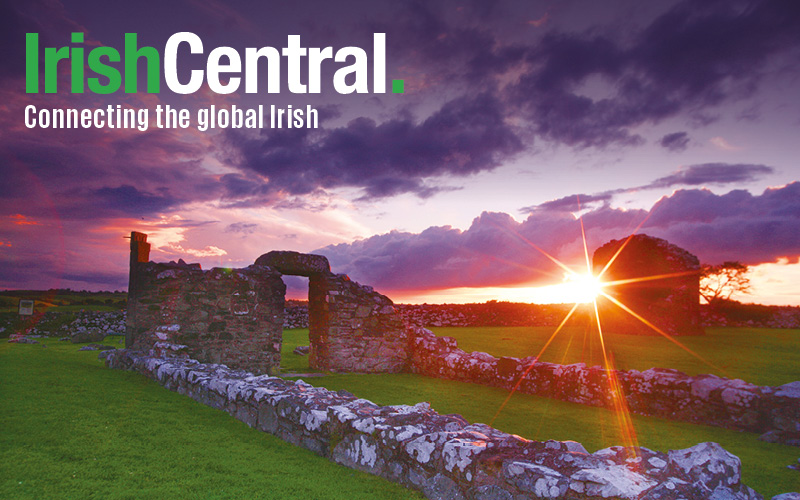
| St. Patrick’s Church, Wicklow Town |
Just 35% of Irish Catholics attend Mass on a weekly basis. 20% attend on Easter, Christmas and other special occasions. 5% never attend.
Moreover, the survey reveals that even self-identified Catholics no longer accept core tenets of Catholic teaching and practice. For 75%, church teachings on sex are irrelevant. 87% believe that priests should be able to marry and 77% believe that there should be woman priests.
While not dead and gone – 84% of Irish people still identified themselves as Catholics in the most recent census – Catholic Ireland is well and truly at its lowest ever ebb. In the wake of sexual abuse scandals, myriad instances of unforgivable behavior and countless other horrific events, it is no surprise that hundreds of thousands of erstwhile Irish Catholics have turned away from the Church. The Irish Catholic Church held nearly absolute power for too long and, in the eyes of many, became absolutely corrupt.
The Church still has its defenders in Ireland. One of them, David Quinn, head of the conservative Iona Institute, took to the pages of the Irish Independent to respond to the devastating findings of the survey. Quinn’s principal argument is that so many Catholics have turned against Church teaching on a wide array of issues because the Church has not adequately explained to her people the reasoning that underpins her teaching.
In support of his argument, Quinn writes that the Church should not and cannot change its teaching based on opinion polls. He points to the example of the Lutheran Churches of Scandinavia that did react to popular opinion. “Moving with the times,” he claims, has only driven down their numbers further.
---------------
Read more:
A priest accused - but is he innocent of the sexual abuse charges against him?
Beaten in Chicago - Natasha McShane now unable to speak or walk
---------------
Quinn makes a fair point when he states that it is folly for churches to be guided by the whims of public opinion. He is also probably right to imply that any ideological shift by the Roman Catholic Church is unlikely to bring Catholics back to Mass in numbers – here or elsewhere. But he is wrong to oppose change. Maintaining the present course is an untenable long-term strategy for a number of reasons. Additionally, he is naive to think that fuller explanation from the Vatican will assuage or mitigate dissension in the ranks. Two related questions immediately come to mind. Who in Ireland will listen? And who in Rome will they listen to?
These are matters that concern me deeply because I write from within. I am one of the 35%. I attend Mass every Sunday, and during the week from time to time. I still observe the now old-fashioned prohibition on eating meat on Ash Wednesday and on every Friday during Lent. More than anything else, however, I believe. I consider myself lucky to have this gift of faith. My faith sustains me.
Like most Catholics, especially those from conservative Catholic families like mine, I didn’t really have any choice about being brought into the religion. My attendance at Mass was the product of fear and coercion – I will admit that I feel a dreadful mixture of fear and guilt on those few occasions that I miss Mass even now – as a young Catholic. That youthful reluctance to attend Mass has been replaced by a more mature recognition that taking just one hour to pause and reflect each week is an opportunity, not a chore.
I find unique comfort and sanctuary in the undeniably repetitious rituals of the Mass and am often inspired by the heartfelt homilies delivered in my parish church, St. Patrick’s of Wicklow Town, by Father Tim Hannon. To me, Father Hannon’s simultaneously simple and profound faith represents the very best of the Catholic Church. He is a superb messenger of Jesus Christ’s extraordinary message.
Distinguishing the virtues of the message from the flaws of the messenger is something that all of us who remain practicing Catholics have had to do in recent years.
I’ve had to do it twice now. I am from the American epicenter of clerical sexual abuse, the Archdiocese of Boston, and now live in Ireland, where children were abused with impunity by priests in dioceses throughout the country. It is interesting to note that, in my experience, American Catholics have proven more willing and able to reconcile good with evil than Irish Catholics. Virtually all of my friends back in Boston remain observant Catholics; not one of my friends here in Ireland is. At any rate, to say that distinguishing between the messenger and the message has been difficult is an understatement of epic proportions.
But the ongoing process of making this distinction in my own mind has made me realize why David Quinn is wrong that the Church should continue to resist change and can justify persuasively this resistance with detailed explanations from the top down. The changes that this most recent survey shows an appetite for among Irish Catholics have almost nothing to do with the message. The changes wanted by the overwhelming majority of Catholics here in Ireland, and majorities of various sizes in countries around the world, have almost everything to do with the messenger.



Comments