The Wonderful Wizard of Oz is a modern fairy tale published in 1900, that was written by Frank Baum who loved editorial cartoons from the newspaper. He used the universal symbols of his day to create a contemporary fable that explains our own financial crisis.
Hurricanes (socio-economic upheaval like now), the Tin Man (working stiffs dependent on oil), the strawman (farmers), the Lion (populist leader), the wizard (the pinhead "in charge"), the Wicked Witch of the East (Wall Street banks), the Wicked Witch of the West (big oil & business) are but a few of the symbols Baum used from his imagination and the newspapers to create a fantasy where an American child could go into and fix the world of finance (Oz) that is causing her aunt and uncle such worry in the real world ("Main Street" or "Kansas"). Dorothy does this amazing thing by changing the way money is made. She kills the Wicked Witch of the East and takes her shoes. In the book the shoes are silver (money) and ruby in the movie for technicolor. The original is better.
If killing the witch seems extreme, in the context of American political cartoons it is not. The banking plutocrats were often depicted as vipers (in top hats) battling Andrew Jackson or populist heroes like him. ["The bank," Jackson told his vice president, "is trying to kill me, but I will kill it!,"--this captures the sentiment towards banks.] The vipers becames witches in Baum's fantasy of Oz.
Dorothy unmasks the wizard and helps him retire. This overthrow isn't violent. Our own system can be taken back on the back of the principles instituted after the original Revolutionary War. Nor does she kill the witches sadistically or even volitionally. White collar thieves are better "killed" with liquidation which is what "I'mm melting!" "I'm melting!" was all about.
Irish Americans have special access to the hidden meaning of the Wizard of Oz. Baum tells us the wizard's full name includes the first-name "Phadrig," Irish for Patrick. Irish Americans were central protagonists and pawns--on all sides--in the beginning of what is our modern oil-driven epoch that began around when Oz was written. By understanding our history and the foundations of our epoch, we can sort out the perrenial tricks that the establishment use to confuse, and thereby to steal our nations' wealth.
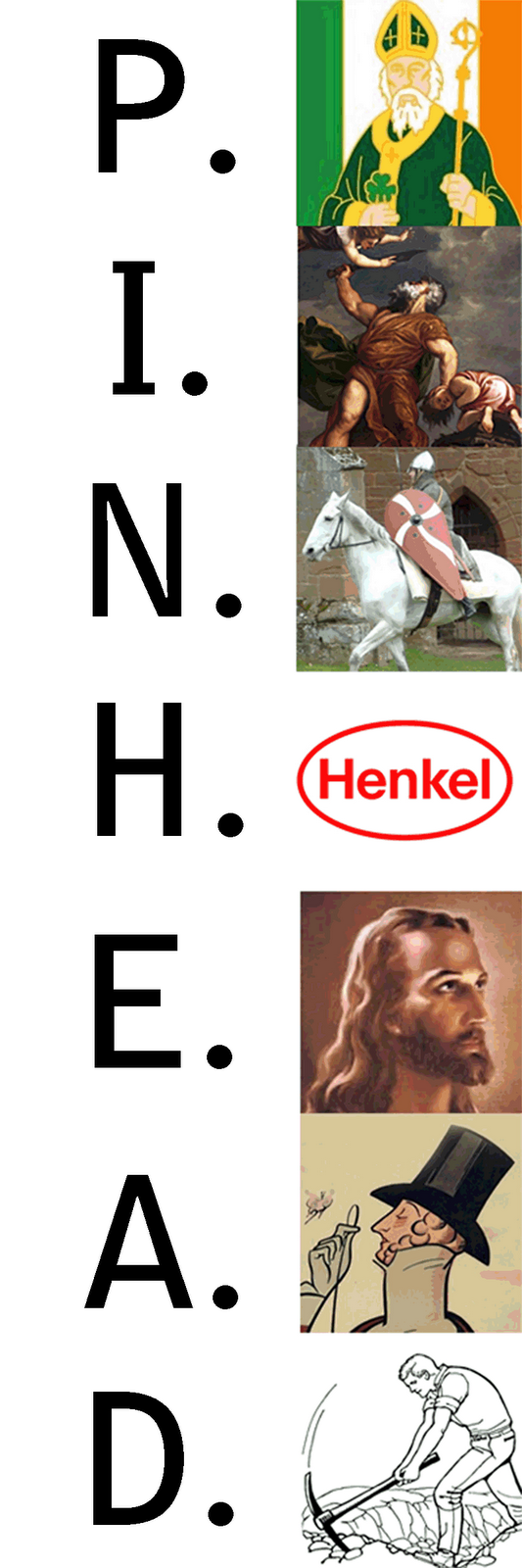
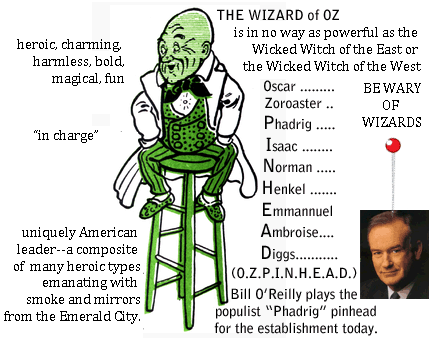
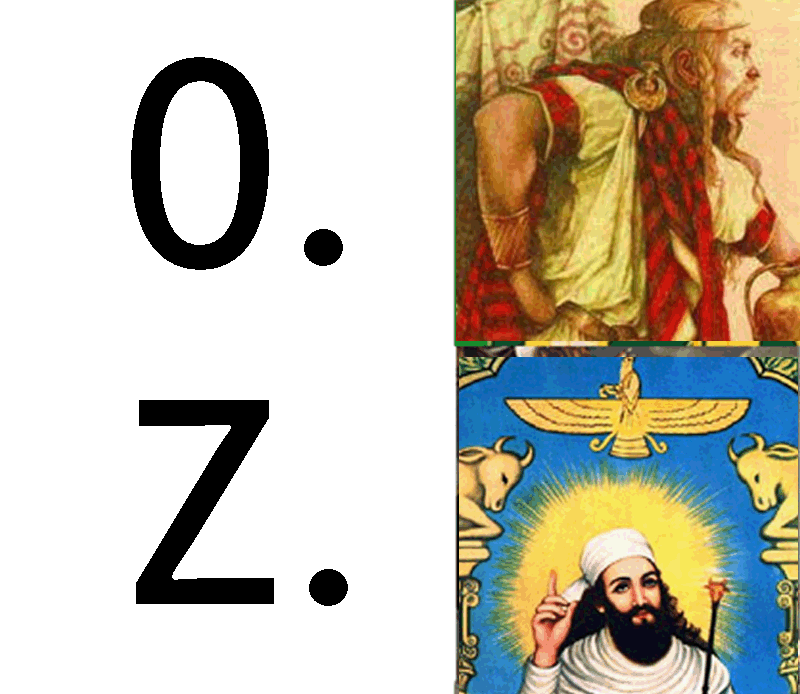
Frank Baum tells us in Dorothy and the Wizard in Oz that the The Wizard's full real name is Oscar Zoroaster (OZ) Phadrig Isaac Norman Henkel Emmannuel Ambroise Diggs or O.Z.P.I.N.H.E.A.D. for short. The name reveals how the wizard who uses charms and fears and trickery and magesterium to keep the people working like little elves, also wears the mask of immortal heroic leaders. The Wizard is the shining knight (Norman), the corporate saleman (Henkel), the messiah(Emmanuel/Jesus), the father who would sacrifice his son for God (Isaac), the knickerbocker (Ambroise), the tycoon (digger). We are to learn, the fable teaches, to see through this wizard and discover our own heart, our own mind, our own courage as the allegorical figures Tin Man, Scarecrow and Cowardly Lion must do. With that selfhood, we can figure out how money and power should be regulated by elected government--not by unelected and secretive bankers--for the good of society and freedom of its citizens.
Phádrig is the shepherd of the Irish often invoked by men seeking Irish votes, using Irish charms in the phenomenon of urban Irish political machines. Tammany Hall in New York and other such machines were in Baum's day engines that had created in America, The Emerald City--a fusion of Emerald Isle romance and urban American opportunity: the mosaics of New York subway, the skyscraper spanning the East River between Brooklyn and Manhattan, the Emerald City and its leprechaun-like wizard were metaphors for that maligned ethnic institution of early democracy that fought to create an American middle class out of Dickensian poverty.
Baum warns us that politicians will strip the mask of Patrick, as they do Jesus and the Texas cowboy and the Crusading knight, and wear this version of manly leadership to usher his flock to ends they will come to regret and should have predicted. The Irish politician in America will end up serving the plutocrats (as O'Reilly does Murdoch), and helping real authority--the witches. The witch will send plagues of flying monkeys and all sorts of hells against Dorothy and citizens like her trying to put power back into the hands or on the silver-clad feet of the people.
In the movie the Wizard's name is kept secret, and much of the allegory Baum created in the book was changed and obscured by Hollywood forty years later and much more so nowadays as the allegory's power is being discovered again and attempts to obscure it are being reknewed. In the book, the face of authority is a heroic mask (O.Z.P.I.N.H.E.A.D.) hiding a cute pip-squeak, such as Bill O'Reilly reveals himself to be in our own day. O'Reilly is a servant, just like the wizard, a shepherd for those that would follow the Phadrig hero archetype in the American soul.
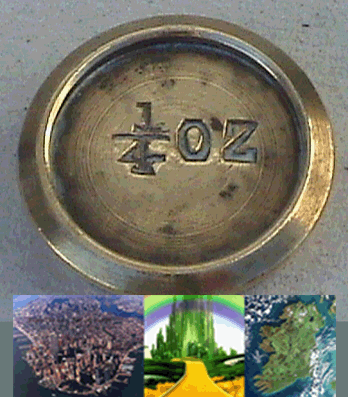
The Wizard of Oz in Baum's book is a changeling, sometimes a Giant head (Big Brother would be depicted by Orwell this way); sometimes a fireball (authority takes this form to shock and awe); sometimes a beautiful fairy--because the servant of authority is a changeling, a shape-shifter. OZ means "Oscar," from Celtic (Gaelic Irish) mythology popular among the ruling elites as a cover to wear like romantic costume, "Zoraster" from the occult a favorite religious passtime among the bored and super-rich, and "Oz," as in ounce, the unit of measurement associated with gold. Gold seems to contain the majestic romance and the sinister mystery associated with royalty, and Baum's Oz incorporates these aspects in the Hermes or leprechaun-like wizard of Oz who gives American urban power its magic. The Emerald City is a nod to the success of Irish America in translating Emerald Isle kitsch onto the streets of New York. The wizard represents the political power of society, which in America had become Irish-styled for a time, and now on Saint Patrick's Day and when a politician invokes JFK or talks to auto-workers or makes a kind but stinging quip to thwart an enemy worthy of Tip O'Neill or Ted Kennedy and Ronald Reagan too--not to mention that Chicago pol, Barack O'Bama (who paid-off the bankers in bailouts).
In order to get the people to follow the leader, the leader must exude qualities of heroism that can then be manipulated to lead people over cliffs. In economics this meant electing a politician that puts forward a gold standard and sinks everyone into desperation except the few who own gold. "16 to 1" or sixteen ounces of silver to one ounce of gold was a popular slogan in the day to get across the problem: gold is too scarce and gives the rich aristocratic rule, silver is more plentiful and more democratic while still keeping inflation checked. The problem was thought of in terms of metal in those days, and as our paper money become de-valued, the problem is arising anew.
Lincoln's greenback solution, the generation before Baum's, was to issue paper money without borrowing from the banks and without a metallic standard also. This is different from our paper money which is borrowed. Lincoln was prohibited from borrowing. He was shot amidst debates about returning us to debt-owed money after he won the war on credit-based money. We have been using debt-based currency since 1913, after much fighting to try and keep Lincoln's greenback in circulation.
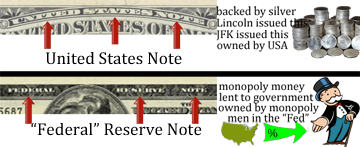
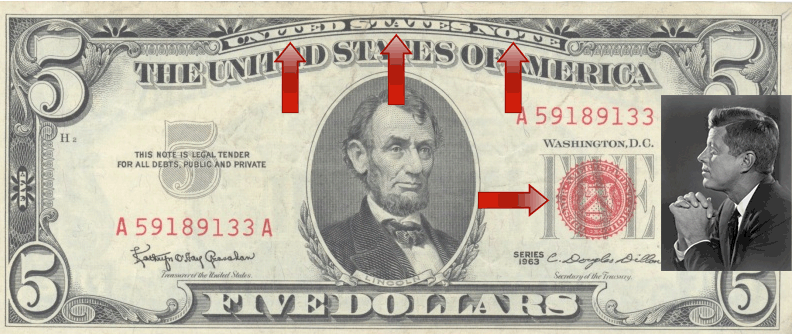
Kennedy resurrected silver-backed money just before he was shot. The history of money is fascinating, and has a bit of detail, like Catholic history, to keep the laymen confused--financial jargon is a Latin in that way. Cutting out the Federal Reserve and printing red-sealed greenbacks one last time was Kennedy's last great gift to the American people. The United States Note, silver money and the greenbacks no longer exist in the USA and were replaced with borrowed "federal" reserved notes--which are currently imploding as they do. The treasury only prints the notes, the mysterium that owns "The Fed" actually owns the notes, ridiculously renting them to the people of the United States, as Central Banks loan currency to nations everywhere. The system is rotten. Baum's fairy tale explains why and offers a fix-it.
The populist movement took place in that post-Civil War period, when the post-Famine Irish were becoming (Irish) Americans and populating the mid-west, discovering loads of silver and sometimes gold, which they would end up having confiscated from their descendants by government decree amidst yet another debt-based Depression. They were laborers and farmers, up against the banking interests of the East like JP Morgan, and the robber barons like Rockefeller, racing to monopolize the west from competitive aspiring class interests periodically starved of national currency, horded by the rich to maintain their power. The common people laboring soul-lessly (without a heart) in factories (tin men) and on farms (scarecrows doubting their own intelligence) were coming together not to follow the cowardly lion (the populist leader), but to follow Dorothy whose silver slippers let her go anywhere, even to the Emerald City, and behind the curtain there, where she will learn the wizard's secret of power.
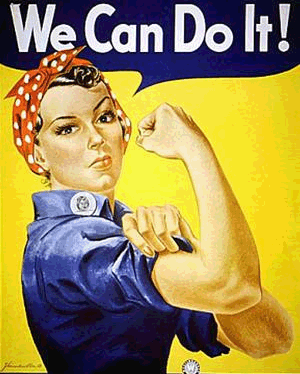
Dorothy is like Alice in Wonderland, but a feminist, and stronger, like an Irish girl (Gale is her family name). She's something like Orphan Annie, Mother Jones and roll up your sleeves Rosie. Baum's wife, Maud Gage, was very strong, and it is to her the book is dedicated. She kept things together in their life. Matilda, his beloved mother-in-law was a reknowned women's liberationist. In them, we know, his progressive politics were secure despite threats to his livelihood forcing him to create a more confusing public record of political stances. His own career of waffling and conflicting poltics is analogous to the cowardly lion, and to William Jennings Bryan in a way who lost the election to William McKinley and really needs someone like Dorothy to lead the leader. Incidentally, that does not mean Sarah Palin, though try as the Republicans might to tap into this great American female archetype of leadership, as they successfully stripped Phadrig from JFK for Reagan to act out in.
The Wizard of Oz represents the mystery of power, but specifically power based on politics in the city. The wizard exists within a much larger power environment (city within the nation) ruled by the witches (east and west) who have sway over metaphysical powers like money, and economic power. The wizard guards his secret of Oz, his secret of gold, but he does not wear the golden cap, the witch does, as she tries to wear the silver shoes except for Gale's revolution when their house landed on the witch beyond the rainbow. Dorothy is a yankee at Arthur's Court, she's Mr. Smith Goes to Washington. In the witch's death, she's storming the fantasy of power, and overthrowing it, to which the Munchkins, the little people, rechoice. The Wizard is less sinister, having stumbled upon his role it seems. He is not the all-authority, he exists within an authority ruled by witches as our own politicians are surrounded by a Praetorian guard owned by the establishment.
The wizard is transported home in a bubble of silken green, referring perhaps unfairly to Lincoln's greenbacks that were not backed by metal. Dorothy gets home in her silver shoes, because they can get her anywhere. The allusions to a bubble of green of different shades (denominations) some in a bag (of money) is common political cartoon parlance for inflation, and Baum is busy trying to present sound allegories for our times to sort through the economic arguments about the best way to print money in a society and keep it in check from over-inflation, without ending the middle class by making money too golden and exclusive. The chapter illustration from the book shows the inflation balloon going up in the air with the money man, (monopoly man in top hat) holding a bag of green strips of silk ("money").
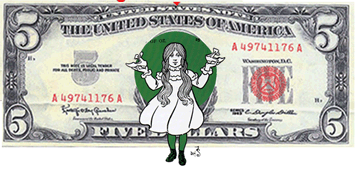
Today, money is becoming worthless inflated paper. Gold is back in the news for a reason. The old debate is back on what to do about money. The debate was alive and well in John F.Kennedy's day, and his issuance of silver-backed money--the "United States Note" was his way to counter the monopoly money we use called the "Federal Reserve Note." The red seal (ruby slippers fits nicely, coincidentally) on the bill indicates it is redeemable in silver; and much more importantly, that it is not just printed by the Treasury but owned by it. Our money (the red seal gone) is "Federal Reserve Notes" is printed by the Treasury but owned by the Fed, so the Treasury is renting our money at interest, and must pay it back with similar debt-notes, with interest. This is the inescapable debt-cycle a tiny few rich people use to rule the rest of us--national debt and taxes. The American Revolution happened in response to taxes and London's ending Colonial Scrip, a type of money based on credit not debt--a key fact we don't learn in our textbooks.
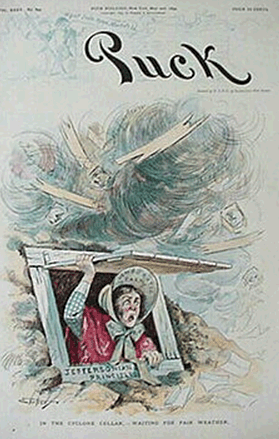
It was common for political cartoonists to represent socio-economic upheaval with a hurricane. Dorothy's Kansas was in dire straits as is the country again today. The vortex sweeping a Kansas farmer's house up and down as in a bubble of air as Baum describes it represents the volatility of the markets, housing markets, mortgages and all the evictions and homelessness that comes with these economic upheavals. When the house finally comes down, it lands on the Wicked Witch of the East.
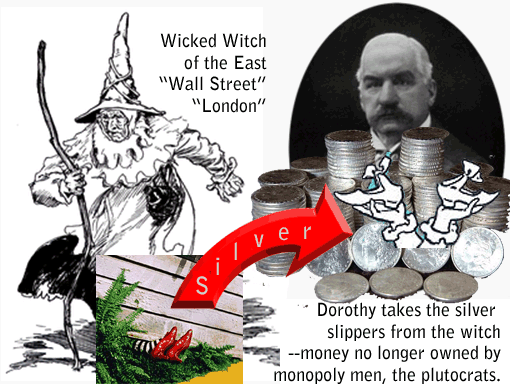
The Wicked Witch of the East is seen in the movie only as the feet of a corpse under the farm-house. She is wearing ruby slippers in the movie, and silver slippers in the book. The silver slippers are then taken from the witch, and Dorothy wears them, allowing her to go anywhere she wants, as silver-backed money, or better yet, greenback money, will give a nation debt-free money to grow and prosper. The hurricane represents a kind of successful social revolution that leaves the banking interests dead or without the power to own society's money, and Dorothy returns the power of banking to the people who can use the bi-metallic standard (gold and silver) to return to security.
Dorothy's trip down the gold road in silver slippers is a metaphor for the bi-metallic standard which at that time used precious metals to measure national money, and keep it from getting inflated, while keeping it plentiful enough so that "everyone" has some according to their productivity in an entrepreneurial economy. Under a strict gold standard, only the aristocratic few who are lucky enough to have gold, rule with it by loaning it out when they please through front organizations like the "federal" reserve. Silver is more plentiful, and was favored by democratic revolutionaries because it kept lots of money in circulation, but not so much that it was worthless. Paul Revere, the famous revolutionary of the American revolution was a silver smith.
The parallels with today are urgent. The banks own the corporations that tell us in the news that it's ok to bailout banks and empower them to order our society any further. Baum's is a fable that gets to the heart of banking power, and takes the populist stance in favor of liquidity for all in society--that nations need not borrow.
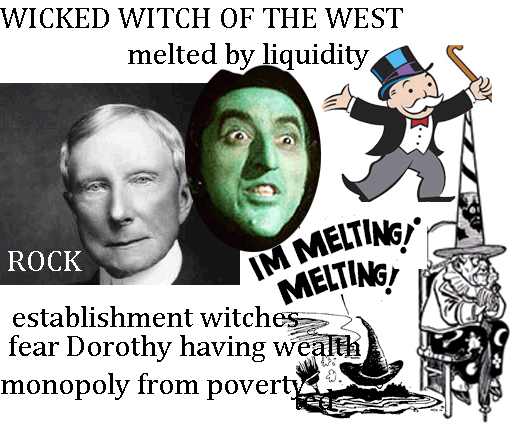
In Baum's day, the hated villain, the monopoly man stealing the nation's wealth to enrich himself, was the owner of Standard Oil (now Exxon)--Rockefeller. Rockefeller is the Wicked Witch of the West, expanding in to the American frontier, using all kinds of tricks to uproot people like the Gales from the land. There wasn't enough money in circulation for people to survive the "austerity measures" of the day. Foreclosures and crashing markets make everything delightfully cheap for monopolists to scoop up and hide in a million post-mortem foundation fronts. Rockefeller was able to buy-up everything in America, because he had no competition--the little guy--the Munchkins--couldn't make their own money--the Wicked Witch of the East had the silver slippers, control of the people's money supply. That is, until Dorothy Gale, and that is why the heroine is such a threat to the horders of national wealth.
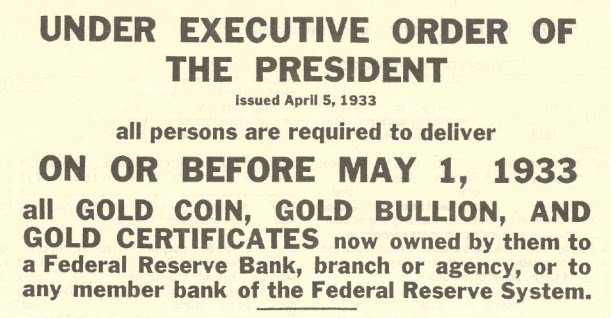
The slippers or silver shoes are "real." In 1933, the United States government literally confiscated every citizen's private stash of gold to pay off the bankers to ease the Depression. Citizens were promised access to silver certificates, money that could be redeemed for metal. Many of the Irish American fortunes that were made in the west in gold strikes were devastated, clipping the wings of vast sections of entrepreneurial Irish American prosperity as with every other group of Americans aspiring to compete with the plutocrats.
In a revolutionary fantasy, Dorothy awakes in the land of Oz, the liberator of the Munchkins, because her house has landed on the Wicked Witch of the East who controlled money in the form of the silver slippers and the gold cap--Baum's economic symbols are innumerable across his books, but the basic messages for sound money are clear. When Dorothy puts the silver slippers on her feet, she walks bi-metalically into the heart of social power, to unmask the wizard. Silver and gold (the bi-metal standard) means that money is both liquid because silver is plentiful, but measured because it is fixed to a finite metal. She will then go on to fight the monopolist Wicked Witch of the West who uses her Gold-cap power to threaten Dorothy's security with a whole series of plagues including flying monkeys. But Dorothy is a fighter and will win by retaining her silver shoes, and throwing liquidity or water into the hording witch's face. We suffer wars, terrorists, plagues and locusts while our money collapses, in order that it can collapse, because if we were not so distracted we would have time to figure these annoying (banker obfuscated) nuances out.
The Munchkins put it this way: "Ding-Dong! The Witch Is Dead." In reality, brief periods of liberty are interrupted by war and economic crashes orchestrated by the very-much living witches that rule our faith-in-economy.
When some cowardly lion actually wins and sets the American Republic (as all Republics should do) back on the course of economic freedom, that kind of leader is repeatedly assassinated.
That's why we must hope there is an economic awakening among working folk like the Gale family in Kansas, who will decide to make economic freedom the unifying cause. It's all about the money and not about stupid culture wars that mean nothing if we're living in our overlords' Depression, under the witch's Oppression. Everyday people have to go into the Emerald City, confront the emperor with no clothes, and take back for America the power of a country to own its own money rather than have to borrow it as we do now from a secretive (unaudited) cabal ("the Fed", the "IMF", Goldman Sachs, the big banks) of witches and their distracting servants (Bill O'Reilly and other fake hero patriot pinheads we see on TV)--the many many wizards of Oz.
Keep in touch with Brendan's work at GaelicGotham.com.
Hurricanes (socio-economic upheaval like now), the Tin Man (working stiffs dependent on oil), the strawman (farmers), the Lion (populist leader), the wizard (the pinhead "in charge"), the Wicked Witch of the East (Wall Street banks), the Wicked Witch of the West (big oil & business) are but a few of the symbols Baum used from his imagination and the newspapers to create a fantasy where an American child could go into and fix the world of finance (Oz) that is causing her aunt and uncle such worry in the real world ("Main Street" or "Kansas"). Dorothy does this amazing thing by changing the way money is made. She kills the Wicked Witch of the East and takes her shoes. In the book the shoes are silver (money) and ruby in the movie for technicolor. The original is better.
If killing the witch seems extreme, in the context of American political cartoons it is not. The banking plutocrats were often depicted as vipers (in top hats) battling Andrew Jackson or populist heroes like him. ["The bank," Jackson told his vice president, "is trying to kill me, but I will kill it!,"--this captures the sentiment towards banks.] The vipers becames witches in Baum's fantasy of Oz.
Dorothy unmasks the wizard and helps him retire. This overthrow isn't violent. Our own system can be taken back on the back of the principles instituted after the original Revolutionary War. Nor does she kill the witches sadistically or even volitionally. White collar thieves are better "killed" with liquidation which is what "I'mm melting!" "I'm melting!" was all about.
Irish Americans have special access to the hidden meaning of the Wizard of Oz. Baum tells us the wizard's full name includes the first-name "Phadrig," Irish for Patrick. Irish Americans were central protagonists and pawns--on all sides--in the beginning of what is our modern oil-driven epoch that began around when Oz was written. By understanding our history and the foundations of our epoch, we can sort out the perrenial tricks that the establishment use to confuse, and thereby to steal our nations' wealth.
Frank Baum tells us in Dorothy and the Wizard in Oz that the The Wizard's full real name is Oscar Zoroaster (OZ) Phadrig Isaac Norman Henkel Emmannuel Ambroise Diggs or O.Z.P.I.N.H.E.A.D. for short. The name reveals how the wizard who uses charms and fears and trickery and magesterium to keep the people working like little elves, also wears the mask of immortal heroic leaders. The Wizard is the shining knight (Norman), the corporate saleman (Henkel), the messiah(Emmanuel/Jesus), the father who would sacrifice his son for God (Isaac), the knickerbocker (Ambroise), the tycoon (digger). We are to learn, the fable teaches, to see through this wizard and discover our own heart, our own mind, our own courage as the allegorical figures Tin Man, Scarecrow and Cowardly Lion must do. With that selfhood, we can figure out how money and power should be regulated by elected government--not by unelected and secretive bankers--for the good of society and freedom of its citizens.
Phádrig is the shepherd of the Irish often invoked by men seeking Irish votes, using Irish charms in the phenomenon of urban Irish political machines. Tammany Hall in New York and other such machines were in Baum's day engines that had created in America, The Emerald City--a fusion of Emerald Isle romance and urban American opportunity: the mosaics of New York subway, the skyscraper spanning the East River between Brooklyn and Manhattan, the Emerald City and its leprechaun-like wizard were metaphors for that maligned ethnic institution of early democracy that fought to create an American middle class out of Dickensian poverty.
Baum warns us that politicians will strip the mask of Patrick, as they do Jesus and the Texas cowboy and the Crusading knight, and wear this version of manly leadership to usher his flock to ends they will come to regret and should have predicted. The Irish politician in America will end up serving the plutocrats (as O'Reilly does Murdoch), and helping real authority--the witches. The witch will send plagues of flying monkeys and all sorts of hells against Dorothy and citizens like her trying to put power back into the hands or on the silver-clad feet of the people.
In the movie the Wizard's name is kept secret, and much of the allegory Baum created in the book was changed and obscured by Hollywood forty years later and much more so nowadays as the allegory's power is being discovered again and attempts to obscure it are being reknewed. In the book, the face of authority is a heroic mask (O.Z.P.I.N.H.E.A.D.) hiding a cute pip-squeak, such as Bill O'Reilly reveals himself to be in our own day. O'Reilly is a servant, just like the wizard, a shepherd for those that would follow the Phadrig hero archetype in the American soul.
The Wizard of Oz in Baum's book is a changeling, sometimes a Giant head (Big Brother would be depicted by Orwell this way); sometimes a fireball (authority takes this form to shock and awe); sometimes a beautiful fairy--because the servant of authority is a changeling, a shape-shifter. OZ means "Oscar," from Celtic (Gaelic Irish) mythology popular among the ruling elites as a cover to wear like romantic costume, "Zoraster" from the occult a favorite religious passtime among the bored and super-rich, and "Oz," as in ounce, the unit of measurement associated with gold. Gold seems to contain the majestic romance and the sinister mystery associated with royalty, and Baum's Oz incorporates these aspects in the Hermes or leprechaun-like wizard of Oz who gives American urban power its magic. The Emerald City is a nod to the success of Irish America in translating Emerald Isle kitsch onto the streets of New York. The wizard represents the political power of society, which in America had become Irish-styled for a time, and now on Saint Patrick's Day and when a politician invokes JFK or talks to auto-workers or makes a kind but stinging quip to thwart an enemy worthy of Tip O'Neill or Ted Kennedy and Ronald Reagan too--not to mention that Chicago pol, Barack O'Bama (who paid-off the bankers in bailouts).
In order to get the people to follow the leader, the leader must exude qualities of heroism that can then be manipulated to lead people over cliffs. In economics this meant electing a politician that puts forward a gold standard and sinks everyone into desperation except the few who own gold. "16 to 1" or sixteen ounces of silver to one ounce of gold was a popular slogan in the day to get across the problem: gold is too scarce and gives the rich aristocratic rule, silver is more plentiful and more democratic while still keeping inflation checked. The problem was thought of in terms of metal in those days, and as our paper money become de-valued, the problem is arising anew.
Lincoln's greenback solution, the generation before Baum's, was to issue paper money without borrowing from the banks and without a metallic standard also. This is different from our paper money which is borrowed. Lincoln was prohibited from borrowing. He was shot amidst debates about returning us to debt-owed money after he won the war on credit-based money. We have been using debt-based currency since 1913, after much fighting to try and keep Lincoln's greenback in circulation.
Kennedy resurrected silver-backed money just before he was shot. The history of money is fascinating, and has a bit of detail, like Catholic history, to keep the laymen confused--financial jargon is a Latin in that way. Cutting out the Federal Reserve and printing red-sealed greenbacks one last time was Kennedy's last great gift to the American people. The United States Note, silver money and the greenbacks no longer exist in the USA and were replaced with borrowed "federal" reserved notes--which are currently imploding as they do. The treasury only prints the notes, the mysterium that owns "The Fed" actually owns the notes, ridiculously renting them to the people of the United States, as Central Banks loan currency to nations everywhere. The system is rotten. Baum's fairy tale explains why and offers a fix-it.
The populist movement took place in that post-Civil War period, when the post-Famine Irish were becoming (Irish) Americans and populating the mid-west, discovering loads of silver and sometimes gold, which they would end up having confiscated from their descendants by government decree amidst yet another debt-based Depression. They were laborers and farmers, up against the banking interests of the East like JP Morgan, and the robber barons like Rockefeller, racing to monopolize the west from competitive aspiring class interests periodically starved of national currency, horded by the rich to maintain their power. The common people laboring soul-lessly (without a heart) in factories (tin men) and on farms (scarecrows doubting their own intelligence) were coming together not to follow the cowardly lion (the populist leader), but to follow Dorothy whose silver slippers let her go anywhere, even to the Emerald City, and behind the curtain there, where she will learn the wizard's secret of power.
Dorothy is like Alice in Wonderland, but a feminist, and stronger, like an Irish girl (Gale is her family name). She's something like Orphan Annie, Mother Jones and roll up your sleeves Rosie. Baum's wife, Maud Gage, was very strong, and it is to her the book is dedicated. She kept things together in their life. Matilda, his beloved mother-in-law was a reknowned women's liberationist. In them, we know, his progressive politics were secure despite threats to his livelihood forcing him to create a more confusing public record of political stances. His own career of waffling and conflicting poltics is analogous to the cowardly lion, and to William Jennings Bryan in a way who lost the election to William McKinley and really needs someone like Dorothy to lead the leader. Incidentally, that does not mean Sarah Palin, though try as the Republicans might to tap into this great American female archetype of leadership, as they successfully stripped Phadrig from JFK for Reagan to act out in.
The Wizard of Oz represents the mystery of power, but specifically power based on politics in the city. The wizard exists within a much larger power environment (city within the nation) ruled by the witches (east and west) who have sway over metaphysical powers like money, and economic power. The wizard guards his secret of Oz, his secret of gold, but he does not wear the golden cap, the witch does, as she tries to wear the silver shoes except for Gale's revolution when their house landed on the witch beyond the rainbow. Dorothy is a yankee at Arthur's Court, she's Mr. Smith Goes to Washington. In the witch's death, she's storming the fantasy of power, and overthrowing it, to which the Munchkins, the little people, rechoice. The Wizard is less sinister, having stumbled upon his role it seems. He is not the all-authority, he exists within an authority ruled by witches as our own politicians are surrounded by a Praetorian guard owned by the establishment.
The wizard is transported home in a bubble of silken green, referring perhaps unfairly to Lincoln's greenbacks that were not backed by metal. Dorothy gets home in her silver shoes, because they can get her anywhere. The allusions to a bubble of green of different shades (denominations) some in a bag (of money) is common political cartoon parlance for inflation, and Baum is busy trying to present sound allegories for our times to sort through the economic arguments about the best way to print money in a society and keep it in check from over-inflation, without ending the middle class by making money too golden and exclusive. The chapter illustration from the book shows the inflation balloon going up in the air with the money man, (monopoly man in top hat) holding a bag of green strips of silk ("money").
Today, money is becoming worthless inflated paper. Gold is back in the news for a reason. The old debate is back on what to do about money. The debate was alive and well in John F.Kennedy's day, and his issuance of silver-backed money--the "United States Note" was his way to counter the monopoly money we use called the "Federal Reserve Note." The red seal (ruby slippers fits nicely, coincidentally) on the bill indicates it is redeemable in silver; and much more importantly, that it is not just printed by the Treasury but owned by it. Our money (the red seal gone) is "Federal Reserve Notes" is printed by the Treasury but owned by the Fed, so the Treasury is renting our money at interest, and must pay it back with similar debt-notes, with interest. This is the inescapable debt-cycle a tiny few rich people use to rule the rest of us--national debt and taxes. The American Revolution happened in response to taxes and London's ending Colonial Scrip, a type of money based on credit not debt--a key fact we don't learn in our textbooks.
It was common for political cartoonists to represent socio-economic upheaval with a hurricane. Dorothy's Kansas was in dire straits as is the country again today. The vortex sweeping a Kansas farmer's house up and down as in a bubble of air as Baum describes it represents the volatility of the markets, housing markets, mortgages and all the evictions and homelessness that comes with these economic upheavals. When the house finally comes down, it lands on the Wicked Witch of the East.
The Wicked Witch of the East is seen in the movie only as the feet of a corpse under the farm-house. She is wearing ruby slippers in the movie, and silver slippers in the book. The silver slippers are then taken from the witch, and Dorothy wears them, allowing her to go anywhere she wants, as silver-backed money, or better yet, greenback money, will give a nation debt-free money to grow and prosper. The hurricane represents a kind of successful social revolution that leaves the banking interests dead or without the power to own society's money, and Dorothy returns the power of banking to the people who can use the bi-metallic standard (gold and silver) to return to security.
Dorothy's trip down the gold road in silver slippers is a metaphor for the bi-metallic standard which at that time used precious metals to measure national money, and keep it from getting inflated, while keeping it plentiful enough so that "everyone" has some according to their productivity in an entrepreneurial economy. Under a strict gold standard, only the aristocratic few who are lucky enough to have gold, rule with it by loaning it out when they please through front organizations like the "federal" reserve. Silver is more plentiful, and was favored by democratic revolutionaries because it kept lots of money in circulation, but not so much that it was worthless. Paul Revere, the famous revolutionary of the American revolution was a silver smith.
The parallels with today are urgent. The banks own the corporations that tell us in the news that it's ok to bailout banks and empower them to order our society any further. Baum's is a fable that gets to the heart of banking power, and takes the populist stance in favor of liquidity for all in society--that nations need not borrow.
In Baum's day, the hated villain, the monopoly man stealing the nation's wealth to enrich himself, was the owner of Standard Oil (now Exxon)--Rockefeller. Rockefeller is the Wicked Witch of the West, expanding in to the American frontier, using all kinds of tricks to uproot people like the Gales from the land. There wasn't enough money in circulation for people to survive the "austerity measures" of the day. Foreclosures and crashing markets make everything delightfully cheap for monopolists to scoop up and hide in a million post-mortem foundation fronts. Rockefeller was able to buy-up everything in America, because he had no competition--the little guy--the Munchkins--couldn't make their own money--the Wicked Witch of the East had the silver slippers, control of the people's money supply. That is, until Dorothy Gale, and that is why the heroine is such a threat to the horders of national wealth.
The slippers or silver shoes are "real." In 1933, the United States government literally confiscated every citizen's private stash of gold to pay off the bankers to ease the Depression. Citizens were promised access to silver certificates, money that could be redeemed for metal. Many of the Irish American fortunes that were made in the west in gold strikes were devastated, clipping the wings of vast sections of entrepreneurial Irish American prosperity as with every other group of Americans aspiring to compete with the plutocrats.
In a revolutionary fantasy, Dorothy awakes in the land of Oz, the liberator of the Munchkins, because her house has landed on the Wicked Witch of the East who controlled money in the form of the silver slippers and the gold cap--Baum's economic symbols are innumerable across his books, but the basic messages for sound money are clear. When Dorothy puts the silver slippers on her feet, she walks bi-metalically into the heart of social power, to unmask the wizard. Silver and gold (the bi-metal standard) means that money is both liquid because silver is plentiful, but measured because it is fixed to a finite metal. She will then go on to fight the monopolist Wicked Witch of the West who uses her Gold-cap power to threaten Dorothy's security with a whole series of plagues including flying monkeys. But Dorothy is a fighter and will win by retaining her silver shoes, and throwing liquidity or water into the hording witch's face. We suffer wars, terrorists, plagues and locusts while our money collapses, in order that it can collapse, because if we were not so distracted we would have time to figure these annoying (banker obfuscated) nuances out.
The Munchkins put it this way: "Ding-Dong! The Witch Is Dead." In reality, brief periods of liberty are interrupted by war and economic crashes orchestrated by the very-much living witches that rule our faith-in-economy.
When some cowardly lion actually wins and sets the American Republic (as all Republics should do) back on the course of economic freedom, that kind of leader is repeatedly assassinated.
That's why we must hope there is an economic awakening among working folk like the Gale family in Kansas, who will decide to make economic freedom the unifying cause. It's all about the money and not about stupid culture wars that mean nothing if we're living in our overlords' Depression, under the witch's Oppression. Everyday people have to go into the Emerald City, confront the emperor with no clothes, and take back for America the power of a country to own its own money rather than have to borrow it as we do now from a secretive (unaudited) cabal ("the Fed", the "IMF", Goldman Sachs, the big banks) of witches and their distracting servants (Bill O'Reilly and other fake hero patriot pinheads we see on TV)--the many many wizards of Oz.
Keep in touch with Brendan's work at GaelicGotham.com.




Comments