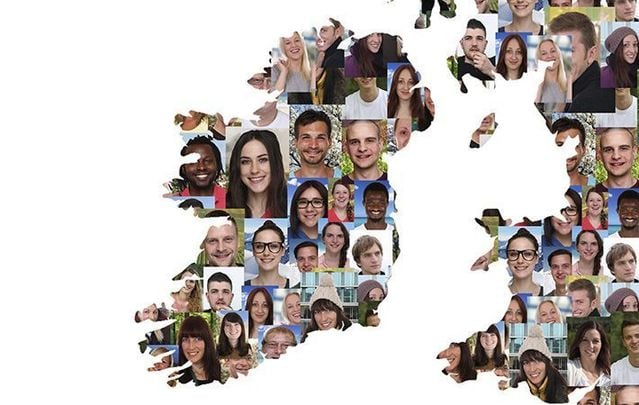
IrishCentral has put together a list of the top 100 common Irish surnames with a little explanation of where these names come from.
If your name does not appear in this list, you may find it in our comprehensive list of the 300 most common Irish surnames and their meanings.
From Aherne to Whelan, here is our top 100 Irish names:
Aherne, Ó hEachtighearna / Ó hEachthairn
In Irish, Ó hEachtighearna / Ó hEachthairn, can possibly mean "lord of horses". Originally Dalcassian, this sept migrated from east Clare to Co. Cork. In County Waterford, the English name Hearn is a synonym of Hearn.
MacAleese, Mac Giolla Íosa
In Irish, Mac Giolla Íosa means "son of the devotee of Jesus"—the name of a prominent Derry sept. There are many variants of the name, such as MacIliese, MacLeese, MacLice, MacLise, etc. The best-known of this spelling, the painter Daniel MacLise, was a member of a Scottish Highland family known as MacLeish, which settled in Cork.
Allen, Ó hAillín
This name is usually of Scottish or English origin, but in Offaly and Tipperary it has sometimes been anglicized as Allen or Hallion. Occasionally, Allen is also found as a synonym of Hallinan in Co. Tipperary. As Alleyn, it occurs frequently in medieval Anglo-Irish records. The English name Allen is derived from a Welsh saint's name.
MacAteer, Mac an tSaoir
Meaning "saor" or "craftsman". An Ulster name for which the Scottish MacIntyre, of similar derivation, is widely substituted. Ballymacateer is a place-name in Co. Armagh, which is its homeland. Mac an tSaoir is sometimes anglicized as Wright in Fermanagh.
MacAuley, Awley
There are two distinct septs of this name, viz. MacAmhalghaidh of Offaly and West Meath, and the more numerous MacAmhlaoibh, a branch of the MacGuires, which, as MacAmhlaoibh, gives the form Gawley in Connacht. Both are derived from personal names. The latter must not be confused with MacAuliffe.
MacAuliffe, Mac Amhlaoibh
An important branch of the McCarthys, whose chief was seated at Castle MacAuliffe. The name is almost peculiar to south-west Munster.
Barry, de Barra
The majority of these names are of Norman origin, i.e, de Barr (a place in Wales); they became completely hibernicized. Though still more numerous in Munster than elsewhere, the name is widespread throughout Ireland. Barry is also the anglicized form of Ó Báire (see under Barr) and Ó Beargha (meaning "spear-like", according to Woulfe), a small sept of Co. Limerick.
Blake, deBláca (more correctly le Bláca)
One of the "Tribes of Galway", an epithet name meaning "black", which superseded the original Cadell. They are descended from Richard Caddell, Sheriff of Connacht in 1303. They became and long remained very extensive landowners in Co. Galway. The branch settled in Co. Kildare, where their name is perpetuated in three townlands called Blakestown.
Read more
Brennan, Ó Braonáin
The word "braon" has several meanings, possibly "sorrow" in this case. It is the name of four unrelated septs, located in Ossory (or Osraige, present-day County Kilkenny and western County Laois), east Galway, Kerry, and Westmeath. The name of the County Fermanagh sept of Ó Branáin was also anglicized as Brennan and Brannan.
O'Brien, Ó Briain
A Dalcassian sept, named after the historical importance of the family of King Brian Boru. Now very numerous in other provinces as well as Munster, being the fifth most numerous name in Ireland. In some cases, O'Brien has been made a synonym of O'Byrne and others of the Norman Bryan.
Browne, De Brún
More correctly le Brún ("brown"). One of the Tribes of Galway. Other vital families of Browne were established in Ireland from the Anglo-Norman invasion onwards. The Browns of Killarney, who arrived in the sixteenth century, intermarried with the leading Irish families and were noted for their survival as extensive Catholic landowners throughout the Penal Laws (the Kenmare associated with their name is in Co. Limerick). The Browne family shown on the map in Co. Limerick is of Camus and of earlier introduction. Yet another critical family of the name was the Neales of Co. Mayo. In that county, Browne has also been used as a synonym of (O) Bruen.
Burk, de Burgh, de Búrca
This is one of the most important and most numerous Hiberno-Norman names. First identified with Connacht, it is now numerous in all the provinces (least in Ulster). Many sub-septs of it were formed, including MacHugo, MacGibbon, Mac Seoinín (Jennings), MacRedmond, etc.
Butler
Always called deBuitléir in Irish, though it is of course properly le Butler, not de. It is one of the great Norman-Anglo names, which, however, did not soon become hibernicized like the Burkes, etc. Historically, it is mainly identified with the Ormond country. It is now very numerous in all the provinces except Ulster.
MacCabe, Mac Cába
A galloglass (from Irish: "gall óglaigh", meaning "foreign warriors") family, with the O'Reillys and the O'Rourkes, which became a recognized Breffny sept. Woulfe suggests "cába" ("cape"), a surname or nickname. Having regard to their origin, it is more likely that they are from a non-Gaelic personal name.
Callaghan, Ó Ceallacháin
The derivation from "ceallach", meaning "strife", which is usually given, is questioned, but no acceptable alternative has been suggested. The eponymous ancestor, in this case, was Ceallacháin, King of Munster (d. 952). The sept was important in the present Co. Cork until the seventeenth century, and the name is still very numerous there. The chief family was transplanted under the Cromwellian regime to east Clare, where the village of O'Callghan's Mills is called after them.
Campbell, Mac Cathmhaoil
From Irish "cathmhaoil", meaning "battle chief". An Irish sept in Tyrone; in Donegal, it is usually of Scottish galloglass origin, viz. Mac Ailínis a branch of the clan Campbell (whose name is from "cam béal", meaning "crooked mouth"). Many Campbells are of more recent Scottish immigrants. See MacCawell. The name has been abbreviated to Camp and even Kemp in Co. Cavan.
MacCarthy, Mac Ćarthaigh
Meaning "son of Cárthach", from Irish "cárthach" - "loving". The chief family of the Eoghanacht and one of the leading septs of Munster, prominent in Irish history from the earliest times to the present. MacCarthy is the most numerous "Mac" name in Ireland.
Cassidy, Ó Caiside
A Fermanagh family of ollavs (professors or learned men) and physicians to the Maguires. Now numerous in all the provinces except Connacht.
Clery, Cleary, Ó Cléirigh
From Irish "cléireach", meaning "clerk". One of the earliest hereditary surnames. Initially, of Kilmacduagh (Co. Galway), the sept was dispersed and after the thirteenth century settled in several parts of the country; the most essential branch was in Donegal, where they became notable as poets and antiquaries. In modern times, the name is found mainly in Munster and Dublin.
O'Connor, Ó Conchobhair
The names of six distinct and important septs. In Connacht, there were O'Connor and O'Conor Don (of whom was the last High King of Ireland), with its branches O'Conor Roe and O'Conor Sligo; Also O'Conor Faly (i.e., of Offaly), O'Connor Kerry, and O'Connor of Corcomroe (north Clare). The prefix, "O", formerly widely discarded, has been generally resumed. Similarly, the variant from Connors has been O'Connor again.
(O) Conroy, Conree, Conary, Conry
These mainly Connacht names, owing to the similarity of the anglicized forms, have become virtually indistinguishable. They represent four Gaelic originals, viz. Mac Conraoi (Galway and Clare), Ó Conraoi (Galway), Ó Conaire (Munster), and Ó Maolchonaire (an important literary family of Co. Roscommon).
Cooney, Ó Cuana
Originally from Tyrone, this family later migrated to north Connacht. The Cooneys of east Clare and south-east Galway may be of a different origin. (For the probable derivation, see Coonan.)
MacCormack, Cormick, Mac Cormaic
This name, just like MacCormican, is formed from the forename Cormac. It is numerous throughout all the provinces, the spelling MacCormick being more usual in Ulster. For the most part, it originated as a simple patronymic; the only recognized sept of the name was of the Fermanagh-Longford area. Many of the MacCormac(k) families of Ulster are of Scottish origin, being a branch of the clan Buchanan-MacCormick of MacLaine.
Daly, Dawley, Ó Dálaigh
From Irish "dálach" or "dáil", meaning "assembly". One of the greatest names in Irish literature. Originally from West Meath, with sub-septs in several different localities. As with Desmond, it appears in the records as early as 1165; it is probable that this was a distinct sept.
Darcy, Ó Dorchaidhe
From "dacha", meaning "dark" in Irish. One of the "Tribes of Galway", also anglicized as Dorsey, it is the name of two septs, one in Mayo and Galway, the other in Co. Wexford.
(O) Delaney, Ó Dubhshláine
Meaning "descendant of Dubhshláine" or "Dubhshláinge" ("black of the Slaney"). The prefix "O" has been completely discarded in the anglicized form of the name. It appears as Delane in Mayo. Both now and in the past, it is of Leix (County Laois) and Kilkenny.
(O) Dempsey, Ó Díomasaigh
From Irish "díomasach", meaning "proud". A powerful sept in Clanmalier. O'Dempsey was one of the very few chiefs who defeated Strongbow in battle. Many of his successors distinguished themselves as Irish patriots, and they were ruined as a result of their loyalty to James II. The name is now numerous in all the provinces.
Disney
Derived from a French place-name, Isigny-sur-Mer, and written D'Isigny initially, "from Isigny", the name Disney occurs quite frequently in the records of several Irish counties in the south and midlands since the first half of the seventeenth century.
(O) Dolan, Ó Dúbhláin
The generally accepted form in Irish today is Ó Dúbhláin (mod. Ó Dúláin) as given by Woulfe and others. O'Dolean, later Dolan, derives from Ó Dobhailen, the name of a family on record since the twelfth century in the baronies of Clonmacnowen, Co. Galway, and Athlone, Co. Roscommon, in the heart of the Uí Mainecountry and quite distinct from Ó Doibhilin (Devlin). There has been a movement north-eastwards so that now the name Dolan is numerous in Co. Leitrim, Fermanagh, and Cavan as well as Co. Galway and Roscommon.
Mac Donagh, Mac Donnchadha
Meaning "son of Donagh". A branch of the MacDermots of Connacht, where the name is very numerous. In Connemara, the name is usually that of a branch of the O'Flahertys. The MacDonagh sept in Co. Cork was a branch of the McCarthys: the name is now rare there, and apparently many of these resumed the name MacCarthy.
O'Donnell, Ó Domhnaill
The main sept, one of the most famous in Irish history, especially in the seventeenth century, is of Tirconnell; another is of Thomond, and a third of the Uí Maine (Hy Many, in Co. Galway).
(O) Donoghue, Donohoe, Ó Donnchadha
An important sept in Desmond: where the name was perpetuated in the territory called Onaght O'Donoghue. There were also two others in Counties Galway and Cavan, where the spelling Donohoe is usual. According to Dr. John Ryan, there was another O'Donoghue sept in Co. Tipperary of Eoghanacht descent.
O'Dowd, Dowda, Doody, Duddy
This is one of the 'O' names with which the prefix has been widely retained, O'Dowd being more usual than Dowd. Other modern variants are O'Dowdy and Dowds, with Doody, another synonym, found around Killarney. O'Dowd, which comes from Ó Dubhda, which means "black" or "dark complexioned", was first found in county Mayo. A branch settled in Kerry, where they are called Doody. Another small sept of Ó Dubhda is in Co. Derry, and they are usually Duddy now.
Doyle, Ó Dubhghaill, MacDowell, Mac Dowell, Mac Dubhghaill
Meaning "descendant of Dubhghaill ("dark stranger")". This is the Irish form of the name of the Scottish family of Macdugall, which came from the Hebrides of galloglasses, and settled in Co. Roscommon, where Lismacdowell locates them. Doyle, rarely found as O'Doyle in modern times, ranks high among Irish surnames by numerical strength, holding the twelfth place with approximately 21,000 people out of a population of less than 4 million. Though now widely distributed, it was once most closely associated with the counties of southeast Leinster (Wicklow, Wexford, and Carlow) in which it is chiefly found today, and in the records of the fifteenth, sixteenth, and seventeenth centuries.
(O) Duffy, Ó Dubhthaigh
Duffy or O'Duffy is a common name in all of the provinces except Munster. Modern statistics show that it is now the most numerous name in Co. Monaghan.
(O) Dwyer, Ó Duibhir
From "dubh" and "odhar", gen. "uidhir", meaning "duncoloured". Of Kilnamanagha, a leading sept in mid-Tipperary. A great name, resistant to English domination.
Mac Fadden, Fayden, Mac Pháidín
From "Paídí n", a diminutive of Pádraig or Patrick. An Ulster name, of both Scottish and Irish origin. Without the "Mac", it is found in Mayo.
Fanning, Fannin, Fainín
A Name of Norman origin, prominent in Co. Limerick, where Fanningstown, formerly of Ballyfanning, indicates the location. They were formerly of Ballingarry, Co. Tipperary, where in the fifteenth century the head of the family was, like Irish chiefs, officially described as "captain of his nation". Fannin is a variant.
Fitzgerald, Mac Gerailt
One of the two greatest families, which came to Ireland as a result of the Anglo-Norman invasion. It had two main divisions, Desmond (of whom are the holders of the ancient titles Knight of Kerry and Knight of Glin); and Kildare, whose leaders held almost regal sway up to the time of the Rebellion of Silken Thomas and the execution of Henry VIII of Thomas and his near relatives in 1537. The bane is now very numerous.
Fitzpatrick, Mac Giolla Phádraig
Meaning "devotee of St. Patrick". The only Fitz name of Gaelic-Irish origin, the leading sept being located in Ossory (or Osraige, present-day County Kilkenny and western County Laois). The name is also numerous in Fermanagh, where families so called are said to be of MacGuire stock.
O'Flaherty, Laverty
From "Flaithbhertaig", meaning "bright leader". The O'Flahertys possessed the territory on the east side of Lough Corrib until the 13th century, when, under pressure from the Anglo-Norman invasion into Connacht, they moved westwards to the other side of the lake and became established there. The head of the sept was known as Lord of Moycullen and as Lord of Iar-Connacht, which, at its largest, extended from Killary Harbour to the Bay of Galway and included the Aran Islands.
Flanagan, Ó Flannagáin
From "flann", meaning "ruddy" or "red". Of the several septs of the name, that of Connacht is the most important: their chief ranked as one of the "royal lords" under O'Connor, King of Connacht.
Flood
Some Floods are of English extraction, but in Ireland they are plainly Ó Maoltuile or Mac Maoltuile, abbreviated to Mac an Tuile and Mac Tuile anglicized MacAtilla or MacTully as well as Flood. Tuile means "flood" but probably it is here for "toile", gen. of "toil" or "will", i.e. the "will of God". In parts of Ulster, "Flood" is used for the Welsh "Floyd". (Welsh llwyd. Grey).
(O) Flynn, Flyng, Ó Floinn
Another name derived from "flann", meaning "ruddy". This numerous and widespread name originated in several places, including Kerry and Clare. Of the two in Co. Cork, one was a branch of the Corca Laoidhe, the other, the lords of Muskerylinn (Muiscre Uí Fhloinn); in north Connacht the O’Flynns were leading men under the royal O’Connors, and there was also an erenagh family there; while further west on the shores of Lough Conn, another distinct erenagh family was located. For the name in Ulster is an indigenous sept.
(O) Gallagher, Ó Gallchobhair
This name, from "gallchobhar" (meaning "foreign help"), has at least 23 variant spellings in anglicized forms, several of which begin with Gol rather than Gal. It is that of one of the principal septs of Donegal.
MacGowan, Mac an Ghabhann, Mac Gabhann
In Co. Cavan, the homeland of this sept, the name has been widely changed by translation to Smith (though Smithson was a more accurate translation); but in outlying areas of Breffny MacGowan is retained.
(O) Grady, Ó Grádaigh
From "gráda", meaning "illustrious". A Dalcassian sept. The leading family went to Co. Limerick, but the majority are still in Clare, where the prefix "O" is retained more than anywhere else. A vital branch changed its name to Brady in the late sixteenth century. The well-known name Grady has to a large extent absorbed the rarer Gready, which is appropriately a Mayo name. This resulted in the name of Grady being numerous in north Connacht and adjacent areas of Ulster.
MacGrath, Magrath, Mac Graith, Mag Raith
Derived from the personal name, which in this case is Craith, not Raith. The name of two distinct septs; namely (i) that of Thomond, who supplied hereditary ollamhs in poetry to the O'Briens, a branch of whom migrated to Co. Wexford; and (ii) of Termon MacGrath in north-west Ulster, a co-arb family. MacGrath is often called MacGraw in Co. Down and MacGragh in Donegal.
(O) Hagan, Ó hÁgáin
It is reasonably well established that this name was originally Ó hÓgáin (from "óg", meaning "young"). It is that of a critical Ulster sept: the leading family was of Tullahogue. Ó hAodhagáin, also anglicized O'Hagan, is said to be a distinct sept of Oriel, but owing to the proximity of Co. Tyrone and Armagh, they are now indistinguishable. The Offaly name mentioned by Woulfe is now extinct or has been absorbed by the Egan name in Leinster.
Hanlon, Ó hAluain
Possibly from "luan", meaning "champion", and intensified by "an". One of the most important of the septs of Ulster. The present association of the name with West Munster is of comparatively recent inception.
O'Hara, Ó hEaghra
An essential dual sept located in Co. Sligo, the chiefs being O'Hara Boy ("buidhe") and O'Hara Reagh ("riabhach"). A branch migrated to the glens of Antrim.
(O) Healy, Hely
This is Ó hÉalaighthe in Munster, sometimes anglicized Healihy, and ÓhÉilidhe in north Connacht, derived respectively from words meaning "ingenious" and "claimant". Ballyhelyon Lough Arrow was the seat of the altar. The Munster sept was located in Donoughmore, Co. Cork, from which the title was conferred on the Protestant branch.
(O) Heaney, Heeney
The Principal sept of this name is Ó hÉighnigh in Irish, and is essential and widespread in Oriel, formerly extending its influence into Fermanagh. Hegney is a variant. Another family named Ulster were erenaghs of Banagher in Co. Derry. Minor septs of Ó hÉanna (Éanna, old form of Enda), also anglicized Heaney, were of some note in Clare, Limerick, and Mayo up to the seventeenth century.
(O) Higgins, Ó hUigín
From an Old-Irish word akin to Viking, not from "uige". A sept of the southern Uí Néill, which migrated to Connacht. The O'Higgins father and son of South American fame came from Ballinary, Co. Sligo, not Ballina.
(O) Hogan, Ó hÓgain
Hogan comes from "og", meaning "young". Three septs are so called: one is Dalcassian, and one of Lower Dormond (sometimes regarded as the same); there is also one of the Corca Laoidhe.
Joyce
Though not Gaelic and sometimes found in England of non-Irish origin, Joyce may indeed be regarded as a proper Irish name, and more particularly a Connacht one. The first Joyce to come to Ireland of whom there is an authentic record was Thomas de Jorse or Joyce, stated by Mac Firbis (Dubhaltach Mac Fhirbhisigh) to be a Welshman, who in 1283 married the daughter of O'Briend, Prince of Thomond, and went with her by sea to Co. Galway.
Kane, O Cahan, Ó Catháin
As lords of Keenaght, the O'Kanes were a leading sept in Ulster up to the time of the plantation of Ulster. The name is still very numerous in its original homeland.
Keating
One of the earliest Hibernicized Anglo-Norman families, whose name was Gaelicized Ćeitinn. They settled in South Leinster. The historian Dr. Geoffrey Keating was of Co. Tipperary. The name with the prefix "Mac" is associated exclusively with the Downpatrick area, where MacKetian is a synonym of it. The theory that Keating is derived from Mac Eitienne is improbable. Woulfe makes it toponymic. The most acceptable suggestion is that it is from Cethyn, a Welsh personal name.
(O) Kelly, Ó Ceallaigh
The derivation of Kelly is uncertain: the most probable suggestion is that it is from "ceallach", meaning "strife". The most important and numerous sept of this name is that of the Uí Maine. Kelly is the second most common name in Ireland. In 1890, less than one percent of them had the prefix "O", but this has been to some extent resumed.
Mac Kenna, Kennagh, Mac Cionaoith
A branch of the southern Uí Neill, mainly located in Co. Monaghan, where they were lords of Truagh; the name is now fairly numerous in Leinster and Munster as well. Locally in Clare and Kelly, the last syllable is stressed, yielding variants such as Kennaw, Ginna, Gna, etc.
Kennedy, Ó Cinnéide
From Irish "ceann", meaning "head", and "éidigh" - ugly. An important Dalcassian sept of east Clare, which settled in north Tipperary and spread thence as far as Wexford, whence came the family of President J.F. Kennedy. The Scottish Kennedys are of remote Irish Gaelic origin.
Lawless, Laighléis
From the Old English "laghles", meaning "outlaw". The name, introduced into Ireland after the Anglo-Norman invasion, is now numerous in Counties Dublin and Galway. It was one of the "Tribes of Kilkenny", but has no close association with the city now.
(O) Leahy, Ó Laochdha
From Iris "laochda", meaning "heroic". This name is very numerous in Munster but not elsewhere. It is, basically, distinct from Lahy, though they have been used synonymously.
(O) Leary, Ó Laoghaire
Laoghaire was one of the best-known personal names of Ancient Ireland. A sept of the Corca Laoidhe established in Muskerry, of importance in all fields of national activity, especially in literature, and in the military sphere, both at home and as the Wild Geese.
(O) Lennon, Lenna, Ó Leannáin, Linnane, Leonard, Linnegar, MacAlinion
Possibly from "leann", meaning "a cloak" or "mantle"; "leanán", meaning "paramour", has also been suggested. This is the name of several distinct septs located respectively in Counties Cork, Fermanagh, and Galway. The latter is of the Sodhan pre-Gaelic stock. The Fermanagh family were erenaghs of Lisgoole. Ó Leannáin is also used as a synonym of Lineen (Ó Luinín), another Fermanagh erenagh family. Further confusion arises from the fact that these have been widely changed to the English name Leonard.
Mac Loughlin, Mac Lochlainn
From a Norse personal name. Of Inishowen. A senior branch of the Northern Uí Néill. They lost their early importance as a leading sept of Tirconnell in the thirteenth century, but are still very numerous in their original homeland - Counties Donegal and Derry - where their name is usually spelt MacLaughlin; MacLoughlin, also numerous, is more widespread. Minor septs in Connacht were akin to the MacDermota and the O'Connors.
Mac Mahon, Mac Mathghamhna, mod. Mac Mathúna
From "mathghamhan", meaning "bear". The names of two septs, both of importance. That of Thomond descends from Mahon O'Brien, grandson of Brian Ború. MacMahon is now the most numerous name in Co. Clare. In later times, the majority of the many of the name were from Co. Monaghan, where McMahons are numerous today, though less so in Thomond (present-day County Clare and County Limerick).
(O) Malley, Mailey, Ó Máille
From "meall", meaning "peasant" in Irish. A branch of the Cenél Eoghain was located in Tyrone, where their territory was known as "O'Mellan's Country". They were hereditary keepers of the Bell of St. Patrick.
(O) Malone, Ó Maoileoin
Although Malone is a genuine 'O' name, being in Irish Ó Maoileoin (meaning "descendant of the follower of St. John"), it is never met with in English with its prefix. The Malones are an ancient sept, associated with the O'Connors of Connacht, and for centuries their principal family was associated with the Abbey of Clonmacnoise, to which they furnished many abbots and bishops. For a time, Clonmacnoise was an independent see ("see", i.e., the place in which a cathedral church stands, identified as the seat of authority of a bishop or archbishop). Before being united with Ardagh.
(O) Meara, Mara, Ó Meadhra
From "meadhar", meaning "merry". This well-known sept, which has produced many distinguished men and women, gave its name to the village of Toomevara in their homeland. This is one of the few "O" names, from which the prefix was never very widely dropped.
Molloy, Mulloy, Ó Maolmmhuaidh
The adjective "muadh", denotes "bit" and "soft", as well "noble"—an essential part of Fercal in mid-Leister. Molly is an anglicized form of Ó Maolaoidh. Apart from five variant spellings, such as Maloy and Mulloy, Molloy has been officially recorded as a synonym of Mulvogue (Connacht), Logue (Co. Donegal), Mullock (Offaly), Mulvihill (Kerry), and Slowey (Co. Monaghan). At the same time, Maloy has been used for MacCloy in Co. Derry.
(O) Moran
Apart from MacMorran of Fermanagh, which has inevitably been changed to Moran, there are a number of distinct septs of Ó Moráin and Ó Moghrain, whose name is anglicized Moran. Four of these are of Connacht - in which province the name is much more numerous than elsewhere - located initially (a) at Elphin in Co. Roscommon (akin to the O'Connors), (b) in Co. Leitrim (of the Muinitir Eolais), (c) in. Co. Mayo at Ardanee, (d) in Co. Galway, a minor branch of the Uí Maine. The Leitrim families are also called Morahan, as is the fifth to be enumerated, namely that of Offaly, where Morrin is a synonym.
Moynihan, Ó Muimhneacháin, Muimhneach
Meaning "descendant of Muimhneacháin" ("Munsterman"). Although there was a small sept of this name, sometimes changed to Munster, in Mayo, families so called belong almost exclusively to south-west Munster, Moynihan being very numerous on the borders of two counties. Minihan, another form of the name, is mainly found in Cork.
(O) Mulligan, Ó Maolagáin
Probably a diminutive of "maol" (see MacMullen). An important sept in Donegal, much reduced at the time of the Plantation of Ulster and now found more in Co. Mayo and Monaghan.
(O) Murphy, Ó Murchadh
Murphy is the most common name in Ireland. The resumption of the prefixes "O" and "Mac", a modern tendency in most Gaelic-Irish names, has not occurred in the case of Murphy.
(Mac) Nally, Mac Anally, Mac an Fhailghih
From "failgheach", meaning "poor man. Without the prefix "Mac", this name is now found mainly in Mayo and Roscommon; with the "Mac", it belongs to Oriel (Airgíalla in Irish, an ancient kingdom in northeast Ireland). Woulfe says that the Mayo Nallys are of Norman or Welsh origin and acquired a Gaelic name. This is unlikely in the case of the MacNallys of Ulster, as there they are often called Mac Con Ulaidh ("son of the hound of Ulidia", i.e., eastern Ulster). In the "census" of 1659, it appears as MacAnully, MacEnolly, MacNally, and Knally, all in Oriel or in counties adjacent thereto.
Mac Namara, Mac Conmara
Meaning "hound of the sea". The most important sept of the Dál gCais (Dalcassians) after the O'Briens, to whom they were marshals.
O'Neill
O'Neill is one of the proudest Irish names. It means "descended from Niall" - one of the great early Irish chieftains, Niall of the Nine Hostages. "Niall" can mean "passionate" or "champion".
(O) Nolan, Knowlan, Ó Nualláin
From "nuall", meaning "shout". In early times, holding hereditary office under the Kings of Leinster, the chief of this sept was known as Prince of the Foherta, i.e., the Barony of Forth, in the present county of Carlow, where the name was and still is numerous. A branch migrated to East Connacht and Co. Longford. In Roscommon and Mayo, Nolan is used synonymously with Holohan (from the genitive plural); and in Fermanagh as an Anglicized form of ÓhUltacháin (Hultaghan). There was also a sept named Corca Laoidhe, which is now well represented in Co. Kerry.
Prendergast, de Priondragás
One of the powerful families that came to Ireland at the time of the Anglo-Norman invasion. They are still found mainly in the places of their original settlement. Some of those in Mayo assumed the name FitzMaurice.
MacQuaid, Quade, Mac Uaid
Meaning "son of Wat". A well-known name in Co. Monaghan and adjacent areas. Without the prefix "Mac", the name is also found in Co. Limerick.
(O) Quinn
Quinn is one of the most numerous Irish surnames; the number of people in Ireland so called at the present day is estimated at 17,000; in the list of most familiar surnames, it occupies twentieth place in the country as a whole and first place in Co. Tyrone, though widespread in many counties. Tyrone is the place of origin of one of the five distinct septs of this name. The Gaelic form is Ó Cuinn, which means "descendant of Conn".
(O) Rafferty, Ó Raithbheartaigh, mod. Ó Raifeartaigh
Though etymologically this name (from "rath bheartach", meaning "prosperity wielder") is distinct from Ó Robhartaigh (from "robharta", meaning "full tide") anglicized O'Roarty, these two names have been treated as one, at least since the fifteenth century. As co-arbs of St. Columcille on Tory Island, Roarty is now mainly in Co. Donegal, while Rafferty is of Co. Tyrone and Co. Lough.
(O) Rahilly, Ó Raithile
This well-known Munster family originated as a branch of the Cenél Eoghain in Ulster, but has long been closely associated with west Munster. The poet Egan O'Rahilly, for example, was a Kerryman.
Redmond, Réamonn
A Hiberno-Norman family of importance throughout Irish history. They are associated almost entirely with South Wexford. The branch of the MacMurroughs in the north of that county, some of whom adopted the name of Redmond, whose chief was called Mac Davymore, is pretty distinct from the MacRedmonds.
(O) Regan, Ó Riagain
Ó Réagain is used in County Waterford. There are three sects with this name. That shown as of Leix (Co. Laois) was in the early times one of the "Tribes of Tara". The eponymous ancestors of the Thomond sept were akin to Brian Boru. The third was akin to the MacCarthys.
(O) Reilly, Ó Raghailligh
One of the most numerous names in Ireland, especially so in Co. Cavan. The prefix "O" has been widely retained in the anglicized form. The head of this critical sept was Chief Breffny O'Reilly.
(O) Riordan, Rearden, Ó Riordáin
This numerous sept belongs exclusively to Munster; the earlier form of Ó Rioghbhardáin reveals its derivation from "riogh bhard", meaning "royal bard" in Irish.
(O) Rooney, Ó Ruanaidh
Originating in Co. Down, where Ballyroney is located, this name is now numerous in all of the provinces, except Munster. In West Ulster and north Connacht, Rooney is often an abbreviation of Mulrooney.
Ryan, (O) Mulrian
Ryan is amongst the ten most common surnames in Ireland, with an estimated population of 27,500. Only a tiny proportion of these use the prefix 'O'. Subject to one exception, to be noticed later in this section, it is safe to say that the great majority of the twenty-seven thousand five hundred Ryans are really O'Mulryans. This earlier form of the name is, however, now almost obsolete. First found in Tipperary.
(O) Shea, Shee, Ó Séaghdha; mod. Ó Sé
From "séaghdha", meaning "hawklike", secondary meaning "stately". Primarily a Kerry sept, but (as in Shee) it is notable as the only Gaelic-Irish name among "the Tribes of Kilkenny", to which county and Co. Tipperary a branch of the sept migrated in the thirteenth century.
(O) Sheehan, Sheahan, Ó Síodhacháin
The obvious derivation from "síodhach", meaning "peaceful", is not accepted by some Celtic scholars. The Dalcassian sept, which spread southwards, accounts for the majority of Sheehans, who are now very numerous in Counties Cork, Kerry, and Limerick. Formerly, there was also a Uí Maine sept of this name, which, however, is rarely found in Connacht today.
(O) Slattery, Ó Slatara, Ó Slatraigh
From "slatra", meaning "strong". Of Ballyslatterly in east Clare. The name has now spread to the adjacent counties of Munster.
Smith, Smyth
When not the name of an English settler family, Smith is usually a synonym of MacGowan, nearly always so in Co. Cavan.
(Mac) Spillan(e), Mac Spealáin
Sometimes appearing as a derivation of O'Spillane, this family name is, however, quite distinct from Ó Spealáin (O'Spillane). Spollan and Spollin, rarely retaining the prefix Mac, are numerous in County Offaly. Older anglicized forms were Spalane and Spalon.
(O) Sullivan, Ó Súileabhain
While there is no doubt that the basic word is "súil" ("eye"), there is a disagreement as to the meaning of the last part of the name. This is the most numerous surname in Munster and is third in all of Ireland. Initially in south Tipperary, the O'Sullivans were forced westwards by the Anglo-Norman invasion, where they became one of the leading septs of the Munster Eoghanacht. There were several sub-septs, of which O'Sullican Mor and O'Sullivan Baere were the most important.
(Mac) Sweeney, Swiney, Mac Suibhne
The word "suibhne" denotes "peasant", the opposite of "diubhneI". Of all galloglass origins, it was not until the fourteenth century that the three great Tirconnell septs of MacSweeney were established; more than a century later, a branch went to Munster.
(O) Tierney, Ó Tighearnaigh
From "tighearna", meaning "lord" in Irish. There were three septs of this name, in Donegal, Mayo, and Westmeath, but it is now scattered. It is often confused with Tiernan in Mayo. In southern Ulster, this name is usually of a different origin, namely Mac Giolla Tighearnaigh, which was formerly also anglicized MacIltierney.
Walsh, Ó Breathnach
Ó Breathnach, meaning "Breton," "Welshman," or "Foreigner", which is re-anglicized also as Brannagh, Brannick, etc. A name given independently to many unconnected families in different parts of the country, and now the fourth most numerous of all Irish surnames. It is sometimes spelt Welsh, which is the pronunciation of Walsh in Munster and Connacht.
(O) Whelan, Ó Faoláin
From Irish "faol", meaning "wolf". A variant form of Phelan is numerous across the country, from Co. Tipperary to Co. Wexford. Whelan is also sometimes an abbreviation of Whelehan and occasionally a synonym of Hyland. Whelan is rare in Ulster.
* Originally published in 2011 and updated in 2025.
Comments