roots


Top ten weird and wonderful facts about St. Patrick’s Day and the patron saint

The relics, celebrations and the saint himself - the inside scoop on facts you might not know


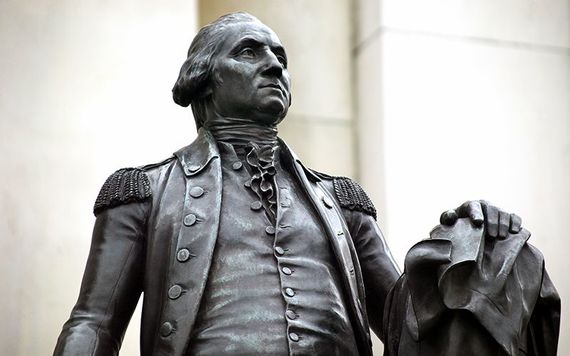
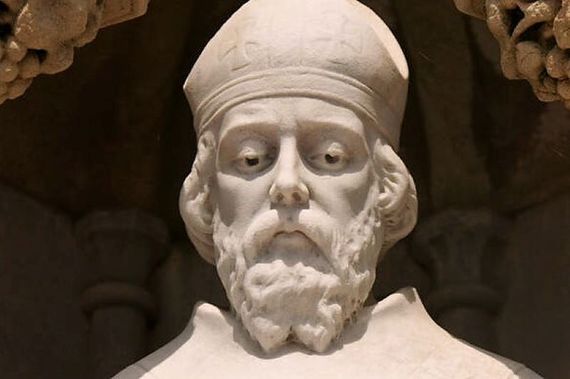
Artist's impression of Saint Patrick to go with some weird and crazy facts about the Irish national holiday
Photo by Google Images

Guinness PubFinder Ad

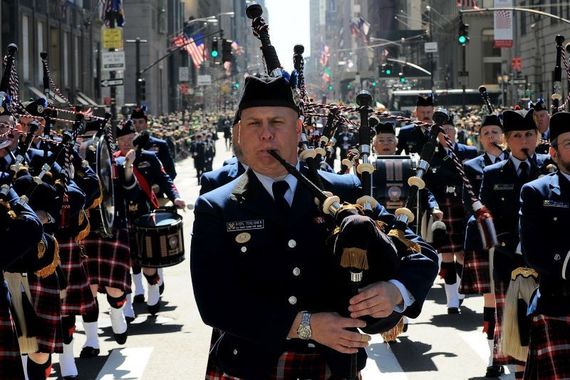
1. The Irish can’t claim credit for the invention of the Saint Patrick’s Day Parade

The world’s first recorded Saint Patrick's Day Parade took place in Boston on 18 March 1737 followed by the New York Parade, which first took place in 1762.

Ireland took over a century to jump on the parade float with the rest of the world and only had their first St. Patrick’s Day Parade in Dublin in 1931.
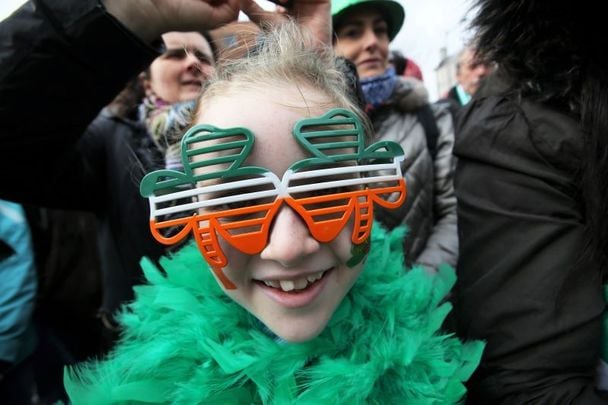
2. This St. Patrick’s Day we’ll all be wearing green, but shouldn’t it be blue??

The original color associated with St. Patrick was blue but because the Saint preached about the Holy Trinity through the symbol of the shamrock and the Irish ‘little folk’ were also associated with green, it became the most common shade in connection with him.

Parade committee organizers across the world wouldn’t take too kindly to us changing the colour now, so maybe we’ll leave it at green.

3. 100 lbs. of green dye was poured into the Chicago River in honor of St. Patrick’s Day

In 1961, business manager of Chicago’s Journeymen Plumbers Local Union, Stephen Bailey, received permission to turn the Chicago River green for St. Patrick’s Day.

Due to uncertainties about the amount of dye it would take to turn the river green, a massive 100 lbs of vegetable dye was used in comparison to the 25 lbs used today.

The Chicago River stayed green for a full week.

4. Saint Patrick banished the Snakes from Ireland

… and not a snake in sight. Patrick is said to have banished the snakes from Ireland but in fact, Ireland never had any snakes as the weather was too miserable for the cold-blooded reptiles.

The banished snakes were thought to be symbolic of the pagan druid priests with whom Patrick might have had a few issues to iron out.

5. George Washington ordered that “St. Patrick” be the response to the password “Boston” on Evacuation Day

On Evacuation Day, March 17 1776, the General Orders issued by Washington were that those wishing to pass through Continental lines should give the password “Boston,” to which the reply should be “St. Patrick”.

6. The resting place of Saint Patrick

Though never fully proven, Down Cathedral in the town of Downpatrick, Ireland, is thought to contain St. Patrick’s remains and, according to legend, he lies beside Saints Columcille and Brigit.

Apparently he’s missing a few things like a jaw and a tooth but these can be seen in Dublin Museum.

7. Saint Patrick’s Relics

A few of the Saint’s relics can still be viewed in Ireland today: St. Patrick’s Bell and shrines of the Saint’s jaw and tooth can be viewed in Dublin National Museum while Patrick’s four gospels are held at the The Royal Irish Academy.

Saint Patrick’s Crozier, with which he banished the imaginary snakes, was venerated for centuries in Dublins Christ Church only to be publically burned in 1538 under the orders of the archbishop, George Browne.


See more: St Patrick's Day , Irish Top Ten , Irish Roots , Irish History
Nster.com


20 Comments

See all comments

Number 5 reminds me of a TV news item I say in the spring of 1986, which stated that the Irish language was widely used by Irishmen in Washington's army at Valley Forge.In early 1962 I was the Duty NCO for my company of marines at Camp Lejune, N.C. and my Tennessian buddy who loved Irish music was my assistant. We placed a record player on the balcony upstairs in our barracks and played Irish records for about 2 hours- no one objected.
Stevenstar - Take your meds now; there's a good lad.
@@@@@anglo-norman | Mar 12, 2013, 01:40 PM EDT >>>>>>> FOR A MOMENT I WAS WONDERING WHAT THE DREADFUL SMELL IN HERE WAS AND THEN I REALISED IT WAS YOU AGAIN !!! YUCK !!! YUCK !!! YUCK !
@@Smyrnian | Mar 12, 2013, 04:19 PM EDT ?>>>>>>>> GREAT EXCELLENT NOW DO US ALL A FAVOUR MATE AND STAY THERE ...!! CHEERS !!
At least one of these comments reminds me of an article I read in an NYC Irish newspaper about 20 years ago. It told how a group of Children from the U.S. were denigraded and ridiculed by people in Ireland for conversing in Irish. Their Irish hosts thought there was no need to use this language in Ireland, much less in the U.S. For the past 2 decades, I and my wife (a New England Methodist) exchange cúpla focal Gaeilge gach lá. Does this mean that the Politically Correct in Ireland do NOT have a Céad Mile Fáilte for us?
STEVENSTAR - Wrong yet again. I am Irish born and probably lived more years in Ireland than you are alive. I have an Irish passport. I have a home in Ireland. I pay taxes in Ireland. I don't have a great auntie Mary. I don't have any Boston relatives. I am not obsessed and fanatical about Irish people because I AM one. I told you all this before. Have you no ability to process and retain information or are you so clouded with your anti-American obsession the facts escape you? Get a grip on yourself man and please don't be skippin g your meds....it shows.
Anglo-norman- I agree 100% Stevenstar statement makes little sense and he has done nothing but embarrass himself
@@Smyrnian | Mar 11, 2013, 06:02 PM EDT Stevenstar - The US is a multicultural society and Irish ethnicity is strongly represented in the population. People with Irish forebears celebrate their ethnicity, of which St. Patrick's day is a part. Get it now??? >>>>>>> THERE ARE NEARLY 1 MILLION IRISH BORN PEOPLE LLIVING IN ENGLAND AND GOD KNOWS HOW MANY MORE IN AUSTRALIA AND CANADA .. SO WHY DO YOU THINK ITS COOL TO BE SO FANATICAL AND OBSESSED WITH IRISH PEOPLE JUST BECAUSE YOUR GREAT AUNTY MARY LEFT HERE 100 YEARS AGO TO WORK IN BOSTON ?? YOUR AMERICAN BE PROUD TO BE AMERICAN FOR GODS SAKE... PEOPLE ARE ONLY LAUGHING AT YOU PEOPLE .. GET IT NOW?
@@@anglo-norman | Mar 12, 2013, 03:53 AM EDT StevenStar- Better a circus act than a puke & piss fest son..>>>>>>>>>>>DO YOU NOT HAVE A JOB MATE ? YOUR ON HERE POSTING YOUR BITTER COMMENTS MORNING NOON AND NIGHT ? GET A LIFE AND STOP POSTING SILLY COMMMENTS..AND SPREADING YOUR BITTTERNESS ITS NOT COOL !!
Recent research (Marcus Losack, 2012) indicates that Patrick, was most likely from Brittany, France, even though his family was from Wales or Scotland (which at the time was Wales). The family estate n Brittany was sacked and his parents were killed. Patrick was then taken as a slave, probably to Co, Antrim.
Green, White and Orange flag: One account has it that the firtst time a military force used this flag was in the late 1860s, when a unit of Fenian soldiers, many of whom were Civil War veterans, invaded Canada in the hopes of conquering a hunk of what then considered British territory and ransom it for Irish independence.
Stevenstar - The US is a multicultural society and Irish ethnicity is strongly represented in the population. People with Irish forebears celebrate their ethnicity, of which St. Patrick's day is a part. Get it now???
forgedinulster.blogspot.co.uk/2012/03/ulster-scots-held-first-st-patricks-day.html
It is not know if the foreign religious fanatic for whom the day is named was Welsh or French. He is credited with establishing a foreign religion that became so embedded and politically powerful that it's uniformed members have been raping children ever since and mostly getting away with it. The more dedicated native acolytes act as traitors working as agents on behalf of a Mafia of sinister male virgins in Rome. For this they can sometimes received medals or titles but mostly just some mumbo jumbo promise of a reward from an invisible man after they die.
The tradition of a parade in honour of "St" Pa at the instigation of the Irish Protestant organisation The Knights of St. Patrick. The inaugural parade took place on 17 March 1783. In what has been describe as an act of cultural re-orientation the British established a new focus of ritual and spectacle in the figure of St. Patrick, a pre-reformation saint who appealed to both the Roman Catholic and Irish Protestant traditions in Ireland (Cullen, 1997, p.67) Guarding the inaugural procession were the mainly Protestant Volunteers who were charged with keeping order on the streets and at the service in the Protestant St. Patrick's Cathedral. It supposedly commemorates Saint Patrick (c. AD 387–461), the most commonly recognised of the patron saints of Ireland, and the arrival of Christianity in Ireland.[1] It is observed by the Catholic Church, the Anglican Communion (especially the Church of Ireland),[3] the Eastern Orthodox Church and Lutheran Church. Saint Patrick's Day was made an official feast day in the early seventeenth century, and has gradually become a secular celebration of Irish culture in general.[4]


Log into IrishCentral with your Facebook account


or sign-in directly

E-Mail:
Password:
 Remember me Forgot my password
Not a member? Register Now!
print this article Print
email this articleE-mail