roots


Top ten words invented in Ireland - useful for St. Patrick’s Day

Well-known words that come from the Emerald Isle


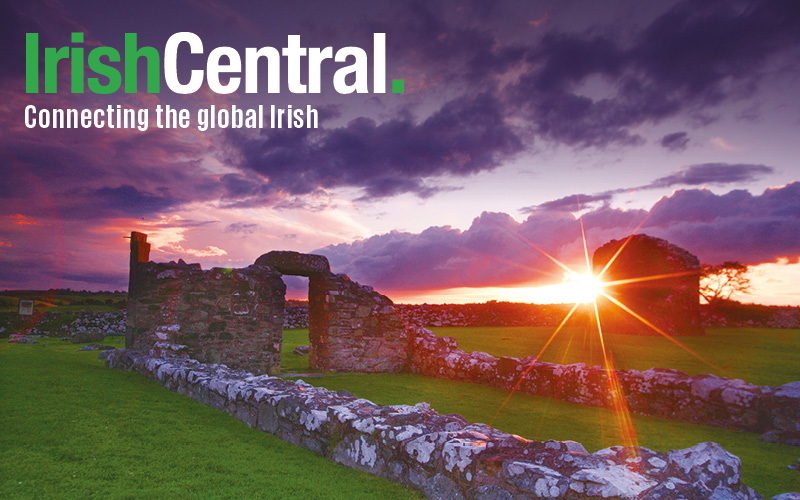
For the people who invented the word 'glen' - Glendalough, County Wicklow

Guinness PubFinder Ad

Visit our special St. Patrick's Day section here

Read more: Understanding the Irish brogue - a guide to Ireland’s colourful language

Read more: The Irish brogue- Ireland's most popular accents - SEE POLL

Here are some choice Irish words which have their roots in the Gaelic language and traditions.

1.  Bard

Bards were Celtic composers of eulogy and satire. The word is commonly known now as a poet of someone who writes lyrical verse.  Bards date back to as early as the 1st century AD.
William Butler Yeats would be considered a great bard.

2.  Bog

The word bog comes from the Irish word for soft.  Peat bogs cover one sixth of Ireland and have been used as a source of fuel for centuries in Ireland. 

After the Ice Age, Ireland was covered in deciduous and pine forests. The wet mild weather caused minerals to be leached from the soil, forming an impermeable layer. As a result water couldn’t soak through and peat began to form.

Peat consists of partially decomposed remains of dead plant material which accumulated on top of each other over the centuries.  Raised bogs and blanket bogs are the main types associated Turf is cut from bogs to burn in the open fire.

3. Boycott

The word derives from Captain Charles C. Boycot, an 19th century British land agent who was ostracized by his local community in Co. Mayo.  The land agent was was socially excluded after refusing to reduce rents during the Irish Land League.  Charles Stewart Parnell had earlier made the proposal that rather than resorting to violence. Everyone in the locality should ostracize the man.
 
4.  Brogue

The word comes from “brog” which is Gaelic for shoe.  Now the word is commonly used to describe a heavy leather shoe which usually has ornamental perforations. The word is also used to describe an Irish accent.
 
5.  Callow

Derives from the Gaelic for bald, “calac,” this word is used to describe those with a distinct lack of maturity.  A person considered to be callow lacks adult sophistication.
 
6.  Galore

Comes from “go leor,” the Gaelic word for sufficiency.  The term is referred to as having an abundance of something. 

7.  Glen

Comes from the Gaelic word “gleann” meaning a valley. It usually refers to a long deep u-shaped valley usually created by a glacier.  Ireland is known for many famous glens, especially Glendalough (Glen of Two Lakes) which is a glacial valley in Co. Wicklow.

8.  Loch


Nster.com


6 Comments

See all comments

The comments below are more interesting than the article! :)
Words invented in Ireland - aw give us a break! These are derivations from the Gaelic. Now if you want a word invented in Ireland take QUIZ. A Dublin publican made a bet he could invent a word which would go in the dictionaries within 24 hours. He hired as many yokels as he could find and in the darkness of night they went around the City writing the QUIZ in every available space. By morning everyone was querying what the word meant and as they say the rest is history.
(... more) On a map of Nth America, USA is called United States of the Home Ruler while Canada is Land of the Home Ruler... very baffling that! Quebec is Narrow Water Place, New York is New Wild Boar Village, Boston is St. Heraldwolf’s Stone, Chicago is Stinking Onion and the Mississippi is isisis ... anyone guess? ... No, no, no - it’s not ‘Old Man River Number Two’ but Father of Waters. There are loads more for Fun Reading in the comments by loads of people, from USA, Canada and mainland Europe talking about the meaning of the names of cities in their countries. Enjoy it if like me you’ve not found it before... Hope it brings a smile to everybody. I’ll probably be shot by Molly Muldoon for hijacking her article (– gaf muh lah skale, a Volley... *whack* - Ouch!) -but it might give yez something to laugh and talk about on St. Patrick’s Day. Ok, so I’m not the first to discover web sites for ‘Atlas of True Names’. Cartographers did, whoever he or she is – duh!
(...more) On mainland Britain, you’ll see South England is called Angleland while North England is Great Land of the Tattooed. Scotland is Land of the Wanderers and Wales is Land of Strangers. Norfolk is Northern Folk and Suffolk is Southern Folk (not baffled by that!) London is called both Hillfort and Town of the Unfordable River, Glasgow is Green Hollow and Edinburgh is Slopecastle. Oddly enough Land’s End is still Land’s End but John O’Groats is called Cape by the Dark Warriors Village. (more...)
But hey all, c’mere c’mere...!! Gotta tell youse all this (begging pardon of Molly Muldoon, Searlit (no seanachai here) and antoman (no I didn’t eat a stone of Blarney’s Castle)), especially those into etymology... While looking for old Irish words in the internet in relation to the above 10 words, I came upon a map of the British Isles in, well... in English! Here are some old names given to present day places: Dublin – Blackpool (or Dark Pool); Belfast – Fordmouth of the Sandbank; Derry – Oakwood; Limerick – Bareground; Cork - Marshton. The Provinces are: Leinster – Land of the Spear Folk; Ulster is North Westland; Connaught is Firewood and Munster is Motherland. And for all youse Americans... wait for this!! The River Shannon is called... Old Man River. I kid you not! (more..)
RE No 8 – Loch or lough is lake alright but a lake is not an inlet from the sea. It is an inland body of water, usually of freshwater fed by a river flowing through it (like Lough Derg on the River Shannon and Lough Neagh) or by water flowing off steep glacial mountain slopes as in Glendalough. In Nth Ireland, Lough Foyle, which is the sea inlet into Derry City, Lough Swilly and Belfast Lough are all exceptions... I wonder why? Anyone care to offer explanations? An inlet from the sea is called, in Irish, cuain (pron coo-in) or inbhear (pron inver). Many of the 10 words above are Gaelic, rather than Irish – e.g. as in Scotland - Loch as in Loch Lomond, Glen as in Glen Garry or Glen Ross and Inver as in Inverness.


Log into IrishCentral with your Facebook account


or sign-in directly

E-Mail:
Password:
 Remember me Forgot my password
Not a member? Register Now!
print this article Print
email this articleE-mail