roots


Heroine of the 1798 Rebellion: Betsy Gray, the Irish rebel girl fought and fell

The myth and mystery surround the woman who died in battle alongside her father and fiance


An illustration of Betsy Gray from the book "Betsy Gray or Hearts of Down: A Tale of Ninety-Eight" by W. G. Lyttle
Photo by Ullans Press

Guinness PubFinder Ad

In the green fields of Ballynahinch, the young Betsy Gray fell in battle alongside her father and fiance who had fought with her during the 1798 Rebellion.

Not much is known about Gray’s life and her story is surrounded by myth and mystery. Some details about her come from a letter from Mary Ann McCracken, sister of insurgent leader Henry McCracken to 19th century historian Dr. Richard Madden, author of “The Times and Lives of the United Irishmen”.

The daughter of a Presbyterian farmer, she lived in Co. Down and was an excellent rider.

Read more Irish news stories here

Her father and fiance were members of the United Irishmen. The United Irishmen had been founded in 1791 as sectarian organization. Inspired by the recent American and the French Revolutions, the United Irishmen sought to introduce parliamentary reform and set Ireland on its natural path towards a republic.

By 1796 the organization created a military structure with elected officers. The organization’s leader, Theobald Wolfe Tone, was captured during the rebellion and committed suicide before the British could execute him.

The summer of 1798 saw the short lived rebellion. The United Irishmen and the Defenders, a Roman Catholic organization formed in the mid 1780’s to fight linen rivalry, fought against the British forces. The rebellion was not well organized with main conflict limited to Leinster particularly Wexford, eastern Ulster, and Mayo in Connacht. Aid from France landed in western Ireland too late in August after the British crushed the rebellion a month earlier.

Read More Irish history stories here

Many women sympathetic to the United Irishmen were camp followers, but the majority of them did not participate in the fighting. Although she knew many members, Gray herself was not a member of the United Irishmen. Some evidence supports a United Irish Women organization. The Women of ‘98, edited by Daire Keogh and Nicholas Furlong, includes an essay by John Gray on Belfast rebel Mary Ann McCracken. The author cites McCracken’s plans to visit “some female societies in this town” in 1797. 

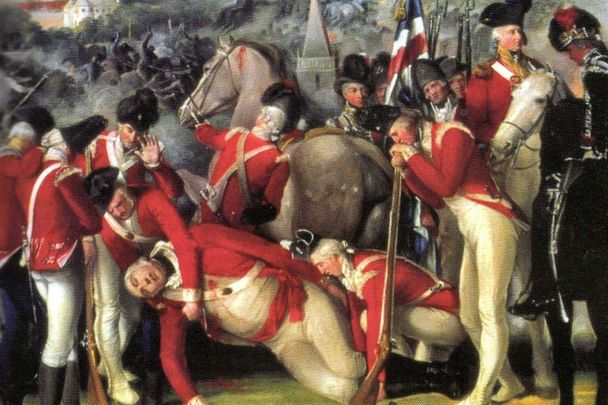
Gray fought in the Battle of Ballynahinch, also spelled Ballinahinch in some books in Co. Down on June 13, 1798. She rode into battle carrying a green flag next to General Henry Monro, leader of the Irish forces at the battle.

Read More:  Irish insulted in major Washington museum exhibit claims scholar

During the battle, the Irish mistook the British signal for retreat as their own call to retreat. The Irish retreated and the British won the battle. According to folk memory, Gray defended her finance from a British sword by putting her arm in front out him and her hand was cut off.


See more: Irish Roots , Irish History
Nster.com


14 Comments

See all comments

So Woundedleg ,by you responding so dramatically to a question posed to pilib02, makes me believe that pillib02 is another one of your poster aliases as well as George Dillon.You are really stressed out dude when you post under so many different names, for the sake of bolstering support for your own fanatical fascist views.By the way,the only people that take your view of Irish history seriously, is yourself, George, so much for" your" history credentials.
Will Hamilton- It seems every Irish rebellion was a fiasco.
Eleven posters and no mention of Scullnabogue
"During the battle the Irish mistook the opposition signal for retreat for their own"....yet another Irish rebellion fiasco...just goes to show how deluded the phrase "the luck of the Irish" really is.
Betsy was one of ours and she didn't fall in the green fields of Ballynahinch (check the meaning of the town) Check also her final resting place and why there is no substantial marker. If we cannot agree on the identidy of our dead then what may we agree on.
Warren'pint, you are as ignorant of irish history as you are of every other topic you offer your nonsense on.
PIilib04, what qualifies you as an Irish historian an 1798?.As one opposed to the writer of this article where are your credentials.May,be you are the one that is reading too many of all the wrong history books all along.Many historians have written books on the subject of Irish history and most of them disagree with each other,s accounts of that same history.Who is right and who is wrong, the answer usually remains in the mind of the beholder,and depending on who they are and where they come from will be the reason why, that they portray their own flawed selfish political interpretation of that history. May,be it is time you updated your library pilib04 ,instead of attacking a staff writer re writing published accounts of some self styled historian.
Slainte - I am totally sympathetic but at this point I think we have been Magdalene Laundried to death!
slainte9 your article is puerile(both of them)The united Irishmen incuded all those freedom loving Irish men and women regardless of their religion.
"The United Irishmen had been founded in 1791 as sectarian organization". Are you mad? Their slogan was to unite Catholic, Protestant and Dissenter. Sloppy hoistory
I'm not sure this deserves all the criticism it has received. It is light weight as history. The United Irishmen were non-sectarian, however, so that is an important error that should have been caught in editing if it is a typo.
What qualifies Michelle K. Smith as a writer of Irish History and in particular a writer about the 1798 Rising? What are her credentials PLEASE? What courses has she taken in 18th century Irish History? Does she have a University degree in Irish History? The reason I ask is because her article is FRAUGHT with error and innuendo. This incompetent suggests that the rising in Wexford and in Connacht (Connaught, english) did not take place. According to her shallow ignorant history of the 1798, there was no Republic of Connacht. I do not downplay the valour of those involved in the Presbyterian (United Irishmen) rising in east Ulster, and the participation of Betsy Gray, but they achieved no significant battle victories that I am aware of. In Leinster and Connacht there were battle victories and Mayo and Wexford came under control of the rebels. There were victories at Oulart, Inniscorthy and Wexford town in Wexford that led to consolidating control over County Wexford. The French/Rebel victory at Castlebar led to the consolidation of control in Mayo. The Year of the French cannot be reduced to an asterisk! In point of FACT, the rising in Meath, Dublin Wicklow, Carlow and most importantly Wexford, lasted longer and was more effective than the rising in eastern Ulster (Down and Antrim). In point of FACT, Wexford was actually liberated from foreign control! The same can be said for the rising in Connacht. Sadly it can't be said of the rising in east Ulster. Ms. Smith simply is quite ignorant of the 1798 rising and has no business pretending she knows. It is a nice child's fiction, but has no business at Irish Central. Had she bothered to fact check her info on the 1798 rising she would have easily found her ERRORS.
Gandhi and O'Connell should be celebrated here, not violence.
Turning a girl into a killer or someone who gets killed is celebrated, while the Magdelene laundry isn't. You people hava an odd set of values.


Log into IrishCentral with your Facebook account


or sign-in directly

E-Mail:
Password:
 Remember me Forgot my password
Not a member? Register Now!
print this article Print
email this articleE-mail