
Working as the staff photographer for the Irish Voice newspaper for the past seven years has given me the opportunity to meet many different people, both within and beyond the Irish American community in New York.
In April 2006, I had the distinct privilege of traveling to Haiti with leading representatives of Concern Worldwide to document and assess the dire situation in a country that is only a short plane trip from the United States, yet overwhelmed with problematic issues ranging from political to socioeconomic.
Concern Worldwide is the Dublin-based international humanitarian organization in existence for more than 40 years with a presence in 28 of the world’s poorest countries. One of the roles of Concern is to ensure that people living in extreme poverty can have their basic needs met, and they do so by working with the communities on long-term development plans and by responding to emergencies.
When I reflect back on my trip to Haiti, I do so with great respect and admiration for the Haitian people. Whenever I meet someone who emigrated to the U.S. from Haiti, I enjoy having a chat with them about my visit to their country.
In preparation for my trip in 2006, I conducted my own research on Haiti and knew the conditions were going to be extremely poor, but it wasn’t until I saw things with my own eyes that I could understand the gravity of the situation.
Nevertheless, I found the Haitian people to be proud, optimistic, and relatively happy with a desire to be self-sufficient once the bigger issues could be resolved. I documented my visit with my camera, and from time to time I still look at the photos I took as a reminder that things can always be worse.
Like many, I never thought things could get much worse in Haiti, but ironically they did. You’ll often hear people say how “resilient” the Haitian people are. Well, it’s because they’ve had to be. They’ve been faced with adversity from every angle throughout their lives. For a nation of approximately 9.3 million people, it comes as no surprise that their life expectancy doesn’t even reach age 50.
What stood out to me was how little people had, yet were so warm and welcoming to me and the other people traveling with the Concern Worldwide contingency. I was honored to accompany the late Father Aengus Finucane, co-founder of Concern, along with Executive Director Siobhan Walsh who is based in the U.S. headquarters in New York. I learned a great deal from Father Aengus and Siobhan, whose life’s work has taken them to Africa and Asia a countless number of times and particularly Haiti, where Concern has been since 1994.
I gained insight from the local Haitian people as well. I remember seeing a little girl, about five years old, carrying buckets of water up and down the mountain so her family could cook and bathe.
People constantly had to make their way to a well for water. There was no such thing as clean drinking water that we take for granted here in America and other developed countries.
I recall taking a boat to the island of La Gonâve where people were so poor living amidst a littered beach in makeshift huts. One particular man was so happy to see us that he climbed a coconut tree in what seemed to be record speed and proceeded to crack open the coconuts to give us the juice to drink on what was a very hot afternoon.
The Haitian people I met had nothing of monetary value, but were eager to show their appreciation to us for coming to their island be it with a presentation of food or a simple smile.
Back in 2006, the clinics we visited in Haiti had very limited facilities and resources. This was before the devastating hurricanes of 2008 that inflicted a multitude of damage to Haiti with a loss of life of over 1,000 people.
Prior to this, Concern established the only health clinic in Port-au-Prince and paid for the rehabilitation of the building and acquired medical staff to attend to the at-risk population.
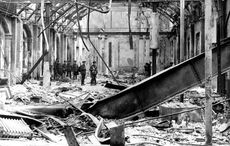
Bear in mind that over 60,000 people are living in one square kilometer in the capital city. As a result of last week’s earthquake, I can only imagine how difficult it is for very sick people to get medical attention at this time when the hospitals and clinics have literally buckled.
Basic structures, such as tents and mobile units have been set up temporarily to attend to those in need, but it’s still not enough. Based on various media reports, dead bodies are lining the streets with the threat of decomposition and disease. Unfortunately, many of these unidentified bodies will end up in mass graves without families being able to connect with the remains.
Survivors of the quake have had no choice but to seek refuge outdoors, as they await medical attention, food, and water. People are terrified to enter buildings that haven’t collapsed for fear that the structure may crumble at any given moment.
To think that people who had very little to begin with don’t even have a change of clothes. They are left with no possessions whatsoever, not even mementoes or family photos of those who have passed before them.
Walsh was interviewed by Irish radio host Adrian Flannelly of the Irish Radio Network in New York on last Saturday’s program where she gave an update on the current situation in Haiti. She indicated that the response effort in the next six months needs to be massive.
Basically, Concern will have to start all over again from Day One to get people back to where they were in order for progress to occur, which could inevitably take years to recover from.
While in Africa recently, Walsh sought the assistance of Digicel CEO Denis O’Brien who helped to get Concern’s aid workers and relief supplies into Haiti. She explained, “We’re trying to respond to the needs on the ground with food supplies. It’s critical to get the aid into the hands of the people.”
Fortunately, Concern CEO Tom Arnold and Concern Worldwide U.S. Operations Director Dominic MacSorley are on the ground in Haiti. Clearly, Concern has a dedicated team who are working around the clock doing all possible for the Haitian people.
If any good can come out of this situation, perhaps it is the fact that Haiti has been highlighted from a global standpoint where the need to recover is in the forefront. Though much damage and loss of life has tragically occurred, maybe worldwide exposure is what Haiti needs in order to rebuild, along with ongoing assistance from the U.S. and other nations, including humanitarian efforts by individuals who care.
Despite the tough economic times in the United States, Ireland and globally, people from all walks of life still want to help Haiti in ways big and small.
President Obama has demonstrated his leadership by entrusting former Presidents Bill Clinton and George W. Bush to lead the relief effort for Haiti. That said, we have to do our part as well.
We’ve all seen the news reports on television and on the Internet bringing us graphic coverage of a country in ruins. This is a headline that cannot disappear.
Concern Worldwide desperately needs your financial support to continue providing aid to the people of Haiti. An emergency appeal has been launched in an effort to raise $7.5 million in order to fill a charter relief flight with vital supplies, such as of Plumpy’nut (an edible high protein peanut based paste), bladder tanks, plastic sheeting, jerry cans (fuel and water containers), and other vital life saving supplies.
While good intentions and prayers are important too and, no doubt, go a long way, the destruction in Haiti is of epic proportion, so please do what you can for those who are less fortunate. Even a small donation can help in big ways.
For example, $3.25 for a supply of Plumpy’nut would help keep a child alive. Or, if you’d like to donate your time to Concern Worldwide on a fundraising effort, event, or even in the U.S. headquarters in Manhattan, please call.
As Father Aengus often said, “The support of our regular donors and supporters are the bread and butter of our organization.” May his legacy and the work of Concern Worldwide continue.
Right now the people of Haiti truly need our assistance and the Irish charity Concern is on the front lines ready and willing to help. “Mèsi anpil”…Haitian Creole for “Thank you very much.”
Concern Worldwide U.S. is located at 104 East 40th Street in New York. Call 212-557-8000 or 1-800-59-CONCERN. Also visit www.concernusa.org/HaitiAppeal.


Comments