News


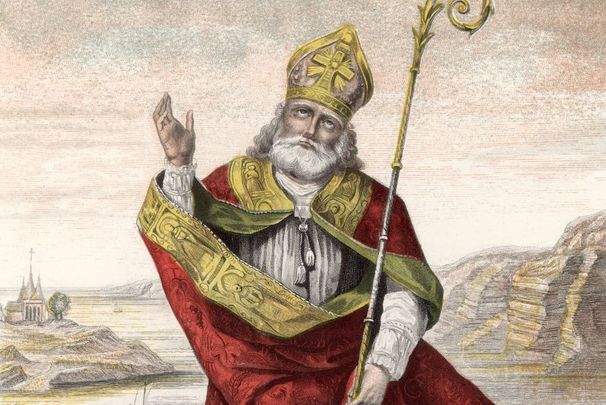
Saint Patrick was likely a slave trader and tax collector says new British evidence

Cambridge University research claims much of Saint Patrick’s life story ‘fiction’

75 comments

Return to article

Next Previous Page 2 of 6 pages
This must be one of "those" hard up for news days !!!
After I posted, I did some searching online. It turns out that I was correct. In 1968, the Catholic Church removed official sainthood from St. Brigid of Ireland for several reasons. The church admitted that she just might be apochryphal and she wasn't 'properly' canonized a saint. Guess this is the church's way of a sideways admittance that she was indeed a goddess appropriated for purposes of conversion.
FromPhoenix: Check with Patti Wigington/paganwiccanguide@about.com
Some of the comments are quite interesting. My name happens to be Brigid and I was named after St. Brigid of Ireland (I believe there is a similarly named saint of Sweden). I was brought up with the story of her being a contemporary of St. Patrick. However, a number of years ago, if I am remembering correctly, the Catholic Church 'demoted' her because they were of the mind that she was more legend than fact. If anyone else remembers this or can check to see if she was actually "demoted" I would like to know that information. It seems to me that at the time, the Church was admitting that they had actually 'adopted' a mythical Brigid who was revered by the Irish before the coming of St. Patrick.
(...more but hard and soft bits) And now come the lovely bits of info: When Brigids’s dad, a Druidic priest-man who refused to accept Christianity, was about to die, Brigid was by his bedside. The two of them argued over the Celtic Sun Gods, the sun itself and the Christian Trinity God... Brigid was in that state of mind, ready to tear her hair out, despairing to save her father from a false belief-and called for God to show her father what He, God, was like. It happened. God showed Himself to Brigid’s father and instantly he asked his daughter to baptise him in the name of the Father, the Son and the Holy Ghost. Tradition in Ireland from the time of St. Brigid is that the cross of St. Brigid should hang over the door(s) into or out of your own home, primarily for that she will bless the people who enter your home as they enter it and bless them as they leave it. The fire that St. Brigid lit in her convent in Kildare centuries ago never died out until it was extinguished during the destructive reign of England’s King Henry the 8th. Years afterwards, after Henry was gone, the people of faith in Ireland re-lit the flame of St. Brigid in County Kildare. It has continued to burn since that day - still burns today and - guess what? - you can go and stand before it and see it for yourself; it’s there burning for you and me in Co. Kildare. I bet you never thought of St. Brigid or St. Patrick still thinking of us secular plebs in this day and age. That flame of St. Brigid is as alive as anybody reading this post. Thanks to PatriciaMarya for this opportunity to tell what we in Ireland know about St. Brigid. I pray that, from the singular grave of St Patrick, St. Brigid and of St. Colmcille in Downpatrick, we may all be united in one trinity of love. A shamrock’s lesson.
(...more) Brigid converted many unbelievers, the kind of people who say “I couldn’t give a hoot about the Christian (now called Catholic or Universal) Church but - on one occasion - while trying to explain to ordinary people (like you and doubting me) at these fire-fests about the something special about Christ dying on a cross, she hadn’t a cross to show them, not even a symbol of the Cross on which Christ died to show them. The story goes that she angrily stormed off to a nearby wheat field, grabbed a few stalks and wove them with her own hands into the shape that is now world-famously known as St. Brigid’s Cross. So if you ever get a few pieces of straw and try to weave them into the shape that Brigid made at that time, you’ll understand Brigid’s anger and frustration that day but at least you will have woven, by your own hands, the same cross that Brigid wove in her desperate proof of love of Christ’s cross. (yep, there’s more...)
(... more for PatriciaMarya) Anyway, Brigid’s dad, the Druid high priest was all into fire in springtime just as people all the all-over-the-world were at that time (like in Egypt and elsewhere), St. Brigid attended these Celtic/Druidic fire-laden fire-fest occasions with her dad, happily celebrating the heat of the spring-time sun after a cold Irish winter, spending most of her time chatting with her dad and mom (the one who gave her to the babyminder), their friends, cousins and whoever else was at these druidic celebrations of sun heat. Brigid must have been an extraordinary woman; she converted many Irish people to Christianity at those Druid feasts on sun-god loving days. All she met were touched by her in some special way. So we should wake up to that fact, and we all should wake up to the fact that Patriciamarya is also affected by St. Brigid – otherwise PatriciaMarya wouldn’t have asked her question here on ICentral (...more)
(So here’s the more from jacersagain...) Somewhere along the line, as she grew up under this spell of being spared from fire, Brigid became a Christian and founded a monastery in County Kildare, dedicated to Christ and to prayer and to appreciation of all that is beautiful and against all that is evil. She was into fire in a big way, her dad was druid, he was big into fire like all druids; she lit and kept a fire going in her monastery’s grounds in Kildare. The people of the monastery were mostly of women who, like her, dedicated their lives to Christ but men who dedicated their lives to Christ were allowed to live and pray at the monastery as well with Brigid but, under her strict rules, they lived in separate quarters. She was eventually blessed to be an Abbess, the female equivalent of Bishop in the Irish Christian Church at that time, by a man (I forget his name right now) who was a contemporary of St. Patrick, the kind of fellow who followed St. Patrick around Ireland but was probably sick and tired of Patrick ringing his famous bell in every village he visited. (More for Patriciamarya)
(..more) Anyways... The baby minder left the house on an errand, leaving baby Brigid in her straw cot in the turf-heated house on her own. The house caught fire while she was out, was completely destroyed and there was much neighbourly anguish about the new-born baby inside. However, when the burnt-out house was cooled down enough to be searched, they found the straw cot and the baby Brigid completely and miraculously alone untouched by the flames. You can imagine the scene at the house in Faughart - with the neighbours, the babyminder, her Druidic father and the rest of the family all there: How on earth, just how on earth...? Those who were Christians at the time said it was a miracle, that Brigid was blessed by God to be spared from fire and blessed by the shamrock Trinity of three Gods-in-One taught by St. Patrick to the High King of Ireland and his Druids at Tara, using a tiny plant growing out of the soil under their own feet, which her father would have heard about as he would have been a young druid at the time. Brigid must have been blessed in some special way, especially about fire, which is one reason of many reasons why many Irish people this day keep St. Brigid’s straw cross above a door into their homes (I have one too). (@ PatriciaMarya – there’s more from this jacers; hopefully it'll be worth hanging in to read). (More ...)
@PatriciaMarya (what a lovely name!) Bejaysus I wish you hadn’t asked the question but since you did, I’ll bother me barmy to answer and I don’t know how to give you a complete answer. Brigid was the daughter of a Druidic high priest in the island of old Ireland, before there were such names like Jews, Catholics, Protestants, Anglo-Saxons and whatever you like to add from today’s terminology. There are many stories of St. Brigid. A very well known traditional story in County Louth in Ireland to this day has it that after she was born, she was given to what we call today a babyminder who lived in Faughart, County Louth, just a couple of miles from today’s town of Dundalk. In those days, burning turf from the bogs of Ireland kept a house warm. It’s funny peculiar in away when you watch turf burn in your house, even today. It tends to unexpectedly fall out of your fireplace. I digress! Anyways... (More ... )
Fe Fi Fo Fum! I smell the blood and lies of an Englishman. Fe Fi Fo Fum! trying to Keep Northern Ireland part of Eng-land!
I agree with the comment that one must be very careful about believing every source who says something about a religious figure, and I would be especially careful about believing a British source without conducting independent investigation.
They can claim that Saint Nicholas aka Santa Claus was a slave trader and tax collector (who believes this utter bullshit anyway?;) but as far as the masses are concerned it aint ever gonna make one iota of difference to his benign and lovable image.
There was a small Catholic bishopric in Ireland before St. Patrick. This small Christian community made little or no effort to convert the rest of the Irish. That task fell to St. Patrick.
n 441 Patrick went to Rome to seek special approval of his ministry in Ireland, and the newly-elected Pope Leo the Great personally confirmed Patrick’s full adherence to the Catholic faith. This is significant since some today assert that Patrick was not Catholic. In this country, the challenge is mainly made by Irish Americans who have abandoned the Church for Protestantism and wish to co-opt Patrick and represent him as a non-Catholic figure. This is an impossible task, as Patrick was a Latin-speaking Roman noble, grandson of a Catholic priest, son of a minor official of the Roman empire, who had repeated private revelations, practiced penance, spent two decades as a monk, was ordained a priest and sent to serve on the papal mission to Ireland, was then ordained bishop by a papal representative, and had his fidelity to Catholic teaching specially confirmed by Pope Leo the Great (of whom the fathers of the Council of Chalcedon cried "Peter has spoken through Leo!"). He described himself as a Catholic, and a list of canons he drew up for the Irish church orders that any dispute not resolved on a local level was to be forwarded to Rome for decision. The two writings from his pen that survive—his Confession and Letter to the Soldiers of Coroticus—are both in Latin, and both attest to his Catholic faith. Any disgruntled claims that Patrick was not Catholic are just blarney....History of St. Patrick by James Atkins.
Next Previous Page 2 of 6 pages


Log into IrishCentral with your Facebook account


or sign-in directly

E-Mail:
Password:
 Remember me Forgot my password
Not a member? Register Now!
print this article Print
email this articleE-mail