
The recent Tribeca Film Festival in New York unveiled two brilliant new Irish films (both about Irish cops, as it happens). Writer and director John Michael McDonagh’s The Guard, starring Brendan Gleeson, will be released in July. And in a nice bit of symmetry, Gleeson also plays a guard in Noreen, an atmospheric short film written and directed by his Harry Potter starring son Domhnall. CAHIR O’DOHERTY talks to the two talented directors currently making waves in Irish film.
Brendan Gleeson is the most accomplished Irish actor of his generation. Let’s just get out of the way.
If you still have any lingering doubts about it they’ll be dispelled when you catch his lovely, understated performance as a tough on the surface Garda inspector (Irish police officer) in writer and director John Michael McDonagh’s entertaining new Irish film The Guard.
McDonagh (who’s the older, wiser brother of playwright Martin McDonagh) obviously agrees that Gleeson is something special, because he’s cast him in every one of his projects past (The Guard) and future (Calvary, where Gleeson will play a priest grappling with the contempt of his local Irish community).
The Guard received an ovation at the Tribeca Festival because McDonagh has managed to craft one of the smartest scripts in years. The film tells the story of Galway-based smalltime cop Gerry Boyle, the little policeman with the biggest attitude in the west.
On the surface Boyle’s a crass, thoughtless, tactless and frequently unbelievably insulting oaf -- ah, but underneath he may well be the smartest guy ever to wear the uniform.
When an FBI agent (Don Cheadle) arrives in town tracking a billion dollar drugs shipment, an unlikely friendship forms between the straight arrow U.S. agent and the loose cannon Irish cop.
But McDonagh explodes this clichéd storyline with some genuinely dark and unsettling developments (it’s an anarchic impulse that he shares with his playwright brother).
If Ireland could produce a punk rock version of the Coen brothers’ Fargo, this is probably the closest thing to seeing what it would look like. By turns heartwarming and surprisingly nasty, The Guard is a hilarious and deeply unsettling film that has given Gleeson his most ambitious role in years.
So was McDonagh satisfied with the cheering from the audience when the film premiered at Tribeca?
“It was good,” he tells the Irish Voice, with typical understatement.
“Different audiences laugh at different jokes. The only thing I was really worried about in New York was how the anti-PC humor in the film would play. At Sundance it’s a Middle America audience, but they seemed to go along with it too.
“I saw a lot of dropped jaws. The presence of Don Cheadle helps with that kind of comedy (Cheadle is the target of Gleeson’s racist barbs in the film). If he wasn’t there there’d be a different edge to it.”
Like his brother Martin, McDonagh was raised in London and speaks with an inner city accent, but he also knows the Irish-speaking Connemara district his parents were raised in like the back of his hand.
In fact, few films in recent years have captured rural Ireland the way it actually is like The Guard.
McDonagh shows it in all its rainy, grey, bog covered brilliance, a landscape that’s a million miles from the kind of epic Lord of the Rings grandeur that’s usually seen in the films made for tourists.
When McDonagh introduced The Guard during the royal wedding week he joked that the horses in Buckingham Palace have more sense than the people whose golden carriages they’re pulling. This statement drew shocked gasps from the American audience, which McDonagh enjoyed.
“They assume everyone in Britain loves the royal family,” says McDonagh with a big grin. “The concept that there could be an anti-monarchist political movement is just kind of anathema to them.”
McDonagh has filled The Guard with good jokes.
“I sometimes get criticisms that I write films with too many witty characters. But I don’t believe that working class people can never say something intelligent, and also I do it to keep it interesting as I’m writing it. I like throwing in all those references to the Russian novelists,” he says.
Villains in thrillers aren’t usually bored, but McDonagh enjoys giving audiences the opposite of what they expect.
“We never see a villain who doesn’t get along with the people he’s with, who doesn’t want to be there anymore. It’s just his job and he has to follow it through. In a way my villain is sort of relieved to be killed, because it puts him out of his boredom,” he offers.
The big anti-PC gags get big laughs, too. Speaking about the black FBI agent played by Cheadle, Boyle says, “He probably hasn’t had this much fun since he killed all those kids at Waco.”
For a moment you can hear a pin drop as the audience reassures itself that they really just heard what they think they have. Then they erupt in laughter.
Like the guard in his film, it’s safe to assume that McDonagh -- being Irish -- has a bit of a problem with authority figures.
“Gerry Boyle doesn’t stop all the way to the end. He doesn’t turn into a nicer person who’s not going to say that stuff. He’s still going to keep on being who he is,” McDonagh says.
“There’s an essential integrity to him. He’s saying the worst things he can think of to see what your reaction will be – that’s how they judge you as a person. He’s neither racist nor stupid. There’s real warmth to the character.”
But making the film was a challenge at times, because no matter how things have changed on the ground in Ireland these days, there are some storylines that still have the power to cause consternation.
“They wouldn’t let us shoot in a Catholic church,” explains McDonagh. “They didn’t like the scene or the dialogue talking about drugs. We had to find a Protestant church that would let us.
“There was one Catholic priest in the area who said it was fine, he needed the money to restore the church roof. But a few days later he got back in touch with the location manager and said he’d been told by the higher ups that he couldn’t allow it.”
In Noreen, the short film hit of the Tribeca Festival, writer and director Domhnall Gleeson (son of Brendan) made comedy gold of a broken heart (his own, he reveals).
“I’d heard about the suicide of a guy who had blamed someone else for his death, and I just wondered what would happen if you’d found that note?” Gleeson told the Irish Voice.
“Imagine someone’s last words were condemning you and saying their death was all your fault? I wondered what that situation would be like.
“ I also wondered about the situations it would throw up. When you get into the pits of despair about some aspect of your life at some stage it does become hilarious. People in despair can be absolutely hilarious.”
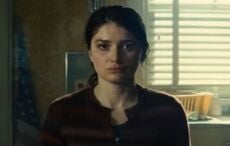
Shot over four days in Co. Offaly, Noreen tells the story of two guards who solve their own problems in the process of attempting to explain a mysterious death. Gleeson’s father Brendan and his brother Brian star.
“They are both brilliant at what they do and I‘m relatively inexperienced compared to them. But I’m also really having fun as an actor and I’m getting to work with good people that I never would have imagined working with before,” Domhnall says.
“They’re opportunities I would never pass up so directing will have to take a back seat -- however I do love it. I’m happy to continue directing it when I’m not acting.”buzz about these two films in particular, he admits.
“Hopefully we can keep on making movies back here and keep the crews, actors and writers in employment,” he says.
Meanwhile, Domhnall is probably best known for his role as Bill Weasley in the Harry Potter films and he’ll be featured in the final episode, The Deathly Hallows, that opens in July. How is it having a role in what will likely be the biggest movie of the summer?
“You do get people who are bit over the top or are star struck by it. It’s like, janey mac, I’m not actually from the universe of Harry Potter, I’m an actor who played a tiny role in the film,” says Domhnall.
“It’s nice that it has that effect on people and obviously the movies are huge. I wonder when it will all calm down with the release of the final film.”
Off screen, he hung out with his fellow Irish Potter-ites.
“I hung out with Evanna Lynch (who plays Luna Lovegood) a little bit and really like her and her family. There’s a lot of waiting around on Harry Potter films and you have to make your friends and hang around, but I did have a fantastic time.
“You’re outstanding for 10 hours a day and shooting for two. I formed close friendships with the people doing it. “
The Guard opens on July 29. To see a trailer for Noreen log onto Viemo.com.

Comments