
Between 1883 and 1908, 307,823 Irish girls arrived at the Port of New York. Who met them? Who helped them reach their destinations or find work? Most of the girls who were not met by family or friends were assisted by the Mission of Our Lady of the Rosary for the Protection of Irish Immigrant Girls.
The Mission was the inspiration of Charlotte Grace O’Brien (1845-1909), the daughter of William Smith O’Brien who was transported to Tasmania for his part in the 1848 Rebellion.
Charlotte was born on November 23, 1845, a year that saw the first failure of the potato crop and the beginning of what became known as the Great Famine. Her father was a member of Parliament for Limerick. Britain’s refusal to relieve the starving Irish led him to join the 1848 revolt. “I do not profess disloyalty to the Queen of England,” he said in his last speech at Westminster, “but it shall be the study of my life to overthrow the dominion of this Parliament over Ireland. I would gladly accept the most ignominious death rather than witness the sufferings and indignities inflicted by this Legislature upon my countrymen.” For his part in the rebellion, Smith O’Brien was captured and sentenced to be hanged, drawn and quartered. The sentence was commuted by the Crown to transportation for life. On July 29, 1849, he and three of his comrades were transported to Tasmania.
This is the setting that young Charlotte was born into. Her father, before his capture, had executed a deed transferring his property to a trust to be held for his wife with the instructions, “Go back to our estate, back to our poor, back to our broken land.” Charlotte inherited his concern for the poor and his fighting spirit.
The failure of the potato crop opened the floodgates, and for the rest of that century and the early part of the next, the Irish left in the thousands. Emigration was a reality particularly for the rural poor of the west, a fact that Charlotte addressed in an article entitled “Eighty Years,” published in 1881, which expressed her deep sympathy for the emigrants’ anguish and her concern about the loss that emigration meant to Ireland.
Shortly after the publication of “Eighty Years,” her article “Horrors of the Immigrant Ship” appeared in the Pall Mall Gazette.
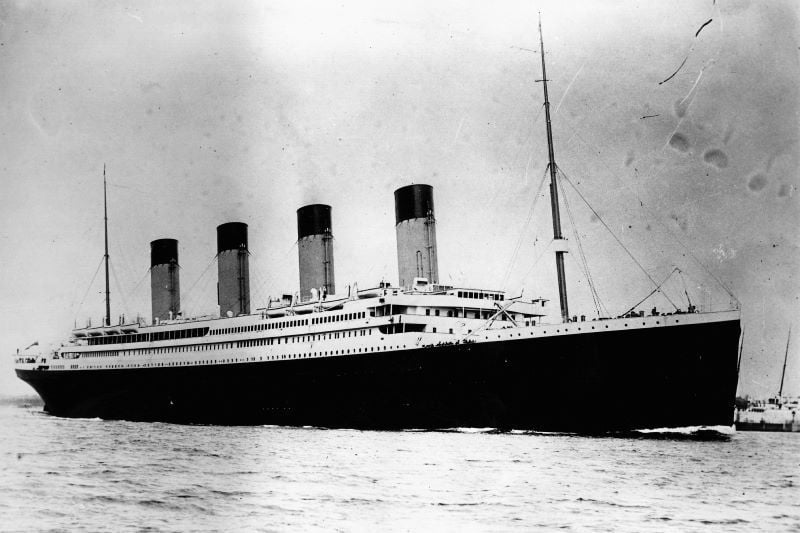
While staying with family in Queenstown (Cobh), O’Brien visited the White Star liner Germanic, anchored in the harbor. While she wrote later that she thought that the Germanic was no worse than other trans-Atlantic ships, she was horrified at the way that young women slept on sailcloth hammocks in the midst of married men and their families. “If they remove their clothes it is under his [male] eye, if they lie down to rest it is beside him.” The image of the steerage passengers huddled together haunted her. Despite the limit of 1,000 passengers she noted the steamer had carried as many as 1,775 at one time. Her sonnet “Steerage of the Germanic — Two Pictures of the Mind, 1882” contrasted images of a summer’s evening in the Irish countryside with ship life below deck:
“Tween dim-lit decks, hard hands, and weary eyes / Hearts so toil-worn that scarce they dare arise. . .”
That image became a call to action and she described herself as “tumbling” into the fight to improve conditions for emigrant girls: departure, transit and reception. She started with emigrant lodging houses in Queenstown (now Cobh, Co. Cork) where unscrupulous boarding house keepers took advantage of emigrants waiting to board their liners. She opened her own O’Brien Emigrant Boarding House at West Beach, Queenstown on April 1, 1882. It was a daunting task for a middle-aged single woman who had modest resources and was almost profoundly deaf. Her fellow Queenstown lodging house owners were so hostile that they urged local merchants to boycott her. She had to bring in every loaf of bread and pound of tea from Cork city.
Improving the boardinghouses was the first step in improving conditions for Irish emigrant girls. There were other dangers: the ocean journey itself and the emigrant’s reception on arrival. In fall, 1882, Charlotte accepted an offer of free passage aboard the White Star’s Baltic. The last couplet in her sonnet “Ireland-Farewell” affirmed her commitment to a life devoted to the welfare of her country:
“Rather henceforth shall my
rejoicing be / That God hath given me
life to live for thee.”
O’Brien arrived quietly in New York City and spent a month with a longshoreman’s family in a tenement house on Washington Street, near the site of the former World Trade Center, where she acquainted herself with immigrant conditions in the city. Then she went west in October to see John Ireland, Bishop of St. Paul, Minnesota, the member of the American Catholic hierarchy who would be the most receptive to her proposal that there be a home for immigrant girls arriving in the Port of New York. She later recalled that when she said to Bishop Ireland, “I am only the plank over the stream, it is you, the Catholic Church, who have to build the bridge,” he told her, “You need not fear, Miss O’Brien, I will not let this matter drop.”
O’Brien returned to controversy in Ireland in 1883. The influential John Boyle O’Reilly, Irish Republican Brotherhood member, who himself had been transported to Australia and was now the editor of the Boston Pilot, denounced her as a British agent whose emigrant boardinghouse and plans for an American home for Irish immigrant girls facilitated the government’s assisted-emigrant scheme, the scheme that helped landlords clear their estates of poor tenants.
In fact, O’Brien opposed assisted emigration, but she would do her best for those who were sent to her. While she worked through 1883, Bishop Ireland raised support for her proposal at the May 1883 meeting of the Irish Catholic Colonization Society. The Society voted to endorse the plan and to establish an information bureau at Castle Garden, the New York State immigration depot. (When the federal government assumed the jurisdiction for emigration, Ellis Island replaced Castle Garden as the immigration reception site.)
Bishop Ireland contacted Cardinal John McCloskey in New York about providing services for Irish immigrant girls. The Irish Emigrant Society’s agent Daniel O’Connell assured the cardinal that there was indeed work for a priest in Castle Garden. Father John Riordan, the first chaplain at Castle Garden, officially established the Mission of Our Lady of the Rosary for the Protection of Irish Immigrant Girls on October 1, 1883.
The Mission had three goals: a Catholic Bureau at Castle Garden to provide information and counseling to immigrants, a temporary home or boarding house where immigrants could be safely sheltered while in transit or while waiting for work, and an immigrants’ chapel. The Mission opened on January 1, 1884. Immigrant girls needing accommodation were placed in local boarding houses until May 1st when a Home for Immigrant Girls was opened at 7 Broadway with a Mrs. Boyle, a matron from the Labor Bureau, hired to look after the residents. The following year, Father Riordan purchased 7 State Street for the Mission home from Isabella Wallace for $70,000.
Patrick McCoole joined the Mission early in 1906 as its first agent at Castle Garden and then at Ellis Island. He interviewed arriving girls, assisted them with meeting family or friends, advised them about traveling on to destinations outside New York, and escorted those unmet girls or girls without sponsors to the Home. McCoole’s experience with the arriving Irish girls gave him insights that he passed along to immigration and to shipping officials. After McCoole’s death in 1906, Sligo-born Patrick McDonough became the Mission’s agent at Ellis Island, where he met Helen Healy when she landed in 1908; he married her the following year. In addition to his administrative work for the Mission, McDonough edited its quarterly Old Castle Garden (1931-1940). Its pages demonstrate the way that immigrant benevolent societies and programs like those of the Mission helped to acculturate new arrivals. Articles in Old Castle Garden offered sensible advice about education and employment, cautionary tales like “Bridget’s Night Out,” and immigrant literature that helped articulate their sense of loss and displacement.
At the time of the Mission’s Silver Jubilee in 1908, the Mission’s third director, Father Michael J. Henry, reported that they had seen nearly one third of the 307,823 Irish girls who passed through the Port of New York between 1883 and 1908. They found employment for 12,000. The photograph of the Irish immigrant girls in front of the Mission represents some of those 100,000 who passed through the Mission.
They are the faces of our mothers and grandmothers. The Mission’s ledger books hold the records of 60,000 arrivals; it is a priceless and unique archive of the immigration experience of Irish women. Some entries include comments. The most frequent is “seen to her,” and “seen to her” they did.
The data from 1,736 arrivals who went through the Mission between August 24, 1897 and August 31, 1898 provides a profile of the Irish immigrant girl who passed through the Mission during that year. She arrived in the spring aboard a White Star liner that she had boarded in Queenstown. The average age of arriving girls that year was nineteen and a half. She certainly came from rural Ireland. Mayo, Galway, Cork, Kerry and Roscommon accounted for nearly half of the arrivals for whom we have a county of origin. Nearly ten percent traveled with a sister. Twenty-six percent of the girls were met by a female with the same surname; forty-two percent listed sponsors with the same surname. It was an immigration of siblings, of family reunification in Irish America.
The Mission of Our Lady of the Rosary never closed; it has continued as the Parish of Our Lady of the Rosary. Today it shares its site with the St. Elizabeth Seton Shrine at 8 State Street. Under the leadership of Father Peter Meehan, pastor of the parish, the current Watson House Preservation initiative seeks to provide funding for the completion of the building restoration project. There is a further effort to conserve and digitalize the Mission records. The final phase will be a museum and reading room for visitors and for those who wish to use the Mission archive for genealogical research, and who, like Irish-American historian John Ridge, might open a ledger and discover the names of their mothers or grandmothers among the girls assisted by the Mission. “With the archives I found and a few hours of leisure time I discovered sources of an unassuming story containing inspiration of love and service here on State Street,” says Meehan. “The genealogical, cultural, educational and spiritual potential of the
project is real.”
Comments