That which we know as All Hallows Eve actually began as a harvest festival several millennia ago in Ireland. Though the evening’s popular colors are black and orange, they might as well be Forty Shades of Green, for the customs of the celebration are Irish as the shamrock.
The ancient Celtic year was divided by the four seasons and reckoned by a lunar calendar. The full moon that rose midway between the Autumnal Equinox and Winter Solstice was called Samhain. It was the most scary and sacred time of all.
Winter was approaching, crops were dying, days were growing shorter, and the specter of death hung heavy in the air. Cattle were slaughtered and salted to feed the people through winter. Crops were gathered in and stored lest the shape-shifting Pooka, a nocturnal hobgoblin that delights in tormenting mortals, destroy the fruits of the field and bring on a season of famine. With storehouses full, the Celts marked the 3-day full moon period with revelry and ritual before facing the unknown.
Consumed with fear that they might be carted away to the land of the dead, the Irish lit huge bonfires to ward off evil forces. At night they listened to seanachies tell how the Gaels had defeated the magical Tuatha De Danaan. Undaunted, the Tuatha De plagued their conquerors with trickery, depriving them of milk and grain. Finally, a compromise was reached and the land was divided into two parts. The Gaels had won the right to live above ground; the fairy folk agreed to live underground.
But on Samhain the veil between this and the Otherworld was thin. The fairies roamed at will, the mounds marking the entries to their dwelling places glowed with eerie light, and many a mortal disappeared, lured to live forever below ground with the fairy Sidhe.
This was Feile Na Marbh, Feast of the Dead. Children born that night were blessed with ‘double sight,’ able to see and play with the fairies. Spirits appeared to ordinary folk advising them of future events. Long-dead ancestors sought the warmth of a hearth fire and communion with the living. In every window, flickering candles lit the way for lost souls.
In 432AD Saint Patrick brought Christianity to Ireland, but the old ways persisted. Rome attempted to take the easy way out and absorbed the tradition into its own calendar. For centuries, the Church had honored its martyrs and saints on May 13, so in 844AD Pope Gregory IV transferred the saints’ feast to November 1, renaming it All Hallows Day.
Five hundred years later, Celtic descendants were still celebrating their 3-day Feast of the Dead. In the 14th century, Rome decreed November 2 would be known as All Souls Day and masses would be said for the departed who had not yet been admitted to heaven. In an effort to finally eradicate the ancient festival, October 31 was titled All Hallows Eve and installed on the Church calendar as a vigil of preparation for the 2-day religious observance.
Christianity had absorbed Samhain, but the Celtic ceremony of honoring the dead – now fixed on October 31st and November 1st and 2nd instead of the final harvest full moon – remained. It was still an occasion for feasting and revelry. It was still the night when souls roved free. And it was still the time to seek answers on things unknown.

Hollowed out turnips (which in Ireland are as big as pumpkins) were carved with fearsome faces, lit with candles, and placed in windows to scare away ghosts. People wore masquerades when out traveling to disguise themselves from creatures of the night. Youngsters went from house to house chanting for food for the poor in the name of Finn Mac Cuill, a tricky descendant of the Tuatha De Danaan.
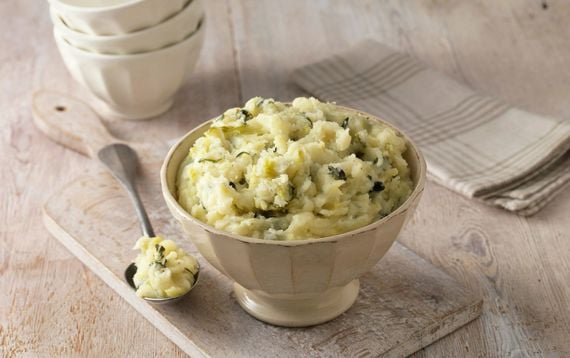
Meals featured the fruits of the late harvest. No Hallows Eve dinner was complete without a steaming bowl of potato-cabbage Colcannon, crowned with a deep puddle of melted golden butter. Baked into the fruity Barm Brack dessert cake were fortune-telling tokens: a button for the bachelor, a coin for the rich man, a wooden matchstick for the pauper, and a thimble for the spinster. And whoever found the cake’s hidden gold ring would certainly marry within the coming year!
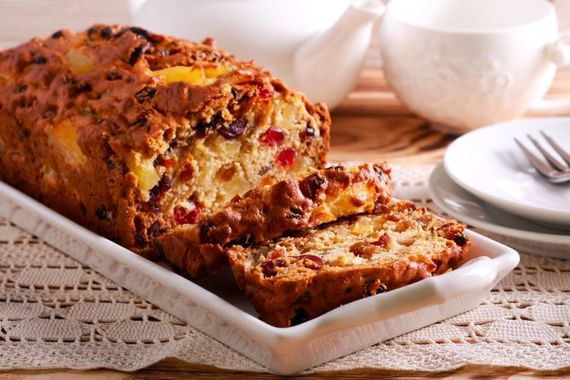
In memory of the departed, crisp wafers called ‘Soul Cakes’ were kept by the door in easy reach of hungry guests – both mortal and immortal. Revelers bobbed for apples in buckets of water and quenched their thirst with mugs of spiced cider. Casting a glance backward into a mirror might show the face of one’s future spouse. An egg white dropped in water could swirl into the initial of a someday betrothed’s name. Through the evening happy music from pipes and fiddles kept all but the friendliest spirits at bay.
Finally at midnight, church bells began to toll. For the following two days candles burned bright in every home in memory of all those who had gone before. Just as they always had during the Celtic festival of Samhain.
Nearly eight hundred years on, All Hallows Eve is yet the night for magic, mystery and merry making. Ghosts haunt the imagination and trick-or-treaters go begging for goodies from door to door.
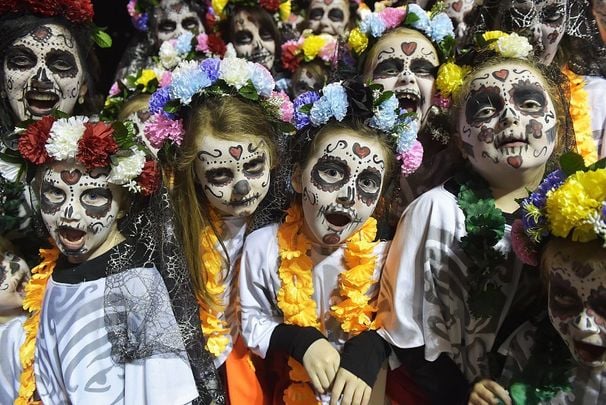
Decorations have gone far beyond carved out turnips and become big business, with devotees of the night decorating their lawns, yards and homes even more lavishly – and definitely more ghoulishly – than Christmas. Costuming is limited only by the imagination, and parties spawned by this ancient Irish tradition now rival the revelry of Mardi Gras.
In New Orleans, which like New York boasts a long history of Irish immigration, Anne Rice’s annual Vampire Ball is the stuff of legend. Author of Interview with a Vampire and several sequels collectively known as The Vampire Chronicles, Anne Rice is Irish American to the core and her books continue the ‘undead tradition’ begun by Ireland’s own Bram Stoker. While costuming at the Ball runs the gamut of all that is weird and wonderful, I spotted more than a few leprechauns, banshees, and fairy folk among the guests the year I attended. My costume? A drop dead come hither vampire, of course. Pardon the pun.
Sláinte!
RECIPES
Soul Cakes
1 3⁄4 cups oatmeal
1⁄4 tsp baking powder
1⁄2 tsp salt
1 tbsp melted butter
8 tsp hot water
Preheat oven to 350F. Pulverize 1 cup oatmeal in a blender. In a small bowl, combine ground oats, baking powder and salt. Stir in butter. Gradually add water to make a thick paste. Gather into a ball, place on a board lightly sprinkled with 1/4 cup oatmeal and roll around until completely covered with flakes. Spread another 1/4 cup of oatmeal on the board and flatten the ball into an 8-inch circle 1/4 inch thick. Cut in wedges and transfer to a pan covered with another 1/4 cup oatmeal. Bake 15 minutes. When wedges are light brown, turn off heat, open oven door and let sit in the oven for about 5 minutes until firm and crisp. Makes 8 Soul Cakes. (Personal recipe)
Hot Spiced Cider
2 quarts apple cider
2 cups fresh orange juice
2 tsp whole cloves
cinnamon sticks
thin half-round orange slices
Warm cider, orange juice and cloves in a stainless steel pot. Serve with orange slices and cinnamon stick stirrers. Makes 2 1/2 quarts. (Personal recipe)
Colcannon
4 large potatoes, boiled, drained and mashed with milk
1 small head of cabbage, minced and sauteed until tender
1 stick butter, melted
Mix mashed potatoes with minced cooked cabbage. Mound in a serving bowl and make a deep depression in the center. Pour melted butter in the depression. Serve immediately. Serves 4. (Personal recipe)
Traditional Barm Brack
13⁄4 cups raisins
13⁄4 cups golden raisins
33⁄4 cup dark brown sugar
1 cup cold tea
4 ounces candied citrus peel, minced
Grated rind of 1 orange
8 tbsp melted butter
2 eggs, lightly beaten
4 cups flour
2 tsp baking powder
1 tsp pumpkin pie spice
1⁄2 tsp cinnamon
pinch of salt
5 fortune tokens, each wrapped in parchment paper (silver coin,
non-plastic button, wooden
matchstick, metal thimble, gold ring)
Preheat oven to 350F. Grease a 9-inch round cake pan; line with waxed paper. In a saucepan, heat raisins and sugar with tea, stirring, until sugar dissolves. Cool. Sift dry ingredients together; set aside. Add candied peel and grated rind to the raisin tea mixture. Stir in butter and eggs. Gradually add dry ingredients. Combine well.
Pour into prepared pan and hide the parchment wrapped fortune tokens deep in the batter. Bake for 1 1/2 hours, or until a cake tester can be withdrawn dry. Makes 1 cake. (Classic Irish Recipes, Georgina Campbell)
Variation: Use up to 1/2 cup whiskey to replace some of the tea.
25 Comments
-
-
-
-
-
-
-
-
-
-
-
-
-
-
-
-
-
-
-
-
-
-
-
-
-
Switch to the desktop site to post a comment.duncaolog | Oct 24, 2012, 11:01 AM EDT
I can only speak for Sligo where I grew up. We had no 'trick or treat'. First place I saw it was on emigrating to America. We did duck for apples and coins and went out making mischief (in imitation of the spirits of Samhain I suppose) The 'celebration' of Halloween that I see now owes much more to American influence and commercialism than the spirit of Samhain. For more on this read: 'Echoes of a Savage Land' (http://www.sligoheritage.com/books.htm)
kinvara7 | Nov 02, 2011, 04:35 PM EDT
I knew you wouldn’t contribute anything; that was my point George: you’re a hypocrite. You filled a couple of posts with your usual rants about ‘the modern Irish’ abandoning their rich lore etc., and despite other posters contributing examples you contributed none. You are a proven liar and there is no doubt in my mind that you have lied in your posts below (I’m sure others will draw the same conclusion). The only thing I offered were my experiences of Halloween and how it is practiced where I live. In contrast you can only contribute rants based on ignorance and your own prejudices ‘backed up’ by IC articles.
GeorgeDillon | Nov 01, 2011, 04:25 PM EDT
kinvara--you've gone from lore to bore. You are an utter fool if you think I'm going to write notes on Halloween lore and traditions for empty-heads such as you. Enough already. But if you again try your stupid stunt of pointing a Leprechaun fantasy for American readers, know that I'll be here to offer them reality, not raimeis. By the way, how many Poles made it to the Tlachtga "ceremonies" this year? What do you mean, you don`t know where Tlachtga is?
kinvara7 | Nov 01, 2011, 07:16 AM EDT
George: I know where the festival is located, that is why I thought it was strange that your ‘cousin’ came from the same county; the fact that you mention this coincidence again only confirms my suspicion. I never said Irish people ALWAYS used the phrase "trick or treat" however it has been used in Ireland for decades (not just fifteen years as you stated). I also made the subtle point that neither did the Irish ALWAYS make Barmbrack, and the point that it was the ‘modern Irish’ that revived the ancient festival in Meath. Please read my detailed posts carefully and you will learn something. You say that you ‘don’t blame immigrants for anything’… well then why do you drag them into your rant about the ‘death’ of the Irish Halloween? Oh yes George, you are the ‘keeper’ of Irish lore… did it ever occur to you George that the books you have read have been read by other people too? Some of us have been lucky enough to hear these stories passed down. In any event, despite my polite request you have yet to relay some of this Irish lore that you apparently keep alive. I at least wrote about some, as did another poster; you on the other hand offered nothing which makes you a hypocrite. So instead of continuing your aimless rant, why don’t you relay some of the lore that you are keeping alive? That would be more welcome.
seanomelbourne | Oct 31, 2011, 09:49 PM EDT
Your an idiot georgy boy I proved your ranting were incorrect. You are too blinded by your hate of the Irish to be rational go bother your trailer thash neighbours with your illconceived drivvel and take a bottle of hootch with you I'm sure your are in a constant state of drunkeness.
GeorgeDillon | Oct 31, 2011, 03:43 PM EDT
What scares you, kinvara and your equally ignorant buddies (e.g the fool who has his brains down under) is that I know Ireland, and I know the United States. When people in our country ask me about Ireland I always tell them the unvarnished truth--the good, the bad and--in your case--the plain stupid. And only an utter nitwit like kinvara could claim that I "blame the immigrants". I don`t blame immigrants for anything, in fact I don't even blame fools like kinvra for anything other than being a stupid bore! The knowledge of Irish Halloween lore is of course, despite what the kinvara klown tells us, quite rare. Kinvara certainly doesn`t possess it. Proof for example is the fact he even suggested that Irish people have always used the phrase "trick or treat". Of course anyone who knows anything realizes the phrase is an American import, just like 100% of the Irish Halloween of today. As to kinvara not believing I have a relative working in Meath, this fool kinvara doesn't even know that the Festival he keeps trying to tell us about, the one no one in Ireland has heard of, was actually held--guess where--in Meath! You`re a chump kinvara, stop wasting our time here with your bigoted nonsense.
kinvara7 | Oct 31, 2011, 01:09 PM EDT
You say I haven’t made one substantive point, but the truth is I have made plenty. That’s why you are descending into rants and blaming the immigrants and misspelling Shakespeare –twice! I have spoken a little about the lore you so love to talk about, as have others, yet you have passed on nothing -hypocrite. You say that what I describe is a ‘sham bogus’ Halloween, yet all I have done on this and the other thread, is explain my experiences of Halloween… perhaps if you knew more about Ireland outside of what you can google on the internet, then maybe you could understand how Halloween is celebrated. Now, just like before, there are people who enjoy lore and there are those that don’t; people who practice traditions and those that don’t; if you think that it was different before, then you are very naive. Such matters are taught in schools and discussed in the media etc., so the origin of Halloween is common knowledge here. You must be very foolish if you think that the ‘knowledge’ you possess is unique or rare. As I said in the previous thread, if you could reply with some manners and instead of ranting, relayed some of the lore you keep talking about… now that would really scare me.
kinvara7 | Oct 31, 2011, 01:09 PM EDT
George: Why don’t you tell us what the Irish Halloween is… from your vast experience. Did I say Halloween is taught in colleges, or did I say folklore was? As regards the festival at Tlachtga (which you clearly knew nothing of) my point was very simple: an ancient festival revived by us the ‘modern Irish’, what does that say about our love for the past? I very much doubt that you have a cousin teaching in Meath (you often pepper your posts with information gathered after skyping this or that relative, or ‘on my last business trip to Ireland’ blah, blah, blah… it just sounds like you’re trying too hard to give your posts authenticity; what you really mean to say is ‘the last time I did a google search’). Even taking your imagined class at face value: doesn’t that show that such matters are taught in schools just like I said? I’m going to ignore all the references to immigrants (you really need to change the record).
GeorgeDillon | Oct 31, 2011, 10:57 AM EDT
kinvara wants Americans to buy into his Fool's Fantasy about Ireland. I on the other hand will not flinch from the reality. In this case the reality is that the version of Halloween now practiced in Ireland owes 100% to Hollywood and the USA, and 0% to Irish lore and traditions. His point that Halloween is taught in the colleges shows how much of a fool kinvara is. Shakepeare is taught in the colleges too--does that mean the Irish are experts on Shakepeare? What a dope you are, kinvara, you and your crazy references to Tlachtga. Take a stroll down O'Connell Street and ask people what they know about the Festival of Tlachtga. The Africans will laugh at you and the Poles will say "Me no Speak English". The Irish, if you can find any on O'Connell Street, will tell you to F* off! In three consecutive posts you didn't make one subtantive point. Sundry clowns like the guy in australia and kinvara want to sell us a sham bogus Halloween--won't work as long as I am here to unmask such Fraudsters and Fools. In fact on the weekend I was on skype with my Irish cousin, who is a high school teacher in Meath. She told me that NOT ONE of her class of 17 year olds knew that halloween sprang from the ancient Celtic festival of Samhain. So we can see that the ignorance shown by kinvara etc is quite widespread.
kinvara7 | Oct 31, 2011, 08:30 AM EDT
I was in town earlier and saw the Halloween display in the shop: barmbrack, apples and nuts etc; I know that there will be plenty of bonfires too. I wonder what knowledge the people who began the festival at Tlachtga had of barmbrack? Would they have considered it an unwelcome addition? I doubt it. Finally, you chastised seanomelbourne for being ‘unable to answer [your] arguments’, I think you are being kind to yourself by referring to what you wrote as ‘arguments’. I agree with his description of them as rants, but you’re a good laugh all the same.
kinvara7 | Oct 31, 2011, 08:25 AM EDT
I note that you didn’t make any reference regarding the ceremony on the hill of Tlachtga; what does it say about the ‘modern Irish’ that such ancient traditions are revived by us? What does it say about our love for such things, when we have University departments dedicated to folklore? I note that you ignored my comment regarding the media coverage here of the origins of Halloween and folklore. You also made very ignorant remarks regarding my comment on how traditions change. The tradition of going from door to door in disguise receiving food existed in Ireland. Along with this there was a tradition of playing tricks on neighbours during Halloween, particularly ones that were seen as mean or arrogant. It is easy to see how these practices evolved into the phrase “Trick or Treating”. So yes, George, going to houses in disguise, and playing tricks were very much part of how Halloween is and was traditionally celebrated in Ireland; does it matter that we now call this Trick or Treating? I don’t think so.
kinvara7 | Oct 31, 2011, 08:24 AM EDT
@GD: I don’t know where to begin. You praised the author of the article and then said that “the Irish are now totally ignorant of their folklore and traditions.” I think eiregirl summed it up pretty well when she said every Irish person she knew was aware of the matters covered in the article; it’s common knowledge here. She also spoke of the pooka (as have I) I don’t know if you have relayed any of the Irish lore that you so love to talk about; or do you just like to give it lip service and use it for negative purposes like your ‘use’ of the Irish language?
seanomelbourne | Oct 30, 2011, 06:06 PM EDT
Not interested in commenting on the mundane and the ridiculous Georgy boy, your anti Irish rants are well known on this site.I was trick and treating in Dublin 60 years ago you ignorant moron.Hollywood borrowed trick/ treat from the Irish.
GeorgeDillon | Oct 30, 2011, 08:07 AM EDT
seanomelb-- You're unable to answer my arguments so you just shout abuse. What a fool you are.
Blackthorn62 | Oct 29, 2011, 07:04 PM EDT
Very interesting. I always liked the idea that the space between the world of the living and the world of the dead "was thin" on All Hallow's Eve. And evidently the Church did not fool anyone-the traditions survive.
seanomelbourne | Oct 29, 2011, 06:11 PM EDT
George "turnip head" Dillon is on his usual anti-Irish rant.
GeorgeDillon | Oct 29, 2011, 03:59 PM EDT
More nonsense from a usual suspect, the poster calling himself kinvara. His belief that "there is as much interest in Halloween today as in years gone by" shows his inability to even read intelligently, since no one had mentioned the notion of "interest" in Halloween. He is even so ignorant that he thinks "trick or treating" is an Irish tradition. Wake up out of your stupor, kinvara, even as recently as 20 years ago the term "trick or treat" was unknown in Ireland. What I had pointed out, a point this guy apparently couldn`t understand, was that the rich old lore of Halloween has been lost in Ireland. The Irish Halloween is dead, and the Hollywood version, with its stupid witches and vampires, has taken over. So in this context kinvara is utterly off the mark when he says that "traditions are subject to change". In the modern Irish case traditions are subject to die, not change. If kinvara thinks that the current infantilized version of Hollywood celebrated in Ireland is an advancement of old traditions, then he's even a bigger fool than I had thought him.
kinvara7 | Oct 29, 2011, 12:56 PM EDT
I would say there is as much interest in Halloween today as in years gone by. For example look at the Tlachtga Samhain Fire Festival: The ceremony on the hill of Tlachtga dates from approximately 200 AD and was the location of the Great Fire Festival begun on the eve of Samhain. Today, the old Celtic ceremony at Tlachtga has been revived with a re-enactment of the Celtic celebration starting with a torchlit procession from the Fair Green in Athboy to the top of the Hill of Tlachtga on October 31st each year. Of course, traditions such as barmbrack persist as do Halloween games. Trick or Treating is as popular as ever etc., Every year the papers discuss 'the origins of Halloween'. The Irish Examiner did a piece on the 'Spirit of our Celtic past' and the seanachaí Eddie Lenihan wrote an article about piseógs and folklore. Such matters are also the staple diet of national schools across the country. As in any country, in any time, the practice of traditions is not uniform among a population and those traditions are subject to change (the Irish that celebrated at the hill of Tlachgta 2000 years ago would not recognise all the traditions practiced in Ireland during the 16th century etc).
Siobhan39 | Oct 29, 2011, 12:54 PM EDT
So nice to see an article here by Edythe Preete. I have been reading her articles in IA for many years - they are well written and researched.
Pittsburghkid | Oct 29, 2011, 12:21 PM EDT
My reading of Ireland, which may be wrong, stated the Ireland has mild winters, and extra growing season. This is why the celts never had barns. Although, these customs could have orginated with the european celts, and were brought to Ireland. This mild climate is why coffee is grown in the south of Ireland.
kinvara7 | Oct 29, 2011, 11:37 AM EDT
I would say there is as much interest in Halloween today as in years gone by. For example look at the Tlachtga Samhain Fire Festival: The ceremony on the hill of Tlachtga dates from approximately 200 AD and was the location of the Great Fire Festival begun on the eve of Samhain. Today, the old Celtic ceremony at Tlachtga has been revived with a re-enactment of the Celtic celebration starting with a torchlit procession from the Fair Green in Athboy to the top of the Hill of Tlachtga on October 31st each year. Of course, traditions such as barmbrack persist as do Halloween games. Trick or Treating is as popular as ever etc., Every year the papers discuss 'the origins of Halloween'. The Irish Examiner did a piece on the 'Spirit of our Celtic past' and the seanachaí Eddie Lenihan wrote an article about piseógs and folklore. Such matters are also the staple diet of national schools across the country. As in any country, in any time, the practice of traditions is not uniform among a population and those traditions are subject to change (the Irish that celebrated at the hill of Tlachgta 2000 years ago would not recognise all the traditions practiced in Ireland during the 16th century etc).
jjkleprechaun | Oct 29, 2011, 11:21 AM EDT
Frankly, I think the article is well said. And what difference does it make if back so "looong" ago turnips were used and not pumpkins? The details of why and how and what happened are more important. Lighten up and Happy Halloween every one!!!
eiregirl | Oct 29, 2011, 10:04 AM EDT
Not sure what generation you two (George and mcdolan)are talking about but every Irish person I know knows this history. Yet I have never seen a turnip in Ireland the size of a pumpkin. They were used for this purpose because they were animal feed. The people didn't eat the but fed them to the cattle and pigs. We ate colcannon and boiled bacon every halloween before we went out to get supplies for our "halloween party" which is mashed potato and kale, not cabbage and it had money, a stick and a ring in it. It's a tradition I continue with my family. If the Pooka did get you it brought you to the land of the fairies and you didn't come back if you spoke to them. So to say that the Irish are a bunch of wannabees with no attachment to their history is really just nonsense. Halloween is an international festival if you choose to celebrate it, it does not require ownership. That is one trait of the Irish, to celebrate and SHARE a good time with everyone. Get over yourselves and your self righteousness. HAPPY HALLOWEEN EVERYONE
mcdolan | Oct 29, 2011, 09:31 AM EDT
I don't often agree with George Dillon, but he's spot on this time. In the rush to become Europeans, the Irish have lost so much that made them unique, one of which is taking ownership of Halloween!
GeorgeDillon | Oct 29, 2011, 09:14 AM EDT
While I would quibble with one or two things she writes, the sad fact is that this author knows more about the Irish roots of Halloween than do 99.9% of Irish people. The Irish are now totally ignorant of their folklore and traditions. They spend their time watching English soap operas or screaming and cursing at English soccer games on TV.