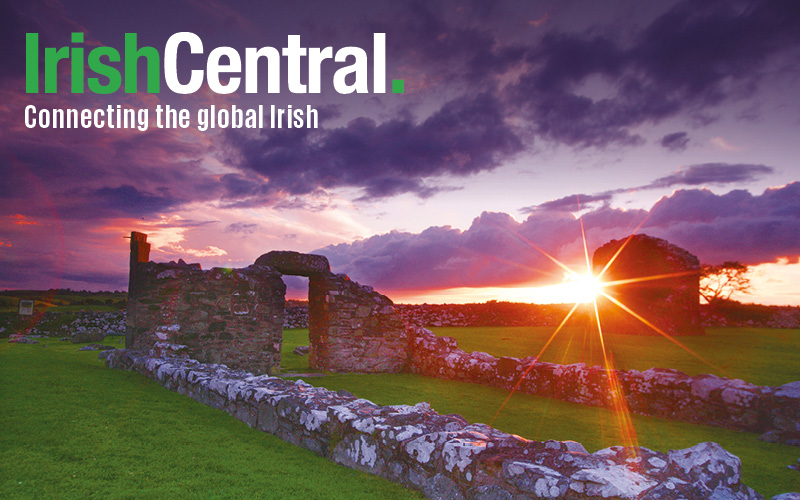
Leinster is sometimes overlooked by travelers to Ireland, with the raw and rugged splendor of the south, west and north coasts attracting more attention. However, the Leinster province, which is Ireland’s largest and borders the Irish Sea, has a rich resource of sights and sounds for visitors, including, of course, Dublin City. Leinster encompasses the counties of Carlow, Dublin, Kildare, Kilkenny, Longford, Laois, Louth, Meath, Offaly, Westmeath, Wexford and Wicklow.
Carlow
Just outside the town of Carlow is an over 100 ton stone structure whose history dates back to 4000 B.C. It is known as the Brownshill Dolmen or the Kernanstown Cromlech. Officially labeled a portal tomb for the two large stones which mark its entrance, how exactly the Dolmen was built remains a mystery as its capstone weighs in at 100 tons, believed to be largest in Ireland.
Dublin
Founded in the 9th century, Dublin City is a culturally rich, international business hub, and tourist mecca. From the city’s beginnings as a Viking trading port to a walled medieval city, it transformed into an elegant Georgian city, cosmopolitan with wide streets and cultural quarters. The National Museum of Ireland on Kildare Street houses the treasures of ancient Ireland, with exhibits including prehistoric and Viking Ireland. The Book of Kells, written around 800 AD and one of the most beautifully illuminated manuscripts in the world, is on display at the Old Library at Trinity College and attracts over 500,000 visitors a year. St. Patrick’s Cathedral, erected on the site where St. Patrick is believed to have baptized his converts to Christianity, dates back to the 12th century. Another historic attraction, Dublin Castle was founded in 1203 by order of King John, who required a fortress constructed for the administration of the city. All that remains of the original design is the Norman Tower, while the rest of the castle has been added to and rebuilt over centuries. For those travelers hoping to soak up some of Ireland’s liquid history, the Guinness Storehouse and the Old Jameson Distillery are both popular Dublin destinations.
Kildare
County Kildare is well known for Irish horse breeding, training and racing. The famous Curragh, a flat open plain of almost 5,000 acres, is home to the Curragh Racecourse, which hosts all five classic annual races: the Irish Derby Stakes, the Irish Oaks, the Irish 1,000 Guineas, the Irish 2,000 Guineas and the St. Leger.
Kilkenny
Situated on the banks of the River Nore, Kilkenny town is known for its historic buildings, and culture of arts and crafts. The Kilkenny Arts Festival celebrates theater, dance, visual art of all types and film, while the Kilkenny Design Craft Centre offers an unrivaled selection of Irish handcrafts. Kilkenny’s important ecclesiastical sites include the Black Abbey, Kells Priory, and Tullaherin Church and Round Tower. Kilkenny Castle is also a popular destination. Many of the landmarks are included in popular walking and cycling tours.
Longford
While the bog lands of County Longford may not sound like a tourist pull, a discovery in 1984 in Corlea unveiled a piece of ancient architecture unique in Ireland. Boards of timber nailed into a giant walkway were found, preserved after having been buried beneath the bog for centuries. Now known as the Corlea Trackway, the roadway is constructed of timber which was felled in 148 BC and is the only remaining example of roads from Ireland’s Iron Age. Inside the Visitor Centre in Corlea is an 18-meter stretch of the original road.
Laois
To experience an authentic blend of centuries-old relics and the contemporary pulse of a thriving Irish town, Portlaoise is the perfect spot. The Rock of Dunamase, set against the backdrop of the Slieve Bloom Mountains is just outside the town. The ruins which stand today were first built in the late 12th century and were restored and occupied by several different groups throughout Dunamase’s history. Portlaoise is also home to Dunamase Arts Centre, which features ongoing exhibitions and presents internationally known musical acts, and O’Moore Park stadium, which hosts many Football and hurling fixtures and has a capacity of 30,000.
Louth
The smallest of Ireland’s counties, the coastal county of Louth provides no shortage of heritage sites and is associated with a number of significant events in Irish history – the Battle of the Boyne, Blessed Oliver Plunkett, Cromwell’s Siege and the surrender of the Irish Chieftains, but one of the better kept secrets of the “Wee County” is the Knockabbey Castle and Gardens. The 30-acre site offers a walk through Ireland’s gardening history, with Victorian flower gardens, restored greenhouses, and a Tower House designed to tell the stories of the owners and tenants who have passed through Knockabbey since it was built in 1399.
Meath
County Meath, the “Royal County,” is home to some of the most important historic monuments in all of Ireland, including the Hill of Tara, once the seat of the High Kings, and the archaeological complex of Brú na Bóinne which is 5,000 years old and includes the burial sites of Newgrange, Knowth and Dowth. At the summit of the Hill of Tara lies an oval Iron Age enclosure known as the Fort of the Kings. Within are two linked enclosures, known as Cormac’s House and the Royal Seat. In the center of the latter is the Stone of Destiny, where legend holds the High Kings were crowned. Newgrange, meanwhile, is a World Heritage Site, and one of the most important Neolithic chamber tombs in Europe, predating both the Great Pyramid in Egypt and Stonehenge. It was built in such a way that at dawn on the winter solstice each year, a beam of sunlight illuminates the chamber floor of the construction. No visit to Meath is complete without a visit to the village of Slane – the cradle of Irish Christianity where St. Patrick lit the paschal fire.
Offaly
President Obama can trace his Irish ancestors to Moneygall, County Offaly, but the the true gem of Offaly is Clonmacnoise, one of Ireland’s most well known monastic sites, which was visited by Pope John Paul II in 1979. Known to the locals as the Seven Churches, this historic site is home to not just those churches but two round towers and two high crosses constructed from quartzose sandstone taken from the foot of the Bernagh Mountains. The ancient monastery is also home to the structure known as the Whispering Arch where it is fabled that the monks would give their confessions. If one whispers into one corner of the structure, someone standing at the opposite corner can hear its echoes, making it a favorite stop on tourists’ walks through the site.
Westmeath
County Westmeath is home to many tourist attractions from its idyllic lakes to the Belvedere House and Gardens. This parkland estate was once home to Earl Robert Rochfort, the infamously wicked man who locked up his wife for 31 years after suspecting her of infidelity. Belvedere House is now open to the public and has many events year-round which celebrate the natural beauty of Ireland. The town of Mullingar boasts a strong sporting tradition with plenty of greyhound races, golf courses, and clubs dedicated to rugby, football, tennis, basketball, snooker and countless other sports.
Wexford
New Ross, Co. Wexford is the site of the Dunbrody, a replica of Ireland’s historic Famine-era emigrant ship. Docked off the South Quay, the Dunbrody recreates the conditions surrounding the 19th-century mass migration from Ireland. Visit the J.F. Kennedy Homestead, in nearby Duganstown, which is the birthplace of the late John F. Kennedy’s great-grandfather Patrick, who lived at the homestead prior to sailing to America to start a new life with his family. Other tourist attractions include the Irish National Heritage Park, and the nearby Barrow, Nore and Suir River Valleys.
The Wexford Opera Festival plays a central role in the cultural life of Ireland, and in the world of opera and arts internationally. The Festival will run from Saturday, October 16th until Saturday, October 30th, 2010.
Wicklow
County Wicklow is known as the Garden of Ireland, and this spectacular county on the doorstep of Dublin is one of the country’s hidden secrets. The highlights of a visit include the magnificent coastline around Bray; the Vale of Avoca; Glendalough, which houses the site of St. Kevin’s monastery; and the waterfall and gardens of Powerscourt one of the most beautiful country estates in all of Ireland.
Wicklow is also home to Avondale House, the birthplace and home of Charles Stewart Parnell, one of the great political leaders of Irish history. The house is situated in Avondale Forest, a national historic site for its California redwoods, on the west bank of the Avonmore River.
Comments