Connacht is the ruggedly beautiful western province of Ireland, bounded by the Shannon, Ireland’s longest river, and the Atlantic Ocean.
It is comprised of counties Galway, Mayo and Roscommon, as well as Leitrim and Sligo farther north.
It is divided north to south by a chain of lakes: Loughs Conn, Mask and Corrib, running down from Killala to Galway and providing a natural border between the fertile lowlands to the east and the wild mountains to the west. From the urban center of Galway City to the Aran Islands off the coast, to the breathtaking coastline of Sligo and the languid, scenic Shannon, there is much to be seen in the smallest of the four Irish provinces.
Galway
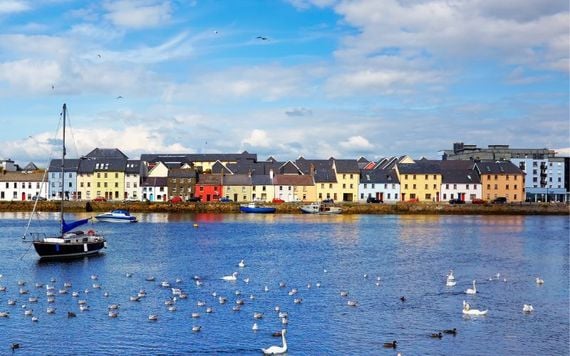

Galway City. Credit: Getty Images
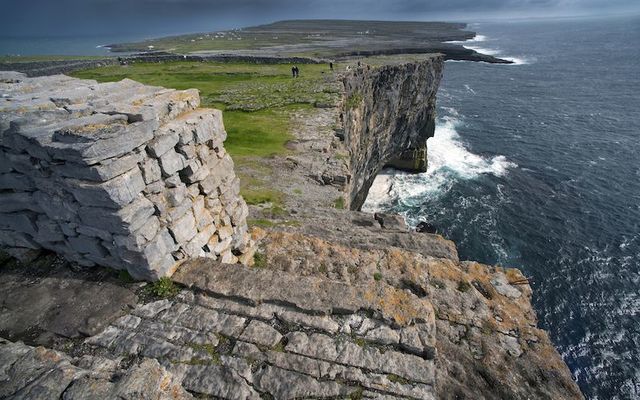
Among the region’s most celebrated spots to visit are the Aran Islands, located at the mouth of Galway Bay, off the coast of County Galway. They are the inspiration for J.M. Synge’s play Riders to the Sea and one of the last strongholds of the county’s Irish-speaking culture. The three islands, Inis Mór, Inis Meáin and Inis Oírr, are the most populous in Ireland. The largest, Inis Mór, contains plenty of bed and breakfast accommodations for travelers. One of its most popular tourist destinations is Dún Aengus, an Iron Age fort situated on the edge of a cliff that stands 300 feet above the Atlantic Ocean. It is built in a series of concentric circular walls. Another, the medieval O’Brien Castle on Inis Oírr, was built in the 14th century.
Another stop on any exploration of Connacht, Galway City is the third largest and fastest growing city in Ireland. It also bears the nickname City of the Tribes, for the fourteen merchant families that led the city during its Hiberno-Norman period. The Church of Ireland St. Nicholas’ Collegiate Church, the largest medieval church that remains in daily use in Ireland, is located in Galway City, as well as the Catholic Galway Cathedral, one of the largest and most impressive buildings in the city. The Galway City Museum, opened in 2006, is located behind the famous Spanish Arch, overlooking the River Corrib and the ancient Claddagh village. It contains art and artifacts from medieval times to the modern era.
Connemara, in the west of County Galway, consists of a broad peninsula between Killary Harbor and Kilkieran Bay with a laced network of lakes and is considered one of the most beautiful regions in Ireland. Its scenic coast is made up of a number of peninsulas that form picturesque craggy mountain peaks, and megalithic tombs surround its main town, Clifden. Traditionally divided into North and South Connemara by the majestic mountains of the Twelve Bens range, Connemara is marked by the boundary of the Invermore River, with expansive beaches. The region is recognizable for the breathtaking contrasts of sky, sea, land and bog.
Leitrim
Carrick-on-Shannon. Credit: Tourism Ireland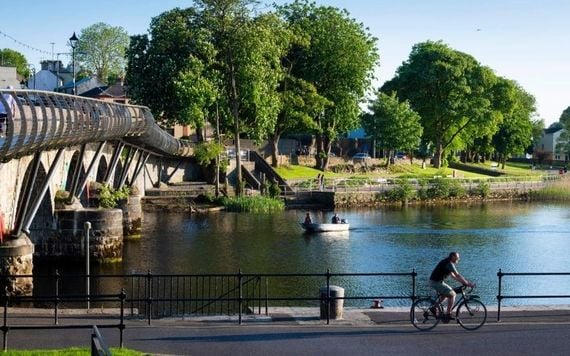
Moving up to the tranquil County Leitrim in the northeast of Connacht, golfers and anglers will find plenty to delight them. Fishing is a popular activity in Leitrim’s Lough Allen in the scenic town of Drumshanbo, which offers breathtaking views on the River Shannon. Surrounded by soft rolling hills, woodlands, and lakes, Drumshanbo is a beautifully preserved town with traditional pubs, shops and restaurants. It is also an ideal destination for golfing enthusiasts, with four courses in the area. Carrick-on-Shannon, the largest town in Leitrim, is acknowledged nationally and internationally as an angler’s paradise. Forty-one lakes surround the town, which is filled with local fishing experts, boats and maps for those undertaking a fishing excursion.
Mayo
Céide Fields. Credit: Ireland's Content Pool
In Connacht’s County Mayo lies the archeological wonder of the Céide Fields. The world’s most extensive Stone Age dwelling site contains the remains of a highly skilled and organized agrarian Neolithic society that was preserved, undisturbed, for some 5,000 years and is now a natural wild ecology of blanket bog, dramatic cliffs and coastline. The vast prehistoric landscape of the Céide Fields, which is located near Ballycastle, consists of a network of parallel stone enclosures with a number of those walls running up to two kilometers in length. The multi-award-winning Céide Fields Visitor Centre offers exhibitions, tearooms and an audio-visual show.
Also in Mayo, Clew Bay is a natural ocean bay overlooked by Croagh Patrick, Ireland’s holy mountain, and the mountains of North Mayo. It contains Ireland’s best example of sunken drumlins: hills formed by glacial action. Clew Bay is said in legend to have 365 islands – one for each day of the year – but in reality there are 117 drumlin islands, sandbars and rocks.
The Knock Shrine and Croagh Patrick are Catholic holy sites in County Mayo, known for their historical significance and religious pilgrimages. Croagh Patrick is five miles from Westport and the third highest mountain in Mayo. Over 15,000 climb it on the last Sunday in July every year, a tradition that dates back to the pre-Christian Celtic era as a celebration of the summer solstice. St. Patrick is believed to have fasted on the summit of Croagh Patrick for forty days in the fifth century. Mythology tells that at the end of his fast, he threw a silver bell down the side of the mountain which banished all the snakes from Ireland. The Knock Shrine in the village of Knock in Mayo is the reported site of an appearance of the Virgin Mary, St. Joseph, St. John and Jesus in 1879.
Roscommon
Boyle Abbey. Credit: Ireland's Content Pool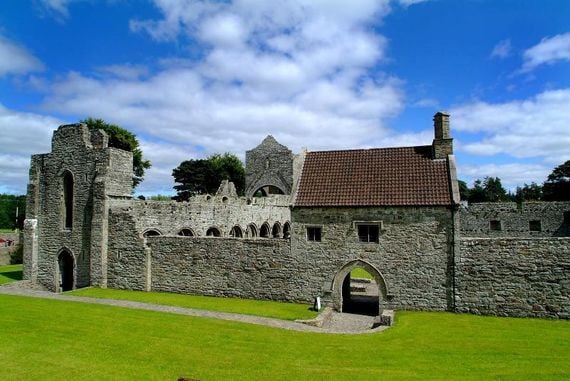
The third largest of Connacht’s five counties, Roscommon is three-quarters bounded by water and contains the longest stretch of the River Shannon of all the ten counties through which the river passes. Some popular stops on a route through Roscommon are Boyle Abbey, still regarded as the finest of the Cistercian churches to survive in Ireland; Ballintober, which contains the remains of a stone castle first mentioned in writing in 1311; and Tulsk, the village between Strokestown and Bellanagare which houses the interpretive center exploring Cruachan, one of the best preserved Celtic royal sites and an Irish Age royal palace. Strokestown, historically known as Bellanamully, houses a museum commemorating the Great Famine of 1845 as well as the County Roscommon Heritage Centre, for those hoping to uncover their ancestors’ pasts in their foray through Roscommon.
Sligo
Knocknarea. Credit: Ireland's Content Pool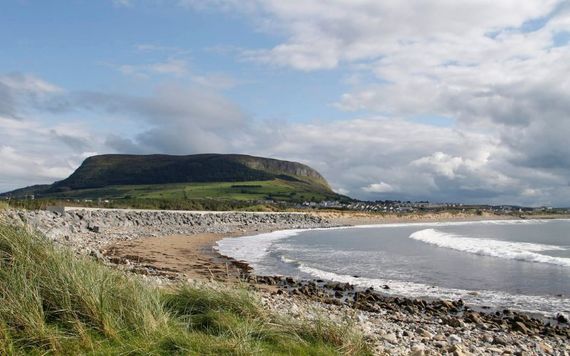
County Sligo, meaning “shelly place,” is allegedly named for the abundance of shellfish found in the river and its estuary. It is the second largest urban area in Connacht. One must-see stop in an exploration of County Sligo is Knocknarea, the mountain dominating the landscape to the west of Sligo town. The 1014-foot-high limestone mountain is monolithic in appearance, capped by a cairn of limestone rocks. The mythological significance of Knocknarea is Queen Maeve’s Tomb, the largest in Ireland outside the Boyne Valley. Queen Maeve, or Medb, was the Warrior Queen of Connacht in Celtic legend, and the famous Táin saga records the story of her reign.
For literary travelers, Sligo has much to offer. Dubbed ‘Yeats Country’ for its heavy presence in William Butler Yeats’ works, Sligo includes the stately Lissadell House, former home of the Gore-Booths, whose two daughters had a lifelong effect on the poet. A drive along the length of the coastline in Ireland’s northwest offers stunning views of mountains, sea and cliffs, sometimes moody, sometimes glowing with sunlight, but always spellbinding. The Lake Isle of Innisfree, featured in one of Yeats’ most evocative works, sits in Sligo, one of some twenty tiny islands in the majestic Lough Gill.
*Originally published in March 2010, updated in August 2024.

Comments