
This special issue on the Great Hunger is an effort to tell the story of what happened in Ireland and explore more fully the story of those who survived the crossing and began a new life in America.
While there’s no denying the darkness of the story, the colossal loss of life, the fractured families, the perilous crossing, the Nativist Party, vigilante groups and “No Irish Need Apply” signs (which has an all too familiar ring in terms of what immigrants are facing today), ultimately, the story is one of amazing resiliency, great bravery, and humanity shown by strangers.
The American side of the story is one that I longed to know more about when I was a child and was told: “They got on coffin ships and left for America.” No one told us what happened once those ships left the port.
At the same time, many Americans are not fully aware of what their ancestors went though – reports from that time would make it seem that the Irish were lazy and indolent and brought the “blight” on themselves.
The reality, of course, is that they did not own their own land, and as Christine Kinealy brings to light, the amount of food that the British exported from the country was enormous.
There is also a tendency to think of the emigrants of the 1840s in stereotypical clichés, poor and downtrodden; “the huddled masses yearning to be free.” The story was far more complex than that, as our writers show in this issue. These immigrants were remarkable people at a remarkable time in America, and each one was as individual as you and me.
Life was tough, the work was brutal, but they got on with it. They dug canals, and laid the rail for the great railways, worked hundreds of feet underground in mines, and traveled acorss country in covered wagons to homestead in faraway places such as Sun Prairie, Wisconsin.
They were not quitters. And as we face hard economic times again, it does us good to remember that. Nothing will ever be that hard again.
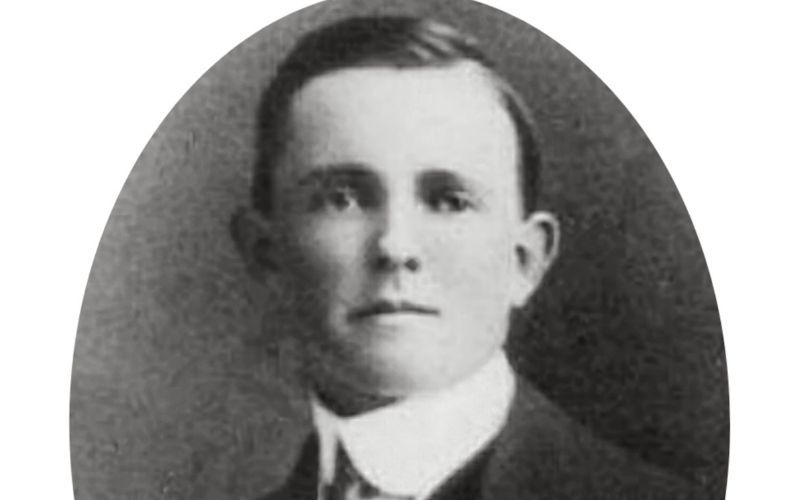
No photographs of the Great Hunger exist, but we see in the pictures submitted by our readers the faces of those ancestors who survived the journey, and put down roots in America.
The personal stories that go along with these photographs give us a wonderful insight into the lives of those early immigrants and their role in America.
Sadly, many who embarked on the journey to America did not make it. They were the “nameless” who succumbed to “ship’s fever” and found a watery grave at the bottom of the ocean or in mass graves on this side of the Atlantic. Some estimates put that number at one in six.
But, there again, while working on this issue we unearthed records – the names of thousands who died at sea, and in quarantine sheds in Canada. We print some of those records in this issue, including the name of a young boy – Thomas Harty, 4 years old, who died on board a ship from Liverpool in January, 1847.
Seeing one so young who bore my family name was a jolt to the heart. While we tend to think of the Famine as happening eons ago – it was just two 80-year life spans ago.
There are many memorials around the world that remember whose who died but seeing the names in the Canadian archives, I wished for one more, one that would release these names and put them somewhere more visible. Perhaps those involved in planning the Irish American Museum we wrote about in the last issue will do just that.
But even as I make this wish, I’m reminded of Mother Jones, the great American Labor leader, who immigrated during the Famine, lost her children and husband to yellow fever, and became know as the “Angel of the camps” for her work with the miners. She said, “Pray for the dead and fight like hell for the living.” I suspect those who died in the Great Hunger would have us direct our efforts towards a “Living Memorial” and focus our attention on today’s hungry and homeless. There are many fine organizations who can help us do just that, including Concern Worldwide. www.concernusa.org.
Comments