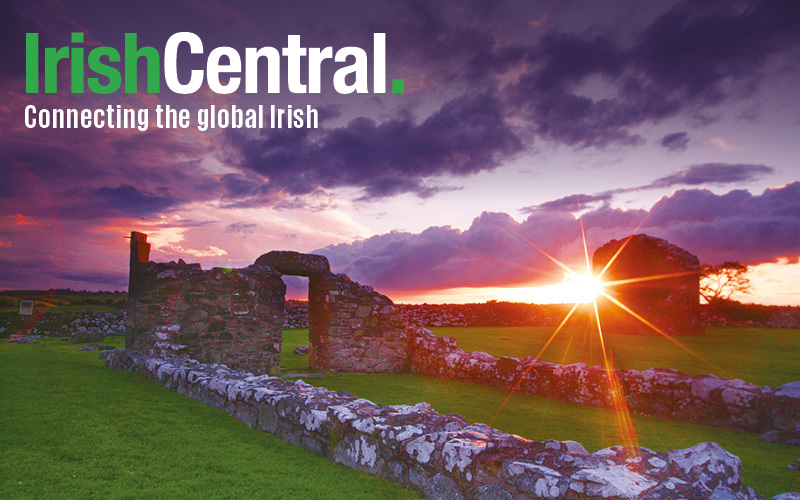
The cemetery is gated and well hidden, and there have been no burials in it for three score years and more. It’s a lovely, grassy, tranquil place, and Dan Mahoney, the parish priest, remarks how all the headstones face northeast toward home, toward Ireland.
The Catholic burial ground is on the fabled battle site of the Revolutionary War in Charlestown, Massachusetts that turned the tide against the British and led eventually to independence. And, though the battle was fought on nearby Breed’s Hill and the Colonials “lost the day,” the fervor of the name “Bunker Hill” stirs the hearts of patriots.
That the “Hill” was transformed into a Catholic cemetery and became a sectarian battleground is yet another piece of Charlestown’s long, contentious history. The Second Battle of Bunker Hill would pit the well-heeled Yankee establishment against a gutsy bishop on a mission.
In 1830, Bishop Benedict Fenwick found there was need for a burying ground in or near Boston. He purchased a parcel of land in Charlestown overlooking the Mystic River for the purpose — a severe blow to the Charlestown Yankees, who, after two centuries, felt Town and “Hill” were theirs. They resolved to do all in their power to thwart the Catholic bishop’s “unholy scheme.”
Fenwick, a Jesuit, was regarded with suspicion by the Boston Protestant elite, who were openly and vehemently anti-Catholic, anti-Irish, and anti-Jesuit. The Bishop was, however, intelligent, courageous, and willing to take on the formidable challenge to the cemetery.
Historian Thomas O’Connor tells us, “No place in the New World was more hostile to Irish and Catholics than Charlestown — it was a tight little Anglo-Protestant enclave with no time for Irish Papists.”
At the height of the Famine, William Whieldon, Editor of Charlestown’s Bunker Hill Aurora, wrote, “Our country is literally being overrun with the miserable, wretched, vicious and unclean paupers of the old country. They are not only introducing their wretchedness and disease among us but, if they ever recover from these plagues, they have a worse disease, which will overspread this country, their religion.”
Charlestown was, in fact, so intolerant of the Irish that in 1847 the town’s selectmen turned the Famine ship Reliance away from Dwin’s Wharf with 280 desperately ill aboard.
Seen in this light, it’s understandable that the Bunker Hill Cemetery faced fierce resistance from Yankee Charlestown at every step of the way. But Bishop Fenwick won the day.
Nine to ten thousand Irish are buried here, and, safe to say, most were Famine refugees and their children who “did not go gentle into that good night.”
In the bad old days, when infant death was all too common and the Irish poor had no means to buy a grave, deceased infants and young children were left at the cemetery gate for burial. Patrick Denvir, the sexton and undertaker at the Irish Cemetery behind St. Francis de Sales Church in Charlestown, tells us that sad practice was not unusual. There are hundreds of infants and children buried here. Their graves went unmarked but the children were not forgotten.
One glorious September Sunday in 2009, a thousand or more gathered on the Hill to raise the Children of the Famine Memorial. The centerpiece is a Celtic Cross, one reminiscent of Muireadach’s High Cross at Monasterboice.
Remembrance
They lie in silence, thousands strong
In a hidden Charlestown graveyard
Awaiting a marker
Evidence of lives lived?
Why do you lament their tragic passing?
What might have been
Pales to insignificance.
What counts is memory and memorial.
The Celtic Cross in Charlestown Graveyard
Honors soul and spirit
Of those Irish dead
They are remembered.
Rest well now
Where Tir na nOg and Gate of Heaven,
Sun and Cross are all the one.
— Donal O’Cathasaigh (Dan Casey)
Comments